Devnarayan Jayanti & the food of faith
As spring gradually makes its appearance, Rajasthan prepares itself to commemorate Shree Devnarayan Jayanti, to honour a deity widely regarded in folk history as an incarnation of Lord Vishnu. The occasion marks the birth anniversary of Devnarayan Ji, which coincides with the sixth day of the bright fortnight of the Hindu month of Magha. It is an occasion that is observed by restraint and service, prayers and thanksgiving, rather than spectacle reflecting a belief that devotion is best expressed through remembrance, shared meals, and harmony among communities.
Devnarayan Ji was born to Sawai Bhoj and Sadu Mata, who were from an ethnic agricultural background, at a time when there was unrest in a predominantly pastoral society, with cattle being stolen, leading to conflicts and unrest in the social order. Devnarayan Ji was known to have restored balance and peace by mediating disputes, preventing violence and retribution and reinforcing the sanctity of commitments and promises that help establish trust. This pattern of intervention and conflict resolution mirrored the Vaishnava idea of Vishnu’s descent on the earth to protect dharma when it is threatened, an image that characterized the deeds of Devnarayan.
Unlike many religious festivals that are marked by public pageants, Shree Devnarayan Jayanti is known for reflection and respect, for honesty and tradition. The emphasis is on participation rather than performance, where service, patience, and equality take precedence over display. In a landscape shaped by limited rainfall and agricultural uncertainty, the day is a remembrance of the value of cooperation and harmony, preserving social and moral order, and protecting pastoral life. Narratives of Devnarayan Ji are preserved over generations through oral epics recited by ritual singers and storytellers called Bhopas and visually represented in painted sacred scrolls called Phad. These epics are performed with a view to reinforce the values that the occasion represents. While many are already familiar with these narratives, their reiteration serves a deliberate purpose. Elders describe this as an opportunity to pass on these value systems to younger generations without introducing reimagined interpretations thus retaining the original message over time.
Initially observed through small, local gatherings centred on song and storytelling, Devnarayan Jayanti has evolved and grown in scale and visibility. Its core practices of Phad recitation, collective service, and simple shared meals have largely endured. In regions where livelihoods have traditionally depended on collective effort, the festival also functions as a reminder that resources should be used sparingly and purposefully. Preparations, however, start in earnest well before the festival. Homes are swept, cattle sheds repaired, grain stores tidied, and water vessels refilled. These activities are treated as practical necessities rather than symbolic gestures, rooted in the belief that order in daily life is essential to ensure long-term stability.
Ritual observance typically begins before sunrise. Devotees rise and bathe early and gather at temples, village shrines, or open spaces dedicated to Devnarayan Ji. Lamps are lit, incense fills the air, and flowers are arranged at prayer pandals. Bhopas narrate episodes from the Devnarayan phad in designated places, transforming them into consecrated areas where oil lamps are lit and performances often held through the night. The emphasis remains on instruction rather than display, and devotees are encouraged to reflect on the central message of accountability, courage, and restraint.
Clothing worn during Shree Devnarayan Jayanti reflects both regional identity and simplicity, in keeping with the mood of the festival. Men are commonly dressed in white or off-white dhotis along with simple angarkhas (long traditional robes) or kurtas, often with a safa (traditional Rajasthani turban) or a pagri (tied higher and more upright on the head). Women wear ghagras and odhnis (scarves dyed in regional patterns) in subdued colours, with veils drawn modestly during prayer. Jewellery is minimal and functional, dominated by inherited silver ornaments such as hanslis, borlas (an ornament worn on the forehead), kadas, and anklets. Gold is used sparingly, with silver remaining the preferred metal, in keeping with pastoral traditions. Across villages, attire reflects the common sentiment of the occasion through an unspoken code and remains dignified and practical. The values associated with Devnarayan are carried forward to the kitchens where family members, young and old, contribute to preparing simple yet festive dishes. The meals are vegetarian, emphasising the purity of purpose and respect for lives. The ingredients used are mostly those preserved and stored during winter and staples, reflecting self-reliance. Bajra, wheat, lentils, jaggery, sesame, and desert produce, such as ker (berries) and sangri (beans), that are sun-dried and preserved, form the backbone of the menu. Winter vegetables like gajar, methi, bathua, and tinda, are locally available and widely used. Cooking processes are also simple, using practices like slow boiling, hand-roasting, and minimal tempering that is suited to preparing large meals for community feasts. Cooking is rarely an individual task with all family members contributing in some manner, an attitude that is considered virtuous. Elders and relatives participate and recall traditional recipes and younger members assist in grinding, rolling, and serving. In this collective effort, cooking becomes a part of the festival itself, and provides an opportunity for the younger generation to learn and absorb age-old customs and practices.
The manner in which food is consumed follows its own set of conventions. Elders are served first, followed by children and guests, before others eat. In many households, those who have observed a full fast during the day wait until evening prayers are completed before breaking it with light foods. Even in contemporary times, families and friends are seated on the floor for meals. Portions remain modest, emphasising that finishing what is served, rather than wasting is the norm. These practices reflect long-standing attitudes toward food as sustenance rather than indulgence, shaped by environments where excess was neither possible nor desirable. Through such practices, the values associated with Shree Devnarayan Jayanti are reinforced without formal instruction.
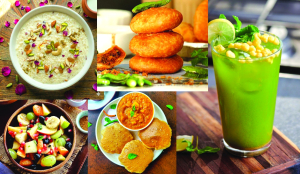
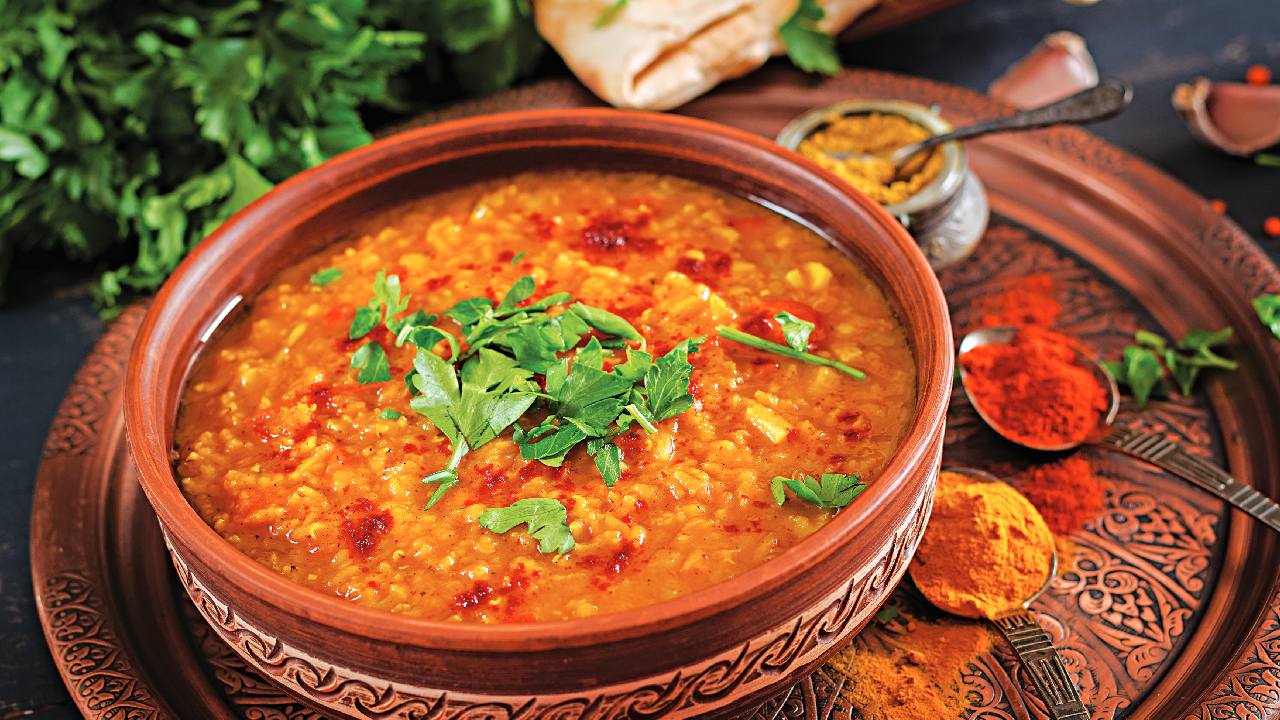
Among the most commonly prepared foods is bajra roti. Pearl millet flour is mixed with water and shaped by hand into thick circular rotis, then cooked slowly on clay griddles and, at times, finished over open flame. Bajra, well suited to arid soil, has long been a staple in Rajasthan. The rotis are dense and filling, brushed with ghee after cooking and relished along with vegetable sides, particularly on days of fasting and prayer. Bajra roti is typically served with panchmel dal, prepared using a mixture of five lentils - toor, chana, moong, urad, and masoor dal. After a prolonged soaking in water, the lentils are simmered together and lightly tempered with cumin, asafoetida, and dried red chillies in ghee. Onion and garlic are intentionally avoided. The resulting dish is mild, nutritious, and filling, reflecting long-standing dietary practices.
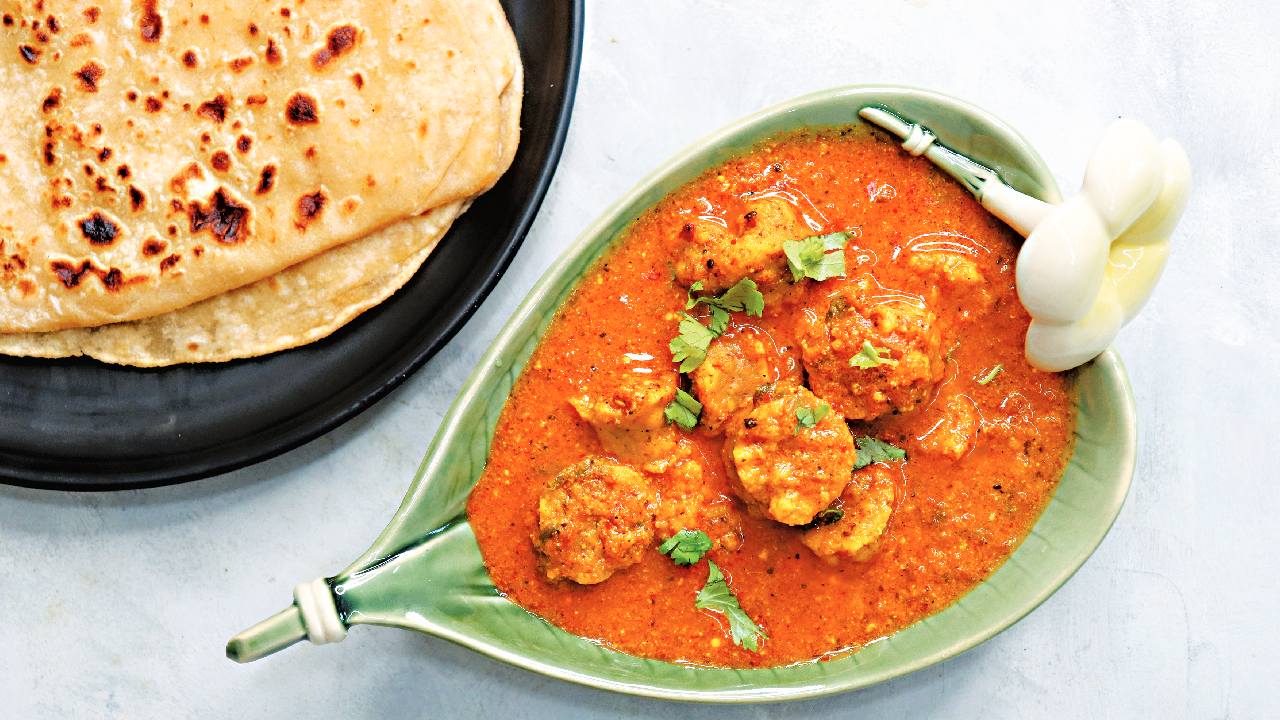
Vegetable preparations provide ideal accompaniments with these meals. Seasonal vegetables are used to prepare simple sabzis, often cooked with little more than salt, oil or ghee, and basic tempering. Sev tamater ki sabzi is a quintessential Rajasthani dish, especially associated with winter gatherings and community meals. Made from a tangy tomato-based gravy thickened lightly with spices, the dish is completed with generous handfuls of sev, crisp chickpea flour noodles, that soften as they absorb the gravy. In some areas, ker-sangri, or berries and pods harvested from hardy desert shrubs and trees and preserved for prolonged storage, is rehydrated and cooked plainly, with a gentle use of spices. Gatte ki sabzi is another favorite, made from gram flour dough shaped into small circular pieces, boiled, and simmered in a yoghurt-based gravy. Despite modest ingredients, the dish is filling and suited to serving large groups. Kadhi is another frequent preparation. Made from sour buttermilk thickened with gram flour, it is gently spiced and simmered carefully to avoid curdling. Some regions serve it plain, while others include soft pakoras made of greens, onions, or sliced potatoes. Light and digestible, kadhi is often consumed later in the day after fasting concludes.Together, these dishes add variety while adhering to ritual guidelines.
Dairy products hold particular importance during the festival, reflecting Devnarayan Ji’s association with pastoral life. Fresh butter and ghee are used in cooking and offerings, while curd and buttermilk are shared after prayers.Fasting practices influence meal timing. Some devotees observe a full fast until evening, while others eat sparingly. After prayers, lighter foods are preferred. Raab, a fermented porridge, is commonly consumed at this time. It is made by slowly cooking bajra, jowar, or wheat flour in water or buttermilk, and gently soured through natural fermentation then lightly seasoned with cumin, dried chillies, and ghee. The result is a warm, porridge-like preparation with a faint tang and deep nourishment. In some households, methi bajra khichdi is prepared for elders and children and also used while breaking a fast. Pearl millet is cooked with split moong dal and fresh fenugreek leaves, lightly seasoned and enriched with ghee. The dish is soft, warming, and easily digestible, while remaining nourishing. Sweet preparations are limited but carry symbolic value. Churma is made by crushing coarse rotis and mixing them with ghee and jaggery. Lapsi, prepared from broken wheat cooked slowly with ghee and jaggery, is often offered at religious ceremonies before being shared. In some regions, gud ki pinni or gud bajra laddus, roasted wheat flour mixed with melted jaggery and ghee shaped into balls, are prepared and shared widely. These sweets are distributed to children and also offered in shrines. Together, these sweets are more of an offering that honour the season and the spirit of the occasion.
Sharing food beyond households and neighbourhoods is a common practice and forms part of the collective festivities of the village. Community kitchens are set up near temples and in open spaces, where simple, sattvic meals often comprising coarse-grain rotis, seasonal vegetables, lentils, khichdi, and jaggery-based sweets are prepared in large quantities and offered freely to devotees, visitors, and passing travellers. Serving food in this manner is regarded as a virtuous social responsibility and a form of seva, carrying the same spiritual significance as prayer. To feed another is considered a pious act, not as an offering but as a gesture of sharing with those in need, reinforcing bonds of community, humility, and collective responsibility.
Preserved foods also feature in the meals. Pickles made from ker, sangri, and sun-dried vegetables, prepared months earlier, are served sparingly. These are typically made at the onset of summer, when ker berries and sangri pods are cleaned, blanched, and thoroughly dried before being cured with salt, mustard oil, and locally ground spices. The pickles are then stored in earthen or glass jars and left to mature slowly, developing depth over time especially by using the warmth of the sunshine. These additions reflect long-standing practices of seasonal planning and resource management, shaped by the realities of arid living.
Utensils used during the festival follow traditional patterns. Brass and earthenware vessels are preferred and cleaned thoroughly before use. Cooking over wood fires remains common, contributing flavours shaped as much by method as by ingredients. These choices are driven by practicality rather than nostalgia.
Today, Shree Devnarayan Jayanti continues to provide a sense of identity, particularly for younger generations coping with the demands of changing lifestyles. Participation in traditional cooking offers a way to engage with elders and the values centered on balance, responsibility, and peaceful community life. Through food and shared preparations, these lessons are absorbed naturally without formal instruction.
I am of the view that even local festivals such as Shree Devnarayan Jayanti hold national significance as they demonstrate how cuisine functions as a means of sharing common values and traditions over centuries. The foods prepared reflect adaptation to difficult environments and cooperation within communities during scarcity. Its endurance lies in a quiet continuity of traditions and of cultural renewal without compromising its ethical core. I believe that in remembering these practices, we preserve not only unique recipes but a way of life rooted in discipline and harmony.
(The writer is Secretary, Cuisine India Society); views are personal