India strikes confident note at Davos summit
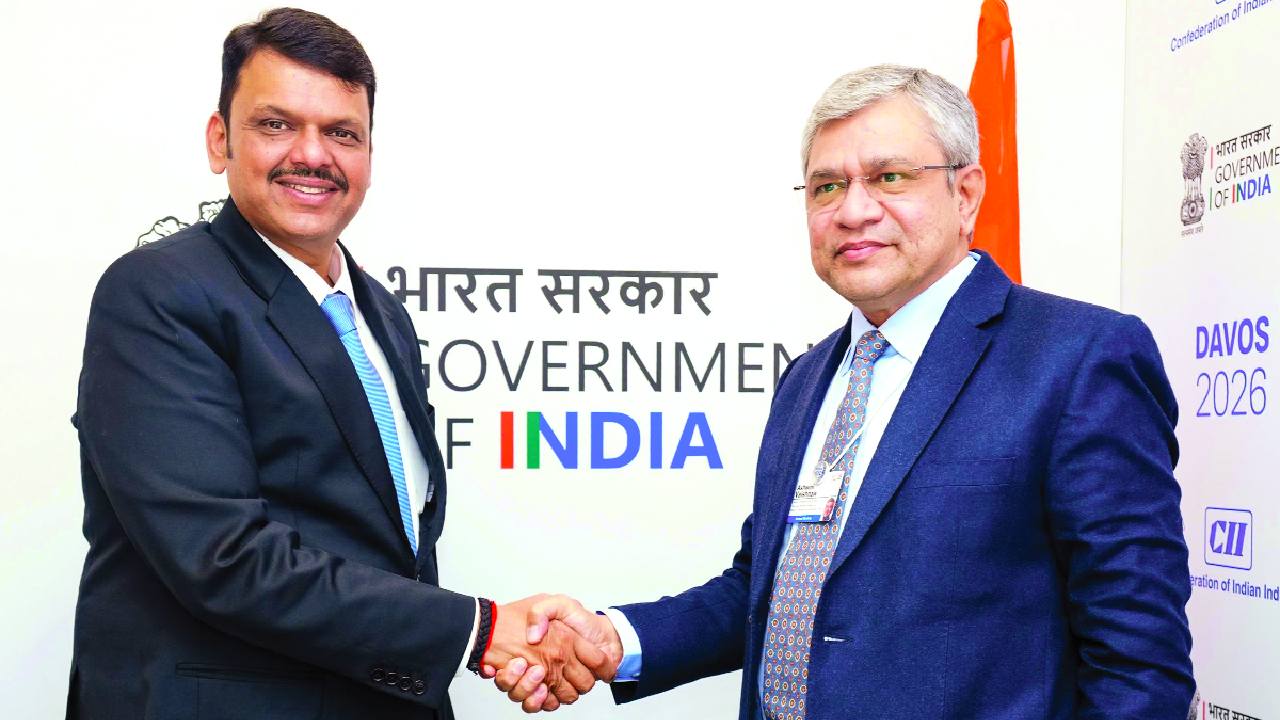
As the world leaders discuss dismal global economic growth and rising climate risks, Indian leaders attending the World Economic Forum Annual Meeting are highlighting the country’s robust growth rate and sustainability features. Union Minister Pralhad Joshi said India will soon become the world’s third-largest economy and underlined the need for greater investment in sustainability and grid stability. His Cabinet colleagues Ashwini Vaishnaw asserted that India will definitely become the world’s third-largest economy over the next few years, with economist Gita Gopinath saying it can happen by 2028 or even earlier.
Joshi said India has already begun modernising its grid through digitalisation, smart metering, and decentralised renewable energy, which has strengthened system resilience and empowered citizens. As India moves from the fourth-largest to the third-largest economy soon, the key need now is to ensure grid stability, he said.
Jharkhand Chief Minister Hemant Soren highlighted the state’s extensive mineral resources, which account for 42 per cent of India’s mineral resources, including iron ore, coal and many other important rare earths, necessary for India’s growth and development.
Gujarat’s Deputy Chief Minister Harsh Rameshkumar Sanghavi said, “Gujarat exemplifies sustainability at scale by transforming its industrial promise into a model of balanced growth, resource efficiency and environmental stewardship that aligns with global priorities”.
Andhra Pradesh minister Nara Lokesh said, “Looking ahead, there are four guiding pillars for us in sustainability. First, is an ecosystem first approach, second is speed of doing business, third is investing in green jobs and skills and fourth is having policy certainty and efficiency”.
Jayant Sinha, Chairman of the CII India Sustainability Taskforce and President of Eversource Capital and Visiting Professor in Practice at LSE, said there are four major areas where Government support remains beneficial.“One is around reporting, taxonomy and standards, second is having a green financing agency, third is digitisation of our grids, and fourth is to develop, strengthen and scale up our carbon markets,” he said.
Speaking in a World Economic Forum Annual Meeting session, Vaishnaw said the only matter of concern is what will happen with the mountains of debt in the rich world and what could be the impact on India. Gopinath said the challenge for India is not becoming the third-largest economy; the challenge is raising per capita income to higher levels.
Industrialist Sunil Bharti Mittal said India is clearly in a very good spot, and it will definitely become the third-largest economy. What we need as the business community is an enabling environment, a committed Government and stability in the country, and all of that is available now, he added while speaking in the same panel.