China silent on India’s move to ease FDI norms
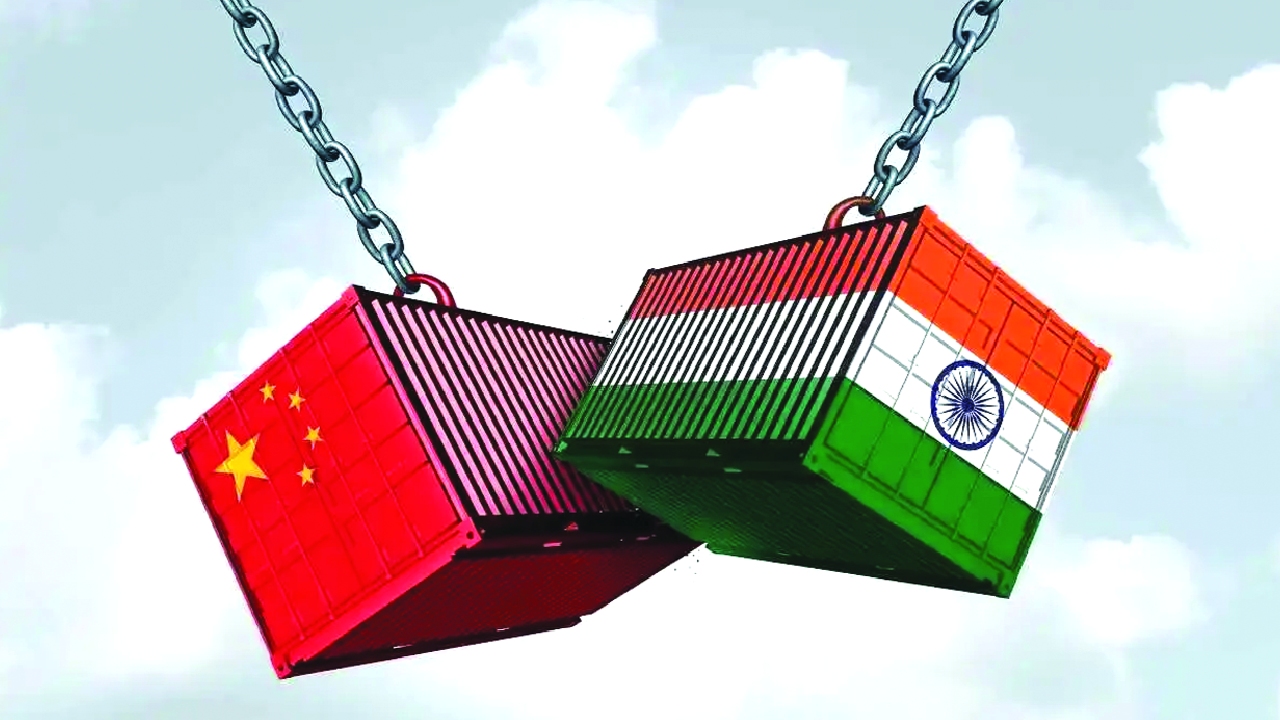
China has refrained from responding to India’s decision to ease foreign direct investment norms for countries sharing land borders with it, while the Chinese business called the move “partial” opening up, with restrictions still in place on large-scale investments.
New Delhi on Tuesday eased foreign direct investment (FDI) norms for China and other nations sharing land borders with it, by allowing overseas firms having up to 10 per cent shareholder from these nations to invest in India without mandatory approval.
Earlier, overseas firms with shareholders from these nations owning even a single share had to seek mandatory approval to invest in India in any sector. However, other conditions of FDI norms, including sectoral caps and entry routes, will apply to these investments.China’s state-run Xinhua news agency said India’s announcement was seen as a major shift in its FDI policy after a gap of nearly six years.
However, the Foreign Ministry here has declined to comment on it. Asked for his reaction to India’s decision at a media briefing on Wednesday, Chinese Foreign spokesperson Guo Jiakun said the question should be referred to competent authorities.
China at present is grappling with over-capacity of the number of its manufactured goods, especially the new productive forces like E-Vehicles and batteries, which reached the saturation point in the domestic market and relied mostly on overseas markets. Considering the size of the Indian market, there are wider expectations here of a broader opening for EVs, batteries and related industries.
On Wednesday, Joint Secretary in the Department for Promotion of Industry and Internal Trade Jai Prakash Shivahare told reporters in New Delhi, “All the restrictions for investors from land bordering countries (LBCs) are still applicable. There is no relaxation so far as entities or investors in LBCs are concerned. This relaxation is only for entities in non-LBCs and having beneficial owners from LBCs below 10 per cent and non-controlling stake... so there are no relaxations as far as investments from LBCs are concerned.”
Reacting to India’s announcement, Chinese experts and businesses told state-run Global Times that China’s investment in sectors such as solar energy and electronics could potentially grow, benefiting related sectors in India.
They called on the Indian Government to further relax investment curbs to cover more sectors. Such moves, they noted, would inject greater vitality into China-India economic and trade cooperation, which has seen a recovery in growth momentum since 2024.
The Chamber of Chinese Enterprises in India said the adjustment in India’s investment policy toward China is a “partial optimisation” rather than a “comprehensive liberalisation,” noting that large-scale investments and those involving actual control by Chinese entities remain unchanged and will continue to follow the previous approval process.
However, the 60-day fast-track approval is limited to specific sectors, primarily targeting areas such as electronic components and polysilicon, rather than representing a broad relaxation across all industries, the Chamber said in a statement to Global Times. Chinese investments in most other sectors will still face rigorous scrutiny, it said, adding that, furthermore, the actual implementation and execution of this policy adjustment remain to be seen.
India is striving to develop its mobile phone industry and other key sectors, including semiconductors, artificial intelligence (AI) and new-energy vehicles. All these industries rely heavily on Chinese technical talent. Yet India’s opening-up is by no means comprehensive, it said.
India only opens areas it urgently needs, while keeping others blocked. The Indian Government is taking a pragmatic stance, a representative of a Chinese enterprise operating in India told the daily.
“This reflects a deeper dilemma: On one hand, India remains wary of Chinese capital and continues to impose restrictions on it, fearing it could gain too much influence. On the other hand, India urgently needs Chinese technologies, driving its partial opening-up.
“Such a contradictory approach is reflected in its visa policy, which has gradually shifted from strict restrictions to targeted relaxation,” the executive said.
Qian Feng, director of the Research Department at Tsinghua University’s National Strategy Institute, said China-India relations have been on an improving trajectory since the two national leaders held a meeting in Kazan, Russia, in 2024, and retaining such an outdated policy runs counter to the current progress in bilateral political ties.Qian told the daily that the previous policy targeting Chinese investment severely hampered the ‘Make in India’ initiative, and claimed that the crackdowns on Chinese capital ultimately undermined India’s own economic interests.
The revision is a timely move that will boost the ‘Make in India’ campaign and support the upgrading of India’s high-tech industries, he said.
Against the backdrop of India-US tariff disputes, this move can also be seen as part of India’s economic and trade diversification strategy, shifting from a previous economic development path that was overly reliant on the US toward greater engagement with China, Qian said.
The adjustment is a positive step that will gradually ease Chinese companies’ concerns and lead to more bilateral investment cooperation. But this is only the first step, and the Indian Government needs to demonstrate greater sincerity and deliver more tangible outcomes to remove the uncertainty hanging over Chinese enterprises, Qian said.
“The foundation of China-India economic and trade cooperation lies in mutual benefit and win-win outcomes. Only transparent, stable, and predictable policies can truly unlock the collaborative potential of businesses from both sides,” the chamber said in the statement.
The ties between the two countries nosedived significantly following the clash in the Galwan Valley in June 2020 that marked the most serious military conflict between the two sides in decades.
Following these tensions, India had banned over 200 Chinese mobile apps like TikTok, WeChat, and Alibaba’s UC browser. The country also rejected a major investment proposal from electric vehicle maker BYD.
Though India has received minimal FDI from China, the bilateral trade between the two nations has grown multi-fold.
China has emerged as India’s second-largest trading partner. In 2024-25, India’s exports to China contracted 14.5 per cent to USD 14.25 billion. The imports, however, rose by 11.52 per cent in 2024-25 to USD 113.45 billion. The trade deficit was widened to USD 99.2 billion in 2024-25 from USD 85 billion in 2023-24.
During April-January 2025-26, India’s exports to China rose by 38.37 per cent to USD 15.88 billion, while imports rose by 13.82 per cent to USD 108.18 billion. The trade deficit stood at USD 92.3 billion.
(PTI )