Govt announces Smart Border push for frontier security
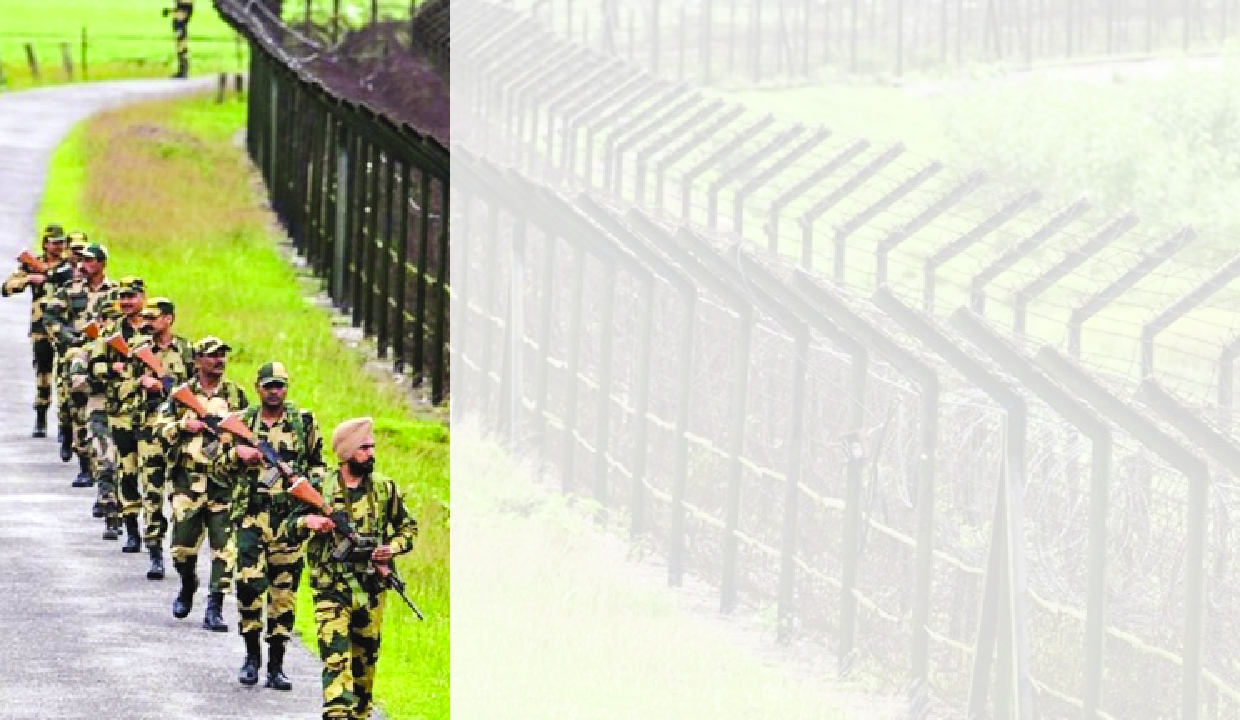
Union Home Minister Amit Shah’s announcement of the ‘smart border’ initiative has brought into focus one of the most ambitious technology-driven border security upgrades in India’s history.
Slated for launch next year in the 60th year of the Border Security Force’s raising, the project aims to convert the entire 6,000-kilometre-long international border with Pakistan and Bangladesh into an intelligent, multi-layered ‘electronic wall’ that is virtually impenetrable to infiltration, smuggling and other threats.
At its core, the Smart Border builds upon and significantly expands the existing Comprehensive Integrated Border Management System (CIBMS). Instead of relying solely on physical fencing and manual patrolling, the new system will fuse advanced sensors, artificial intelligence, real-time data analytics and rapid-response capabilities to create a 24×7 automated surveillance grid.
Senior officials describe it as a ‘strong security grid’ that will drastically reduce blind spots, especially in riverine, hilly, marshy and densely vegetated stretches where traditional methods often fall short.
One of the foundational pillars of the smart border is an extensive network of high-resolution smart cameras and electro-optic systems. These include day-and-night CCTV, thermal-imaging cameras capable of detecting human body heat even in complete darkness, fog, or thick foliage, and infrared night-vision devices. Many of these cameras are equipped with artificial intelligence that can automatically distinguish among humans, animals, vehicles, and drones and instantly flag suspicious activity.
Complementing the cameras are advanced ground surveillance radars and battlefield radars that can detect movement several kilometres away, including low-flying drones used for smuggling or reconnaissance. These systems work alongside perimetre intrusion detection systems, fibre-optic sensors buried along fences, seismic sensors that detect footsteps or vehicle vibrations, laser beams, and underground monitors designed to detect tunnelling attempts. Together they form a virtual, invisible fence that triggers alerts the moment any breach is attempted.brighter.com
Uncrewed Aerial Vehicles (UAVs), both fixed-wing and rotary drones, will play a crucial role in covering difficult terrain. Equipped with high-definition and thermal cameras, these drones will provide real-time video feeds to command centres, conduct autonomous patrols and offer rapid aerial verification whenever ground sensors detect activity. BSF units have already been training with drone fleets, and their deployment is expected to scale up significantly under the new project.carnegieendowment.org
All these devices will feed data into centralised Command and Control Centres through high-speed fibre-optic and satellite communication networks. Artificial intelligence and machine learning algorithms will analyse the massive influx of information in real time, filter out false alarms, predict infiltration patterns and generate instant alerts to the nearest BSF posts and quick-reaction teams. This “multi-sensor fusion” approach ensures that information from cameras, radars, drones and ground sensors is combined into a single, comprehensive operational picture.
Once fully implemented, the smart border is expected to deliver near-instant detection and response capabilities, significantly reducing dependence on round-the-clock physical patrolling while enhancing effectiveness in challenging weather and terrain. Officials say the system will also help counter emerging threats such as drone-based smuggling and coordinated infiltration attempts.
The project aligns with the government’s broader objective of creating a technology-augmented security architecture along both the western and eastern frontiers. With State Governments in Assam, West Bengal and Tripura already on board, the Ministry of Home Affairs (MHA) is expected to hold coordination meetings soon to ensure seamless centre-state collaboration. As India moves towards making its borders truly ‘smart’, the initiative is being watched closely as a potential model for modern border management, blending physical infrastructure with cutting-edge technology to safeguard national security and territorial integrity.
ELECTRONIC WALL
- The project aims to convert the entire 6,000-kilometre-long international border with Pakistan and Bangladesh into an intelligent, multi-layered ‘electronic wall’ that is virtually impenetrable to infiltration, smuggling and other threats
- The Smart Border builds upon and significantly expands the existing Comprehensive Integrated Border Management System
- The new system will fuse advanced sensors, artificial intelligence, real-time data analytics and rapid-response capabilities to create a 24×7 automated surveillance grid
- All these devices will feed data into centralised Command and Control Centres through high-speed fibre-optic and satellite communication networks
- This “multi-sensor fusion” approach ensures that information from cameras, radars, drones and ground sensors is combined into a single, comprehensive operational picture