War-linked paradox of incentives
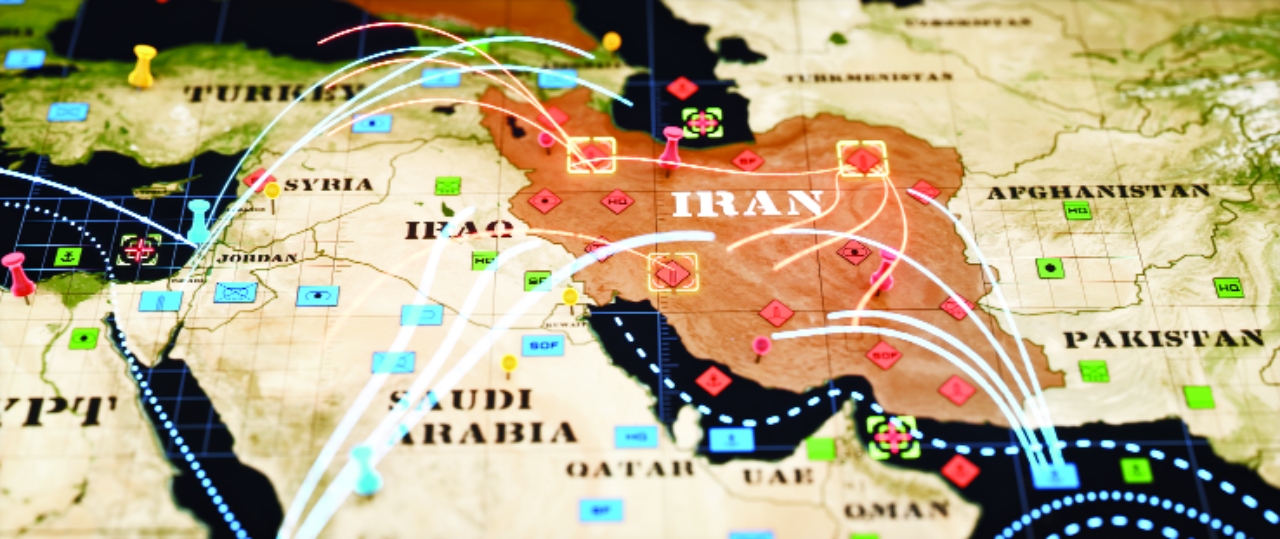
One of the worst truths, which is both intuitive, and sometimes counterintuitive, is that there are invariably some corporate victors, which earn super profits, and many failures, which end up in extreme pain, even if only for a few months or years. A new research study, which dubs this phenomenon a “paradox of incentives,” looks at the firms that get the “windfalls,” and others that lie in shambles. As most asset classes disintegrate in the ongoing Iran war, apart from perhaps the dollar, a few other currencies, and treasury bonds and, of course, oil and gas, it is crucial to understand how its spoils will be divided.
It is easy to identify some of the winners, which include defence firms, especially in the US and Europe, and the owners of the global oil and gas reserves, if these giants are unable to sell enough quantities. But there are some that remain invisible, or partly-hidden. These include the tech firms, especially those related to artificial intelligence (AI), and especially in the modern war context. Apart from the business gainers, there are the political beneficiaries across the globe. War, disruptions, tensions, violence, and chaos help some leaders who are under pressure for various reasons, and wish to distract attention.
According to the research, “On Wall Street, defence stocks including Lockheed Martin, Northrop Grumman, and RTX rose between four per cent and six per cent on the first day of the (US-Israel) missile strikes (on Iran). The three firms’ combined shareholder gain on that one day was $25-30 billion. In Israel, Elbit Systems briefly became the country’s most valuable listed company, with its shares up 45 per cent since January (2026). In Europe and the UK, defence stocks surged against a falling FTSE 100 (the UK stock exchange index).” The London-based BAE Systems surged six per cent on the first day.
In India, the situation is slightly different from what the “paradox of incentives” hints at. According to AI-generated search, “Indian defence stocks experienced high volatility, initially surging by up to 13.5 per cent in early March 2026 due to the escalating Iran-Israel tensions, before experiencing a correction due to profit-booking.” This is because unlike the defence firms in the US and Israel (and even Europe), Indians are not directly involved in the war, and may not gain immediate tangible benefits. It was logical for the savvy institutional and high net-worth persons to sell at the new highs.
However, when the war effects were more direct, as during Operation Sindoor and last year’s India-Pakistan conflict for a few days, the scenario was different. “Indian defence stocks experienced a massive, rapid surge during and after Operation Sindoor (initiated May 7, 2025), with the sector outperforming broader markets by 9x, and some stocks rising 72 per cent within weeks. Driven by the success of indigenous systems and expectations of new orders, key stocks such as HAL, BEL, and Cochin Shipyard saw significant gains, adding Rs 1.18 lakh crore to investor wealth,” stated another AI-linked search.
In both the wars, Iran-Israel-US and India-Pakistan, tech played a crucial part, and cyberwar constituted a critical component. In the case of India, drones, intelligent missiles, and defence platforms were important. Both the US and Israel, as well as Iran, rely on AI-driven weapons to launch long-distance strikes on key assets. This explains tech stocks, especially in the US, did not suffer much despite the decimation across the global stock markets. The Nasdaq did not tumble, and the wealth of the tech billionaires seemed intact despite the falls. In contrast, Indian tech seems destroyed because it is largely unprepared for the AI onslaught in the future.
Oil nations will gain, as the global crude prices cross the $100 mark for the second time, and some pessimists predict oil @ $200 per barrel. The US may benefit as Europe buys more of its output, as it did after the Russia-Ukraine war, and a large consumer like India, which relied on Russian crude earlier, spins towards America. “For the Gulf petrostates, the picture is nuanced,” states the new research. Saudi Arabia and the UAE face real costs but their exposure to the Strait of Hormuz is lower than Kuwait, Qatar, and Iraq. Russia, whose oil now sells at a premium to the global prices, will find legitimate buyers in India and China.
A counterintuitive trend to the oil beneficiaries is that the high global prices suddenly make drilling in difficult areas more lucrative. Shale gas, with its large reserves in the US, may get a huge boost. At the same time, the oil crisis propels nations to seek greater refuge in renewables. In practice, things may be different. As was evident after the Russia-Ukraine war, Europe turned more towards not just fossil fuels, but even worse, coal. Old coal-based plants that were shut down were suddenly revived. As the new research states, the transition to renewables may slow down due to more attention on oil and gas.
“Wars may also be good for incumbent politicians in the short term. Before the (Iran) strikes, the fallout from the release of the Epstein files was reverberating globally…. Within hours of the first strikes, web searches for the Epstein files collapsed,” explains the new research. In Iran, the earlier western sanctions, and ongoing war, which aims to destroy the existing power structures, may bolster it. Due to sanctions, the Islamic Revolutionary Guard Corps, the elite military faction, ended up with control over oil assets, engineering, telecom, and construction. Now, in the aftermath of war, it may expand its dominance.
There can be social consequences. In Iran, several sections of the population showed elation after the initial strikes, and death of the supreme religious leader. But after the son took over, and the Shias and Sunnis across the world came together, possibly for the first time since their estrangement 1,500 years ago, the dynamics have changed. The Muslim or Islamic world, which was ridden by factions on both sides, may informally unite, even if for a brief period. This may decimate most of the war-related plans hatched by the western leaders.
Hence, if one looks at the emerging overall picture, the “paradox of incentives” runs deeper than what is visible. “What makes this (Middle East) crisis particularly hard to resolve is the paradox (of incentives) at its heart: The actors best placed to end it are those with the most to gain from its continuation,” concludes the new research.