A Tryst with Atmanirbhar Bharat
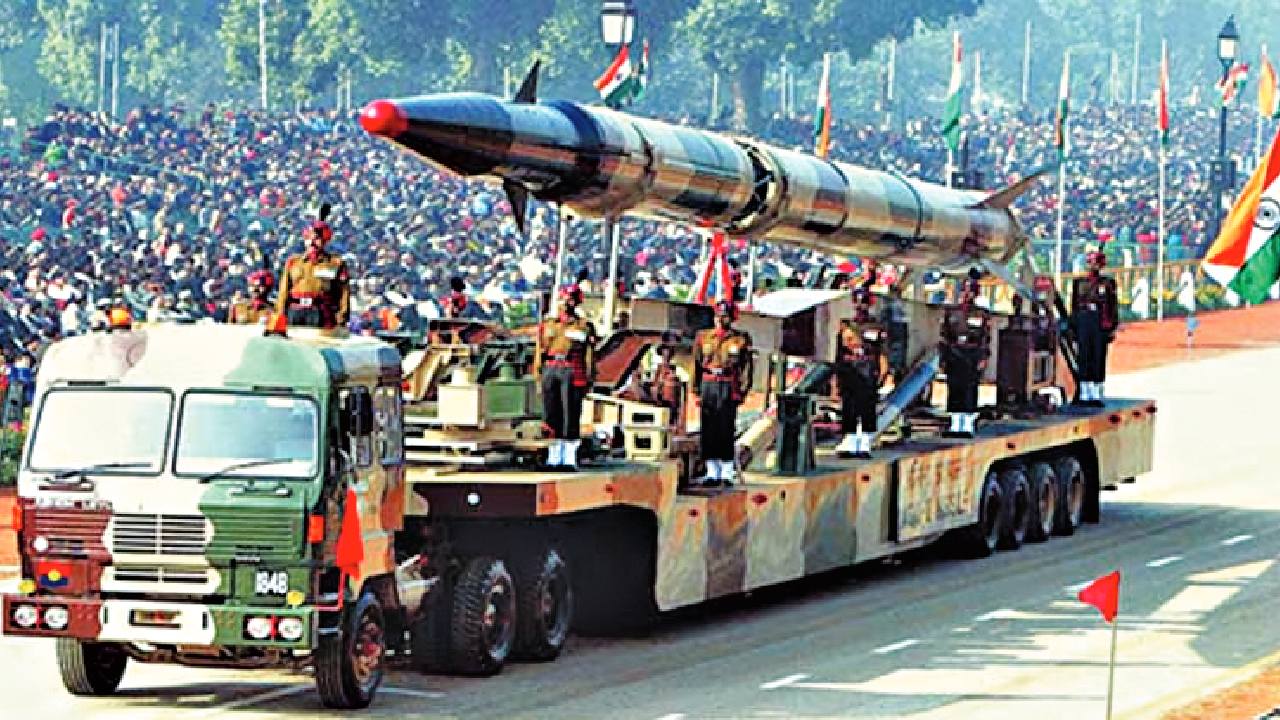
As the bugles sound across Kartavya Path for India’s 77th Republic Day, the world watches with a mixture of awe and calculation. The spectacle is more than a parade of mechanised columns and vibrant tableaux; it is the manifestation of the world’s oldest civilisation-rooted in a ritualistic ethos-marrying the robust economic and military prowess of the world’s largest democracy.
This year, however, the air in New Delhi carries a distinct weight. The celebrations are not merely commemorative; they are a defiant assertion of robustness in a world that has increasingly descended into what the Bharatiya Arthashastra tradition calls Matsya Nyaya-the “Law of the Fish”, where the mighty devour the small. The past few years have served as a grim reminder of India’s precarious geography. India’s neighbourhood witnessed a tragic collapse of governance and stability. India was yet again attacked by terrorist intentions originating from its western neighbour, and New Delhi, in a calculated and well-laid-out military operation, launched a retaliation. This year was the year of Operation Sindoor-a meticulously planned operation that achieved its targets with precision while striking a fine balance between national security and international law. Operation Sindoor was not a blind lashing out; it was a uniquely planned precision strike. It achieved its kinetic objectives while maintaining a fine balance between national security and the mandates of international law. By contrast, for many other international actors, geopolitical uncertainties have reached a new pinnacle since the Cold War era, with countries acting arbitrarily in their economic and strategic decisions, showing little regard for international legal systems and mechanisms.
This brings us to a haunting question: are we witnessing the reinstatement of Matsya Nyaya, or has the “Rule of the Fish” always been the reality, merely hidden under the polished garb of the “Rule of Law”? As India is a major player in this geopolitical game, India’s responses and role in this geopolitical uthal-puthal warrant analysis. The Bharatiya Arthashastra tradition discusses the evolution of Matsya Nyaya in the absence of an overarching danda (authority) or ruling power. Matsya Nyaya refers to a state of disorder in which the mighty fish feed on the smaller ones, making the powerful the ultimate survivors. In such a situation, justice is scarce, and the only way to uphold dharma is to survive and maintain order through reliance on one’s own strengths and capabilities. The Bhagavad Gita offers a profound lens here: (There is no official coronation for the lion in the forest. He attains leadership through his own prowess and strength.)
Just as the lion upholds order not by decree but by its innate strength, India realises that to protect its interests, and to protect dharma, self-reliance and strength are not ambitions but requirements. For India, Atmanirbharta (self-reliance) is not a mere slogan; it has been a necessary imperative. This journey towards self-sufficiency has spanned economic development, military preparedness, and human development indicators. We have learned, often through the cold indifference of the international community, that we cannot depend on external crutches to safeguard our interests. This philosophy is deeply ingrained in our history. When India conducted its first peaceful nuclear explosion, it was named Operation Smiling Buddha. The symbolism was deliberate: Buddha smiled because true peace is not the absence of power, but the possession of the power to destroy-and the wisdom not to use it arbitrarily. This forms the fundamentals of the constitutional ethos as well as the civilisational soul of the ideals that have sustained India, that is, Bharat.
Today, as we mark our 77th Republic Day, this posturing has matured. New Delhi speaks from a standpoint of strength, yet avoids the pitfalls of arrogance.
We recognise that Matsya Nyaya may be the permanent reality of the geopolitical arena. Consequently, India’s rise as a robust democratic republic is now inextricably linked to its civilisational ethics. As Indian Air Force aircraft will colour the sky in the tricolour on the 26th of this month, the role of New Delhi shall strengthen further as the fulcrum of regional and global stability. Our military strength, economic capital, and strategic relevance shall act as a cumulative force multiplier. We are no longer a ‘balancing power’; we are a ‘leading power’ that seeks to anchor the Global South in an era of uncertainty.
In the face of the ‘Rule of the Fish’, India offers a different vision: a Republic that is self-reliant enough to defend itself, yet rooted enough in dharma to advocate a world where the small are not devoured by the great. On this 77th Republic Day, the message is clear — India has found its strength, and in doing so, it has found its voice.
The journey so far...
1930 ,26January — Declaration of Purna Swaraj: The Indian National Congress formally proclaims complete independence from British rule.
1947,15 August — Independence of India: India attains freedom from colonial rule, ending nearly two centuries of British domination.
1946,9 December — Constituent Assembly Convenes: The Constituent Assembly meets for the first time to draft a Constitution that would reflect India’s democratic and plural character.
1947,29August — Drafting Committee Formed: BR Ambedkar is appointed as Chairman of the Drafting Committee. The post that would earn him the title of ‘Architect of Indian Constitution.
1949,26November — Constitution Adopted: The Constituent Assembly formally adopts the Constitution of India.
1950,26January — India Becomes a Republic: The Constitution comes into force. India becomes Republic & Dr Rajendra Prasad becomes the first President of free India.
1951,First General Elections: India conducts the world’s largest democratic exercise, makes it a thriving democracy.
1971,Abolition of Privy Purses: Constitutional changes reinforce the principle of equality by ending royal privileges of former princely states.
1975,The Emergency: A critical phase that tests constitutional limits and reaffirmed the importance of civil liberties and institutional checks.
2005 - Right to Information Act: Empowers citizens to demand transparency and accountability from the state.