The Arab-India partnership is on the cusp of a more strategic era: Dr Khaled Hanafi
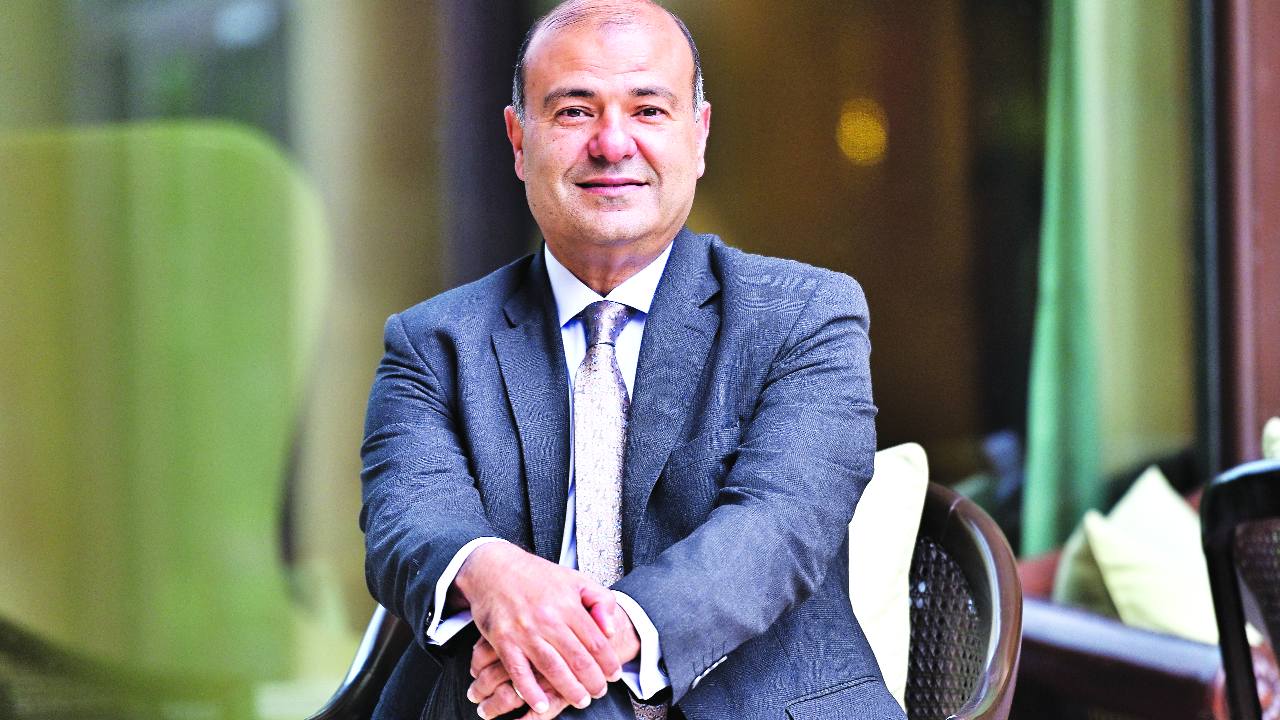
The relationship between the Arab world and India is strategic and diverse, and has been developed over the years through trade, investment, people-to-people exchanges, and mutual interests. Today, India is one of the most important partners for the Arab world, not only in trade but also as a force for technology, innovation, and economic change. On the occasion of the 77th Republic Day of India, Dr Khaled Hanafi, Secretary-General Union of Arab Chambers spoke with The Pioneer. Edited excerpts follow:
Trade Architecture: South-South Dynamics — How do Arab economies view India’s growing role in shaping a new South-South trade architecture amid global supply-chain fragmentation?
The Arab economies perceive the increasing role of India in the new global trade architecture as an opportunity and a strategic. In the face of supply chain fragmentation and rising protectionism in the markets of the West, India has stepped up its trade agreement initiatives, including the recent comprehensive trade agreements with Gulf countries and others.
For instance, India recently concluded a comprehensive Free Trade Agreement with Oman in December 2025, under which Indian exports enjoy zero duty access on over 98 per cent of Omani tariff lines, while liberalising close to 95 per cent of imports from Oman, marking a significant step towards deeper integration intoMiddle East value chains.
This is part of India’s strategy to diversify trade relationships southwards, and to achieve economic integration that would benefit producers in Asia, Africa, and the Arab world, providing stability for exporters in the face of global trade uncertainty.
Investment Corridors: Next Big Drivers — With sovereign wealth funds from the Gulf increasingly investing in India, what sectors do you see as the next big drivers of Indo-Arab capital flows?
The investment flows between the Arab sovereign wealth funds and India are increasing beyond the conventional energy and infrastructure investments into technology, manufacturing, and services. The bilateral interactions between India and Saudi Arabia, for example, have emphasised the cooperation in fintech, clean energy, AI, and advanced manufacturing, with Saudi Arabia reaffirming its commitment to long-term investments.
At the same time, the economic relations between the UAE and India, under the CEPA agreement, have opened up new investment channels, including innovation networks and start-ups. In addition, strategic investors such as DP World have committed multi-billion-dollar investments in India’s logistics and port infrastructure, solidifying the integrated supply chain corridors.
In the future, the most exciting sectors that will drive investment flows will be information technology, renewable energy and green hydrogen, digital infrastructure, life sciences, and sustainable industrial clusters that harness the power of Arab investments and the growth engine of India.
Energy Transition & Hydrocarbons Cooperation — As India balances energy security with decarbonisation, how can Arab producers reposition themselves as partners in green hydrogen and renewables rather than just hydrocarbons? And in the shorter run, how can Arab countries ensure a seamless supply of oil and gas for the ever-growing demand of India?
On one hand, India’s energy policy is geared towards ensuring the availability of oil and gas resources in the short term, while on the other hand, it is focused on promoting the use of low-carbon fuels. The Arab region is very important to India’s energy security, as the oil and gas-producing Gulf states account for about 35 per cent to 40 per cent of India’s oil and gas imports from the Arab region.
Concurrent with this, the new horizon of cooperation in hydrogen, solar, and renewable energy offers an exciting new frontier. The ambitious renewable energy plans of India to increase capacity over the next decade, combined with the capital and resource advantages of Gulf countries, can help develop a decarbonised energy value chain that can mutually benefit both regions.
The Arab countries can effectively reposition themselves as partners in the export value chains of clean energy, green hydrogen, and integrated power projects.
Food & Water Security: Technology Cooperation - Can deeper Indo-Arab collaboration in agri- technology and food processing address shared vulnerabilities in food and water security?
Food and water security are common policy concerns for both regions, which are marked by growing populations, climate change, and changing food demands. Indo-Arab cooperation in agritech, climate-resilient agriculture, and food processing technology can help both regions address challenges in productivity and supply chain efficiency.
For instance, the recent economic cooperation between Egypt and India focused on connecting entrepreneurship platforms and encouraging agritech partnerships that facilitate innovation and market access for small farmers.
Leveraging Indian strengths in agricultural research and digital farming, together with Arab investments, can deliver scalable solutions for food security and water management in both regions.
Digital Trade: Regulatory Harmonisation - What regulatory harmonisation is needed to unlock the full potential of digital trade, fintech and e-commerce between India and Arab markets?
To fully tap the potential of digital trade, fintech, and e-commerce between India and Arab markets, several areas of regulatory harmonisation are required. These include harmonization in cross-border data flows, cybersecurity standards, electronic authentication, and secure digital payment systems that conform to global best practices.
Initiatives that make it easier to mutually recognize digital identities and e-signatures, together with regulatory discussions on consumer protection and competition policy, will lower barriers and mobilize the private sector’s engagement in fintech and platform trade.
CEPA-related initiatives, such as specific startup series and innovation corridors, highlight the progress toward a more substantial digital economic integration.
“MSME Integration: Shared Growth & Jobs — How can MSMEs from India and the Arab world be better integrated into each other’s value chains, beyond large conglomerates, to address the ever-growing unemployment issue?
Enhancing MSME integration goes beyond trade headline numbers and requires systematic investment in entrepreneurship linkages, financial solutions, and joint business platforms. We are already witnessing progress in this area, such as platform interconnectivity between Indian and Egyptian startup ecosystems, which can be extended to the broader Arab region.
The Arab-India economic frameworks should focus on accessible credit, risk-sharing facilities, regulatory facilitation for cross-border activities, and capacity-building programs tailored to specific needs. This will enable MSMEs and startups to engage with regional value chains, thereby addressing unemployment and increasing job opportunities in both markets.
Closing Outlook
The Arab-India partnership is on the cusp of a more strategic era. Trade agreements, investment commitments in the billions, digital collaboration, and energy transition frameworks all point to a future of mutual growth. Our shared challenge and opportunity is to make sure that this partnership is inclusive, sustainable, and founded on shared prosperity for business communities and citizens on both sides.