FIFA 2026: The rise of a new Football world
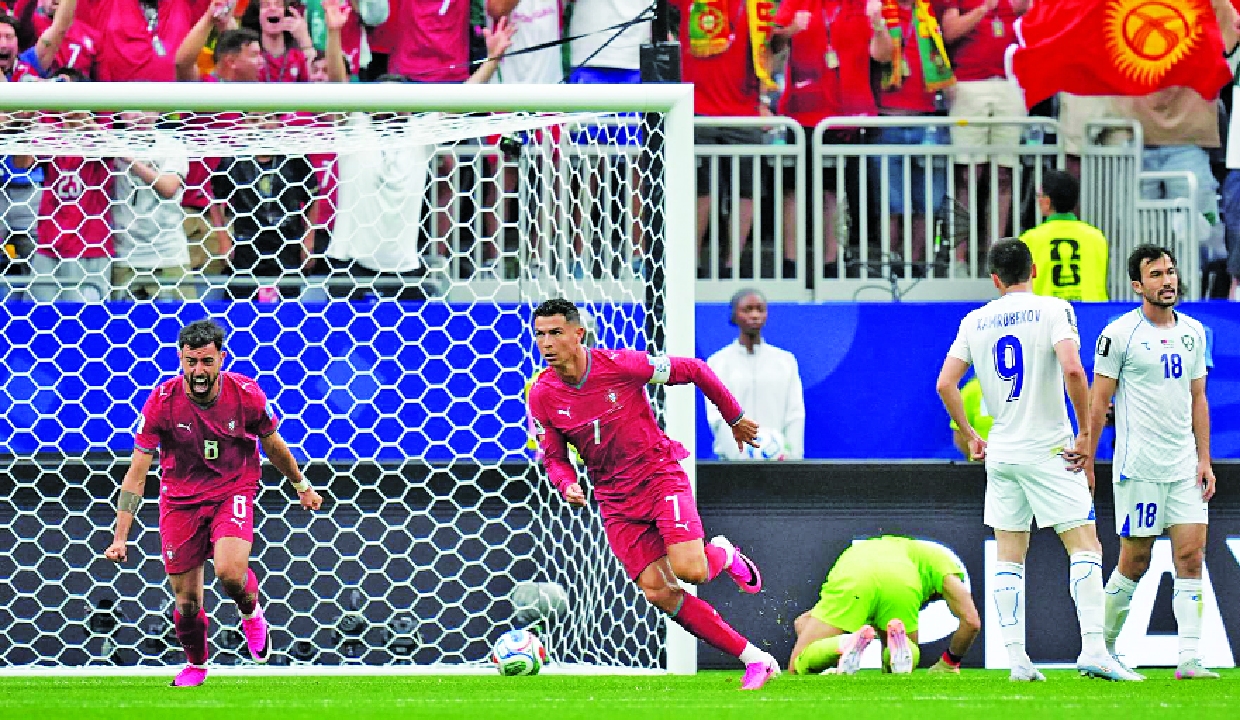
Football as a sport has undergone a strategic shift. This shift is exemplified through the upsets, victories and tenacity that audiences are witnessing globally. Football today has moved beyond being a traditional bastion of favored nations to becoming a global sporting festival. The performance of Cape Verde has created a football tsunami for pundits and strategists analyzing the emergence of a new brigade in the football fraternity. It has stunned viewers through its spectacular performance against Spain and Uruguay. DR Congo has emerged with a new killer instinct.
Other nations such as Egypt, Haiti, Jordan, Uzbekistan, Iraq and Canada have also given us a whiff of professionalism that has been unprecedented and unparalleled. All this proves that the experiment to expand FIFA to 48 nations has met with success, giving new hope and aspiration to countries across the world. In the past, we witnessed the "Mexican Wave", which became a natural sporting symbol at global events. FIFA 2026 has not been left behind. The tagline and narrative have echoed ideas such as "Global Audiences Pick", "Underdogs Spectacle" and "David V/s Goliath Contest."
Every edition of the FIFA World Cup has given us a splash of unusual excitement, dogged performances, underrated displays and the emergence of unrecognizable dark horses. The current edition has been no exception. FIFA 2026 has so far had several defining moments, particularly through the rise of teams that were earlier seen as peripheral to the football imagination. These teams have given traditional showstoppers a run for their money.
With expanded participation, football branding has also scaled new heights. Each participating nation has given audiences a fresh taste of professionalism, along with new dynamics of skill, speed and strategy. Established superpowers have witnessed bouts of struggle and underperformance, while newer entrants have used the platform to announce their arrival with confidence. Football has transcended boundaries, leaving a lasting legacy among admirers, supporters and audiences. FIFA 2026 has shown to the world a bold new experiment, showcasing the "Democratization of Football" with renewed confidence, vigor and vitality.
The recent implications of FIFA 2026 have gone beyond the field of play. The enlarged format has not merely increased the number of teams; it has expanded the emotional, commercial and geopolitical footprint of football itself. With 12 groups, a new Round of 32 and the possibility of third-placed teams progressing, every match has acquired greater tactical meaning and every goal has begun to carry qualification consequences. This has made FIFA 2026 refreshing because the tournament is no longer being viewed only through the lens of traditional football powers. The entry and performance of countries such as Cape Verde, Jordan, Uzbekistan, Haiti, DR Congo and others has been received with curiosity, admiration and surprise. Their inclusion has reinforced the belief that football's future lies in wider participation, not closed dominance.
The eastern part of the world is also emerging as an important zone to watch. Asian and Middle Eastern teams are bringing discipline, speed, compact defending and fearless counter-attacking football into the tournament's mainstream imagination. Japan, South Korea, Iran, Saudi Arabia, Iraq, Jordan and Uzbekistan have shown that the football map is gradually shifting eastward. FIFA 2026, therefore, is refreshing not only because it is bigger, but because it is more representative, unpredictable and truly global.
Communication, outreach and narrative building have created new frontiers at FIFA 2026. It has been a rare symphony of diverse stakeholders leading to "Communication Convergence." Global conversation across multiple platforms has unleashed the power of soft power in the narrative-building process. An unusual diplomacy has emerged across stadiums, where the dynamics of sport, identity and national pride are visible in real time. We have witnessed an interconnect unprecedented in scale and volume across stadiums, players, fan communities and digital platforms. This has brought to light the importance of using sport as a medium for building a cohesive communication environment between fans, brand identity, real-time dissemination and response. All this has led to a new phase of strategic global communication, influencing national networks, global visibility and soft power connectivity. Strategic communication through FIFA platforms is reinventing narrative discourse through different tools, platforms and engagement protocols.
FIFA 2026 has shown the importance of people-centric communication and narrative building in creating a perception where sport is not limited only to playing time. It is being utilized to build bonhomie through innovative storytelling and conversations that touch the heart and emotions, rather than relying on pure statecraft alone. Audience investment has been one of the critical pillars of FIFA 2026. The emotional journey of audiences has been relayed on a real-time basis to create an impact resting on authenticity, values, aspirations and hope. Technology, value systems and emotions have together shaped the benchmarks of audience engagement and excitement. FIFA 2026 has seen a Unified Voice across stadiums, where sports lovers have chanted triumph in unison or expressed disappointment with the resolve to fight back once again. It has created "Emotional Bonding" among people through common voices, shared memories and collective sporting imagination.
FIFA 2026 has also proved to be a new "Branding Vehicle", creating a multi-layered brand platform through visual visibility, thematic positioning, FIFA logos, sloganeering, theme song placement and corporate participation. Coupled with this is the presence of iconic players such as Lionel Messi, Cristiano Ronaldo and Kylian Mbappé.
FIFA has created new parameters and benchmarks for endorsements, consumer engagement and fan experiences. Loyalty, emotional participation and cultural association have become the new mantras of branding principles. Fan experiences have added to the color of branding, where the "product" is no longer just the match, but the complete universe of emotion, identity, visibility and audience acceptance created around it.
FIFA 2026 is not merely another edition of the World Cup; it is a statement on the changing geography of global football. It has shown that the sport is no longer confined to a few historic power centres, but is being shaped by new nations, new audiences, new markets and new aspirations. The expanded format has opened the gates for wider participation, while the performances of emerging football nations have given the tournament a new emotional and competitive pulse. As the world moves towards the knockout rounds, FIFA 2026 stands as a celebration of unpredictability, inclusion and global sporting democracy. It has reaffirmed that football's greatest strength lies not only in goals scored or trophies lifted, but in its power to unite identities, ignite hope and create a shared global imagination. This is the real legacyof FIFA 2026.