Fake medicine: A crime against humanity
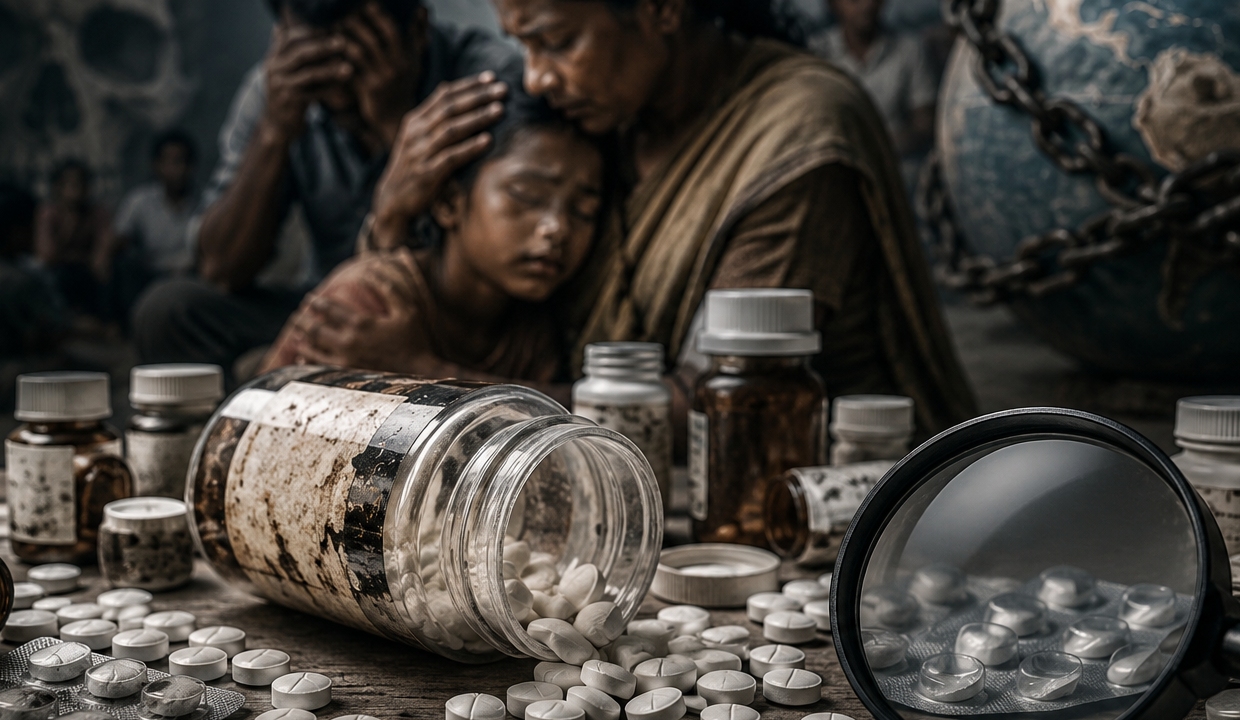
The recent bust of a large counterfeit-medicine operation near Bengaluru is not just another regulatory raid; it is a stark reminder that fake drugs are a slow-motion mass poisoning that demands the severest punishment and systemic reform. Karnataka’s Food Safety and Drug Administration (FDA) enforcement wing raided an unlicensed facility at a farmhouse in Bidadi (Ramanagara district) and seized medicines, expired stock, counterfeit labels, packaging material and an injection-filling unit valued at about `4.91 crore.
Officials allege that cheaper medicines sourced from other states were repackaged and relabelled to look like products of major multinational companies-including brands such as Pfizer-and then sold to hospitals and pharmacies at roughly 50 per cent below market price. Counterfeit medicines are not just another “white-collar” crime; they are a public-health assault. Patients in ICUs, cancer wards and chronic-disease clinics rely on exact dosages and sterility. Fake or substandard drugs can cause treatment failure, drug resistance, organ damage and death.
When criminals knowingly flood hospitals with relabelled injectables and critical medicines, they are effectively mass murderers operating for profit. Think of small children, old people and pregnant women being administered spurious medicines which are nothing less than poison. That moral culpability, multiplied across thousands of doses, meets the threshold of a crime against humanity. At the national level, regulators report that over 1.41 lakh drug samples were tested in 2025-26, with 3,012 declared “not of standard quality” and 283 spurious; 961 prosecution cases were filed in 2024-25 alone, a five-year high.
This itself shows the magnitude of this crime taking place across the country. In June 2026, CDSCO flagged 159 substandard drugs, and over five years more than 3,500 prosecution cases have been registered. Yet detections of spurious drugs have fallen even as prosecutions rise, suggesting either better legal follow-through or, worryingly, that many fakes never reach testing labs.
The Bengaluru case exposes systemic gaps: unlicensed farmhouse units operating with relabelling lines, interstate sourcing, and deep discounts to hospitals indicate weak last-mile oversight and possible collusion. Past incidents-from fake cancer and diabetes medicines in Delhi (`4 crore seizure in April 2024) to counterfeit antibiotics in Delhi-UP and large cough-syrup scandals-show a pattern of recurring networks with limited deterrence. Enforcement agencies deserve credit for the Bidadi raid, but the existence of such a sophisticated unit points to intelligence failures, fragmented state-centre coordination, and insufficient routine inspections of high-risk places.
Without real-time traceability, whistleblower protections, and harsher penalties, raids remain reactive. It is high time to make end-to-end track-and-trace mandatory for critical injectables and oncology drugs. The perpetrators of such heinous crimes deserve no mercy and should get the taste of their own medicine with the severest punishment.