Did you know?
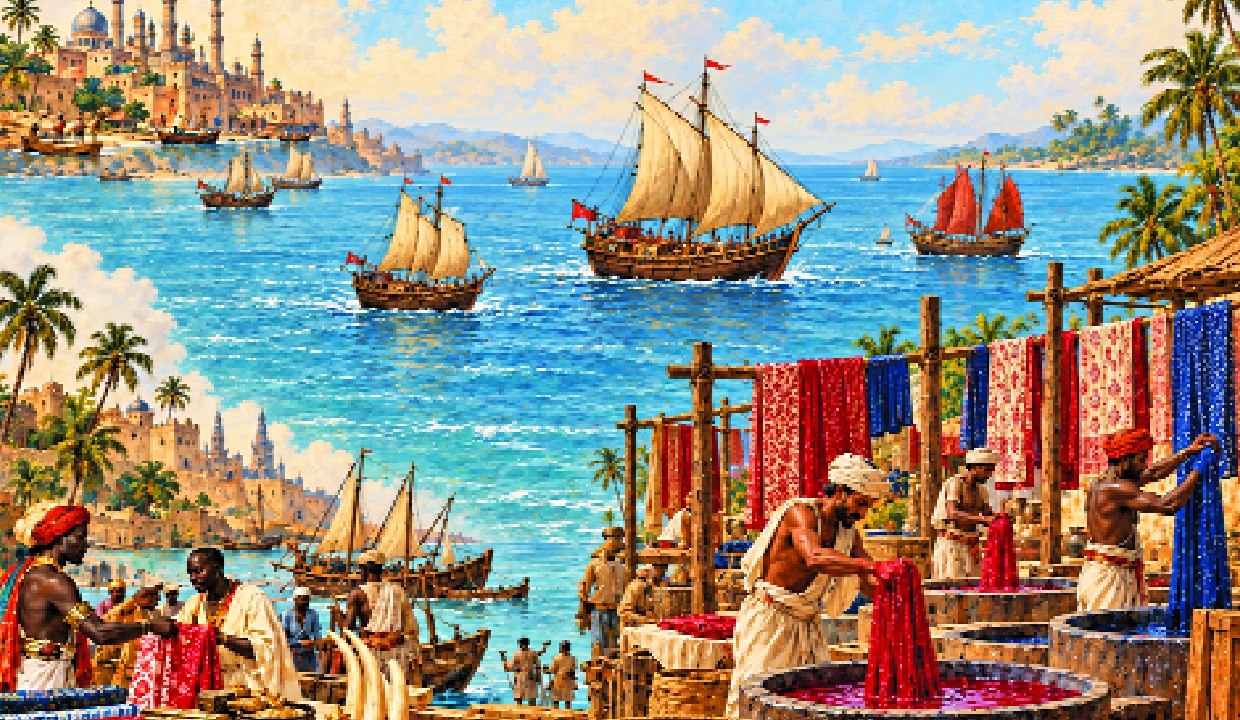
Indian textiles enjoyed extraordinary demand across Europe, Southeast Asia, Central Asia and the Middle East. By around 1500, Indian cotton cloth was central to commercial networks extending from Japan and Indonesia in the east to Ethiopia, Egypt and West Africa in the west. Major centres of production included Gujarat, the Coromandel Coast and, later, Bengal. European travellers were struck by the refinement of these fabrics. Writing in 1598, the Dutch traveller Jan Huygen van Linschoten noted that Indian cotton cloth was highly prized in Asian markets and, in some contexts, valued even above silk.
In parts of Africa, Indian cloth functioned as a medium of exchange, with "Guinea cloth" used in transactions involving commodities such as gum and ivory. In Southeast Asia, Indian textiles were widely accepted in commercial dealings, while in Europe they helped shape an emerging culture of fashion and consumption.
India's real advantage lay in technical expertise. Indian dyers had mastered sophisticated mordant-dyeing techniques and durable red dyes that European producers struggled to reproduce despite access to similar raw materials. In this sense, India helped define the benchmark against which Europe's own cotton industry developed.