Delimitation: A constitutional necessity
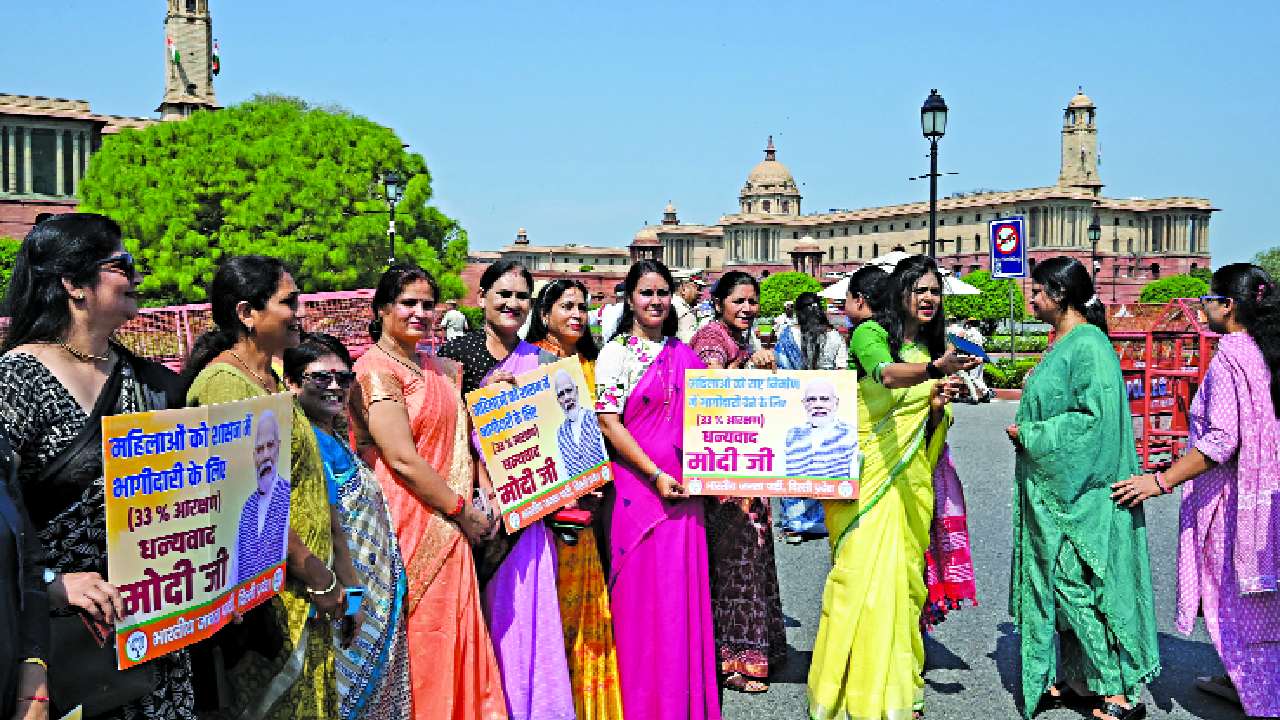
The debate sparked by Sonia Gandhi’s recent article on women’s reservation reflects a familiar pattern in Indian policymaking — where long-overdue structural reforms are questioned less on substance and more on process. A closer reading of the criticism directed at the Modi government suggests that much of it rests on mischaracterisation rather than fact.
Delimitation as ‘the real issue’: A flawed premise
The attempt to frame delimitation as the “real issue”, distinct from women’s reservation, is fundamentally misplaced. Delimitation is not a political choice but a constitutional necessity, intended to ensure that representation reflects current demographic realities. Periodic recalibration of constituencies is intrinsic to democratic fairness. To argue that linking women’s reservation with this process creates uncertainty is to overlook this constitutional logic. On the contrary, integrating women’s reservation with delimitation ensures structural coherence. Implementing reservation on an outdated constituency framework would risk distortion and imbalance. Aligning the two processes strengthens institutional credibility and ensures that representation is both fair and contemporary.
The charge of “politicisation” is equally unconvincing. The Indian National Congress itself presided over years of indecision on women’s reservation and failed to bring any clarity to delimitation-related questions. To now describe a structured approach as “uncertain” appears less like concern and more like retrospective justification.
At its core, delimitation is about fairness. Integrating women’s reservation into this exercise is not distortion — it is alignment with its purpose. Since delimitation is historically tied to census cycles to ensure accuracy, embedding reservation within this framework ensures that the reform is meaningful and durable rather than symbolic. What is being portrayed as a tactic is, in reality, a constitutionally sound and administratively efficient approach.
Decisiveness versus delay
The allegation that the government is acting in haste does not withstand scrutiny. Women’s reservation is not a sudden policy initiative; it is a reform that has remained pending for decades. Successive governments debated it but failed to implement it. What is being witnessed now is not speed, but the translation of long-standing intent into action. To label this as haste is to invert reality. Decisive governance may appear abrupt to those accustomed to prevarication, but that does not make it procedurally flawed.
While consultation remains important, over-consultation cannot become a pretext for paralysis. Democracies require a balance between discussion and decision. Endless consensus-building, without closure, undermines public trust in governance. At some point, leadership must move from dialogue to delivery-and that is precisely what is happening. The broader approach reflects a governance model anchored in clarity and momentum. A country of India’s scale cannot afford to indefinitely delay transformative reforms in pursuit of perfect agreement. Progress inevitably demands a degree of decisiveness.
Census delays: Context matters
Concerns around the delayed Census must be understood in context. The disruption caused by the pandemic affected large-scale administrative exercises worldwide. India’s delay is part of a broader global pattern, not an isolated lapse. Crucially, the commitment to conduct the Census remains firm. The process has been deferred, not abandoned. When dealing with a foundational exercise that informs policy, representation, and resource allocation, accuracy must take precedence over speed.
A hurried Census-especially one involving complex data considerations-would risk compromising its credibility. Reliable data is essential for legitimate outcomes. Ensuring that integrity is maintained is not administrative hesitation; it is responsible governance.
Federal balance concerns: Premature anxieties
The argument that delimitation could shift the balance of power among states is, at this stage, purely speculative. It projects hypothetical outcomes onto a process that is governed by constitutional principles and institutional safeguards. Delimitation is not an arbitrary exercise; it is designed to ensure equitable representation based on current realities. Suggesting that it will inherently disadvantage certain states risks undermining trust in the very mechanisms that sustain democratic balance.Reforms of this nature cannot be indefinitely stalled due to hypothetical fears. While concerns can be discussed, they cannot become a veto against progress. The focus must remain on ensuring fair representation, not on conjectural political outcomes.
It is also evident that such arguments shift attention away from the core reform-women’s representation — and towards peripheral uncertainties. This risks creating confusion and diluting the significance of a long-pending change.
The role of Parliament
Calls for greater deliberation would carry more weight if avenues for debate were unavailable. In reality, the government has convened a special session of Parliament, providing the highest democratic platform for discussion and scrutiny.
If the opposition is serious about engaging, Parliament is the appropriate forum. Raising objections outside while hesitating within raises questions about intent. Deliberation is essential, but so is decision-making. For decades, women’s reservation remained stuck in discussion without implementation. What is unfolding now is a necessary shift-from prolonged debate to concrete action.
A democracy cannot function on perpetual indecision. It must balance consultation with closure. To resist decisions in the name of endless debate risks ensuring that no reform is ever realised. The present debate is not merely about procedural disagreement; it is about whether India is prepared to act on long-articulated commitments. Linking women’s reservation with delimitation is not political manoeuvring but institutional alignment. Moving forward now is not haste, but overdue resolve. The criticism, therefore, appears less about safeguarding process and more about resisting momentum. But reforms of this scale cannot remain indefinitely deferred. They require clarity of intent and courage of execution. The Women’s Reservation Bill and delimitation mark another manifestation of PM Modi’s political willpower and decisive leadership-which were conspicuously absent in the UPA era.
The writer is a national spokesperson of the BJP and an acclaimed author ; views are personal