Decisive Initiative of BBSSL: Towards self-reliance in the seed sector
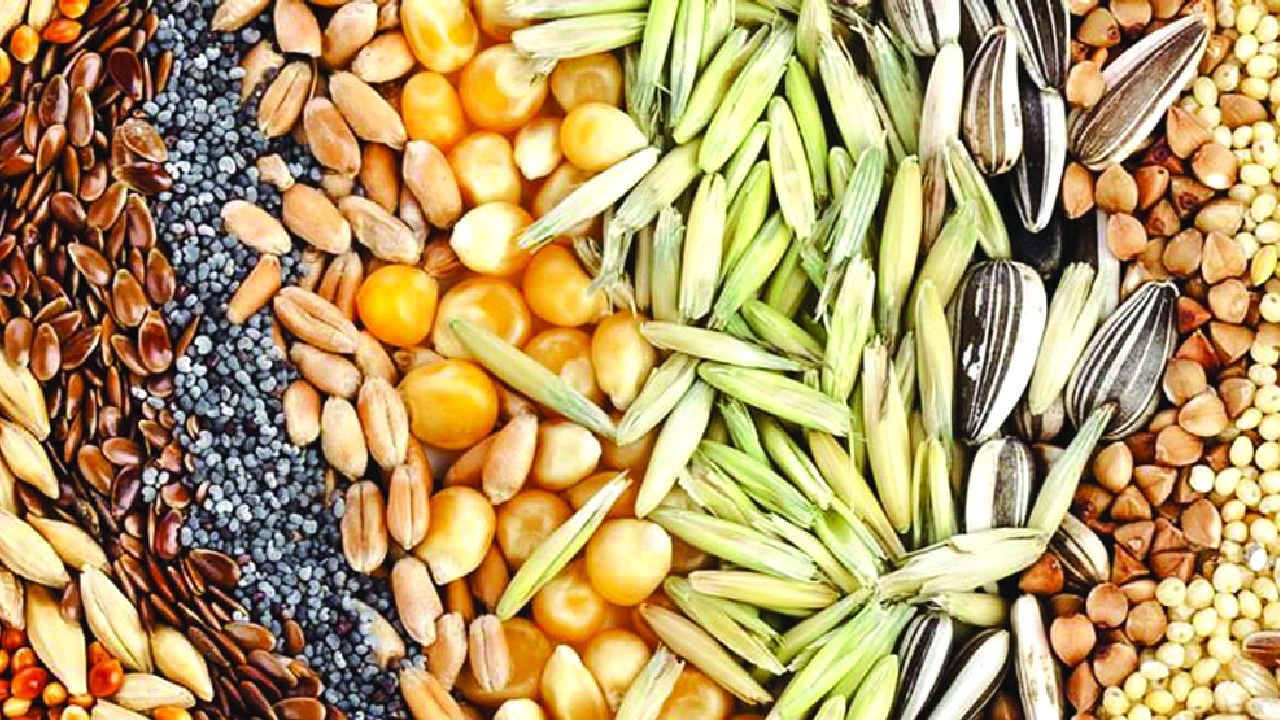
India is an agrarian country where a large section of the population depends directly or indirectly on agriculture. With changing times, agriculture is no longer merely a means of livelihood; it has become a central pillar of self-reliance, food security, and rural economic development. In any agricultural system, seed is considered the most critical input because crop productivity, quality, and farmers’ income are directly dependent on seed quality. At the global level, the seed industry is undergoing rapid technological transformation. Advanced biotechnology, artificial intelligence-based agriculture, and organised supply chain systems are taking this sector to new heights. Regions such as North America lead the industry, while the Asia-Pacific region, particularly India, has emerged as a rapidly growing and significant market.
In this context, the establishment of Bharatiya Beej Sahakari Samiti Limited (BBSSL) is regarded as a historic initiative. This institution is not merely a commercial organisation but a national cooperative movement rooted in farmers’ participation, aiming to make the country self-reliant in seed production and to provide high-quality certified seeds to farmers. BBSSL has been formed in alignment with the vision of “Self-Reliant India” and “Prosperity through Cooperation.”
Global seed market and India’s position
In 2024, the global seed market was estimated at approximately Rs 4 lakh crore. North America leads the sector due to precision farming, advanced machinery, and strong supply chain infrastructure. Meanwhile, within the Asia-Pacific region, India is emerging rapidly as a key seed market. India’s seed industry was valued at Rs 67,858 crore in 2024 and is projected to reach Rs 1,65,295 crore by 2033. An estimated annual growth rate of around 10.5 per cent highlights the sector’s strong potential. Diverse agro-climatic conditions, contributions from research institutions, and government support are accelerating this growth. However, India continues to face challenges such as counterfeit seeds, limited access to quality seeds, and inadequate modern storage facilities. The establishment of BBSSL represents a structured and coordinated effort to address these issues. BBSSL was established with an initial capital of Rs 250 crore, contributed equally by five major cooperative institutions-Indian Farmers Fertiliser Cooperative Limited (IFFCO), Krishak Bharati Cooperative Limited (KRIBHCO), National Agricultural Cooperative Marketing Federation of India (NAFED), National Cooperative Development Corporation (NCDC), and National Dairy Development Board (NDDB). Its authorised share capital has been fixed at Rs 500 crore. Operating under the brand name “Bharat Beej,” the organisation promotes indigenous seed production to reduce dependence on imports.
It is a national-level multi-state cooperative seed society, with its registered office located at WTC Tower, New Delhi. Its membership extends from Primary Agricultural Credit Societies (PACS) to state and national-level cooperative institutions. Breeder seeds for production are sourced from the Indian Council of Agricultural Research (ICAR), state agricultural universities, and other national and international institutions.
Objectives and operational framework
The primary objective of BBSSL is to provide farmers with high-quality certified seeds, promote domestic seed production, and reduce import dependence. The organisation places special emphasis on developing climate-resilient and disease-resistant seed varieties. Strengthening farmers economically by integrating cooperative institutions into the value chain is also a key priority. Additionally, increasing the Seed Replacement Rate (SRR) and Variety Replacement Rate (VRR), along with ensuring transparency through a QR code-based traceability system, are among BBSSL’s core strategic initiatives.
Strategic operations and achievements
BBSSL procures breeder seeds from reputed research institutions, produces foundation and certified seeds, and supplies them to farmers. The organisation invests in research and development to develop drought-tolerant, pest-resistant, and high-yielding varieties capable of addressing climate change challenges. Through the expansion of its distribution network, BBSSL is ensuring the availability of certified seeds even in remote regions of the country. From a statistical perspective, the organisation has made notable progress. So far, it has received more than 35,524 membership applications and issued 34,078 share certificates. In the financial year 2025-26, it distributed 2,70,167 quintals of seeds, generating an operational revenue of Rs 177 crore. During Kharif 2025-26, seed production was carried out over 11,125.68 hectares, resulting in 1,99,501 quintals of output, while for Rabi 2025-26, production of 7,04,388 quintals is estimated. The organisation has set an ambitious target of achieving a turnover of Rs 25,000 crore by 2035.
Vision 2035: A Self-Reliant Seed Powerhouse BBSSL aims to become one of the world’s top five seed-producing organisations by 2035. To achieve this, it is expanding research based on artificial intelligence and genomics, strengthening local production systems, reducing import dependence, organising farmer training and demonstration plots, and adopting environmentally sustainable production practices.
Conclusion
Bharatiya Beej Sahakari Samiti Limited (BBSSL) represents a historic and transformative initiative in India’s seed industry. Through its cooperative-based model, the organisation is providing a new direction to agricultural productivity, food security, and rural prosperity. By integrating quality, transparency, technology, and cooperation, BBSSL is emerging as a strong pillar in realising the vision of a self-reliant India.
The writer is Joint Secretary, Ministry of Cooperation; views are personal