COP30 ends in disappointment with weak commitments
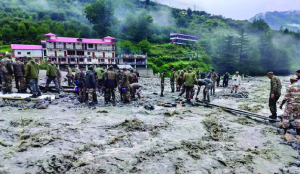
A week before COP30 began in Belém, Cyclone Montha formed in the Bay of Bengal and struck the Indian states of Telangana, Andhra Pradesh and Odisha, damaging infrastructure and disrupting lives and livelihoods. Around the same time, Hurricane Melissa originated in the Atlantic Ocean and caused widespread destruction in Jamaica and Cuba. Melissa was one of the strongest Category 5 storms ever recorded, with wind speeds approaching 300 km per hour, knocking out power to nearly three-quarters of the island nation. The hurricane then moved towards Cuba, causing extensive damage, and later to Haiti, where 20 people died, before passing across the Bahamas and near Bermuda. In addition, Typhoon Kalamegi made landfall in Vietnam after killing 200 people in the Philippines and Vietnam. By the time COP30 reached its concluding stage, flooding in Vietnam had taken 41 more lives.
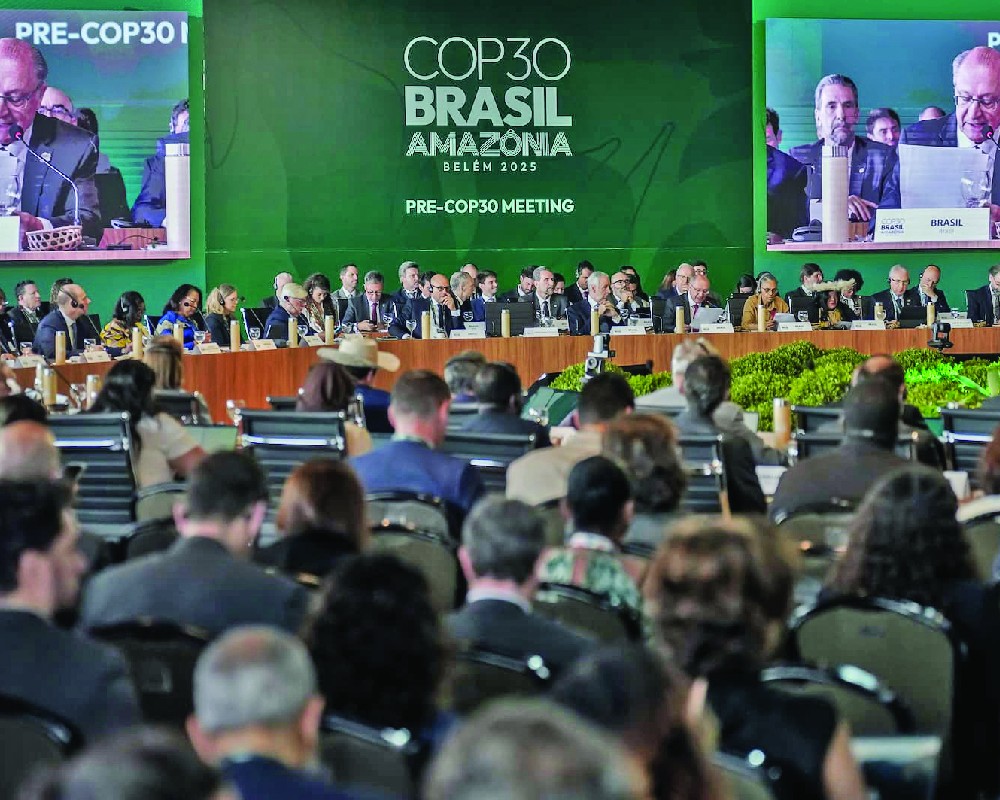
Amid so many climate disruptions occurring across the world, COP30 ended with significant disappointment. Brazil’s proposal — backed by nearly 90 countries — to lay down a roadmap for transitioning away from fossil fuels, along with the host nation’s proposal to end deforestation, failed to reach consensus.
The conference was overshadowed by the absence of leaders from the three top greenhouse-gas-emitting countries. Climate change driven by greenhouse gas emissions has warmed oceans and intensified storms. The most damaging of these gases is CO?, a non-reactive compound that remains in the atmosphere for hundreds of years. The poorest countries — especially those located between the Tropic of Cancer and the Tropic of Capricorn — are suffering the most.
They have been pleading for assistance for years, but wealthy nations have failed to meet their pledges to fund mitigation and adaptation efforts. Donald Trump, in both his first and second terms as US President, withdrew from the Paris Climate Accord and did not provide funds to help poorer nations decarbonise their economies or repair climate-related damage. How can he aspire to a Nobel Peace Prize when his actions have left two-thirds of the global population exposed to increasingly destructive climate catastrophes?
More than Trump’s claims, the Nobel Committee should consider the state of the global environment. Scientific communities and the United Nations have repeatedly warned that if global warming exceeds 1.5°C above pre-industrial levels, life on the planet will face unprecedented disruptions. These warnings have been ignored by Trump, who calls climate change a hoax, dismantles green-energy transition projects and expands fossil fuel production. He praises “clean, beautiful coal” and increases fossil-fuel output to keep inflation in check. How can the Nobel Committee overlook actions that directly contradict scientific advice?
The conference was held at the mouth of the Amazon in Belém, a region of immense environmental significance. The Amazon rainforest is considered the lungs of the world, and its preservation is essential for the survival of humankind. Assured access to concessional finance for adaptation and affordable green technology for mitigation are major concerns for the Global South. The scale of the Amazon can be understood from the fact that India’s forests store 7.2 gigatonnes of CO? equivalent, while the Amazon stores 56.8 gigatonnes. Forests cover 31 per cent of the world’s land, amounting to 4.14 billion hectares. Brazil holds 12 per cent of global forests, while Russia, China, Canada and the Democratic Republic of Congo hold 20 per cent, 12 per cent, 9 per cent and 8 per centrespectively. If forests were protected and allowed to regenerate without human pressure, they could absorb nearly 14 gigatonnes of CO? annually — equal to one-third of yearly global greenhouse-gas emissions.
Recognising this potential, the host country proposed an initiative to end deforestation. Although only a beginning, the proposal aimed to stop the destruction of tropical forests. The Tropical Forests Forever Facility (TFFF) was launched to mobilise $125 billion through public and private funding to reward countries that conserve forests and regenerate barren areas to expand tropical forest cover. It would be managed by the World Bank as a multilateral trust fund. The challenge arises when fossil fuels lie buried beneath these forests, creating incentives for their destruction through extraction.
Of the 74 countries with TFFF-qualifying forests, 68 have fossil fuel deposits beneath them. There are 317 billion tonnes of potential CO? from recoverable reserves and more than 4.6 trillion tonnes if all deposits were exploited. Most of these are concentrated in India, China and Indonesia. TFFF cannot succeed unless there is a clear commitment not to extract fossil fuels beneath forests. A similar mechanism must also apply to non-TFFF countries. Boreal forests also cover major fossil fuel reserves, particularly in Russia and Canada. Therefore, an agreement is needed to prioritise forests located above fossil fuel deposits and ensure they remain off-limits for exploitation. Indigenous people from the Andes in Ecuador, the Amazon in Peru, and activists from Brazilian forests and savannas — young and old, women and men — participated in the conference in large numbers. They raised their voices against the destruction of their territories through oil drilling and gold mining and demanded the protection of the world’s most biodiverse forests. Indigenous communities in the Amazon are known to clear trees and expand agriculture for crops such as soybeans and maize. They will protect the forests if compensated adequately.
Another proposal by the host country that failed to appear in the final agreement was the roadmap for phasing out fossil fuels. Around 90 countries from Africa, Asia, Latin America and the Pacific, along with EU member states and the UK, supported the phase-out plan. Although the EU called the roadmap a red line, leading economies such as India, China, South Africa and Russia informed the presidency that they would not accept it. Cambodia also joined this coalition. The initiative sought a binding global agreement to halt new fossil fuel expansion, ensure an equitable phase-out and scale up financial mechanisms to support vulnerable nations. Developing countries require technology transfer, climate finance and capacity-building support for a fair energy transition. There was strong support from both the Global South and Global North for a fossil-fuel phase-out, but the final agreement omitted it. This became the biggest fault line at COP30.
COP30 increased the annual climate-finance target from $100 billion to $300 billion by 2035. Developed countries will raise their grant contributions from $40 billion to $120 billion, while the remaining $180 billion — mobilised by developed countries — will come as loans to developing nations for mitigation and adaptation. This could push vulnerable countries into unsustainable debt and harm their economies.
Other issues that reached consensus and were included in the agreement are the health action plan, the Santa Marta Conference (co-hosted with the Netherlands on April 28-29 2026) to discuss global fossil-fuel phase-out, the Open Planetary Intelligence Network, the global ethical stocktake, and the declaration on hunger, poverty and people-centred climate action and adaptation. These have limited significance at the international level. The concern remains that transporting 50,000 delegates from all parts of the world and meeting their logistical needs in Belém may have generated more carbon emissions than the reductions achieved at COP30.
The writer is Retired Head of Karnataka Forest Force and presently teaches Economics in Karnataka Forest Academy; views are personal