BRICS comes of age in New Delhi
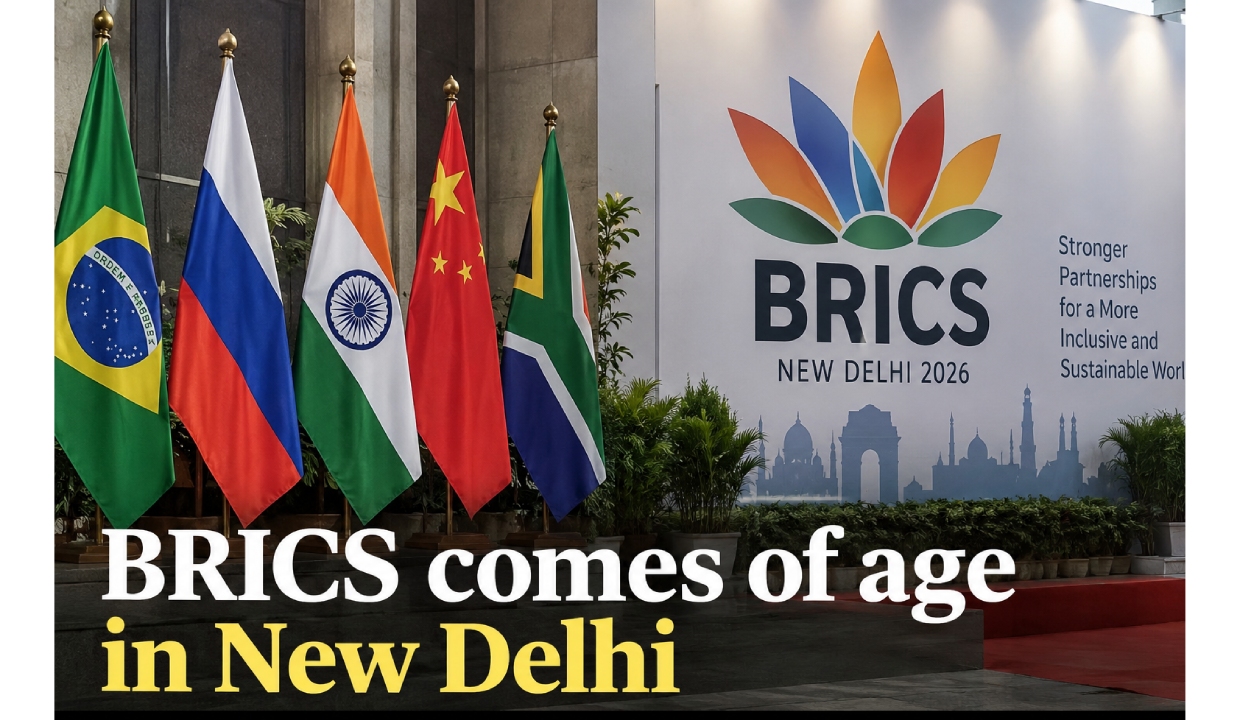
When eleven leaders gathered at Bharat Mandapam on September 12-13 and unanimously adopted the New Delhi Declaration, the achievement lay less in what was said than in the fact that anything was agreed at all. Twenty years after BRICS foreign ministers first met in 2006, the grouping now runs from Brazil to Indonesia, accounting for roughly 40 per cent of world GDP and over a quarter of global trade. Getting Iran, Saudi Arabia and the UAE to sign one sentence on West Asia — agreeing only to voice regret over unprovoked hostility in general terms — took Sherpas working through the night. That the declaration survived intact rather than being watered down is itself evidence that BRICS is maturing.
The substance backs this up more than sceptics expected. Gone is talk of a single BRICS currency; in its place sits a narrower, more workable agenda — greater use of national currencies in intra-BRICS trade, interoperable cross-border payment systems, and early conversation on linking central bank digital currencies.
This is de-dollarisation by increment rather than by declaration, and it is more credible for it. Alongside sits a familiar BRICS wishlist, now with more institutional backing: reform of the IMF, World Bank and UN Security Council to reflect where economic weight actually sits; a Partnership on the New Industrial Revolution pushing Industry 4.0 cooperation; a digital public infrastructure repository; and a shared, if vague, push for trustworthy AI governance that keeps rule-making out of Western hands alone. Counter-terrorism language — an India priority since the Pahalgam attack — was reinforced, alongside Delhi’s own proposal for a Seafarers' Emergency Support Network: modest, but genuinely useful rather than symbolic.
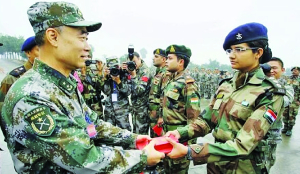
The subplot mattered as much as the text. Xi Jinping’s arrival — his first visit to India in seven years, with a delegation reportedly twice the size of his 2019 trip — turned the summit into cover for an India-China reset neither side could easily stage alone. That Modi and Xi could meet, agree their differences must not be allowed to harden into disputes, and still sit under one declaration alongside Washington’s rivals and partners, is precisely the kind of ambiguity BRICS exists to hold.
Yet the caveats are real. BRICS still cannot agree on Ukraine, still has no enforcement mechanism for its own declarations, and still leans on studied vagueness to keep eleven governments with barely reconcilable worldviews inside one tent. China’s economy still dwarfs the rest of the grouping combined, keeping alive the old question of whose bloc this really is. A single currency remains, sensibly, off the table.
What New Delhi has shown is not that BRICS has arrived as a rival to the G7, but that it has learned to do something more useful: hold together its own contradictions long enough to get practical work done. That is not dominance. It is maturity of a limited but real kind — and for now, it may be the only kind on offer.