BRICS and the paradox of strategic autonomy
BRICS wants to build a multipolar world less dependent on Western power. Yet its own members remain deeply dependent on competing centres of technology, finance, energy, markets and security. The New Delhi summit exposed the uncomfortable gap between the rhetoric of autonomy and the realities of interdependence
Nearly 50 pages of the Delhi Declaration were adopted at the New Delhi BRICS summit last week, while the Houthi advance in the Red Sea and its seizure of major positions around a critical maritime chokepoint were pulling the world’s supply chains towards another dangerous rupture. The Trump administration’s military intervention in Iran, carried out with Israeli support, has demonstrated how rapidly the language of sovereignty can collide with military power, while the Houthi advance towards Bab el-Mandeb has given Tehran-aligned forces greater leverage over one of the world’s most consequential maritime passages. Globalisation has created prosperity by concentrating dependence along a handful of geographical, technological and financial arteries. Once those arteries become instruments of power, economics and geopolitics become inseparable.
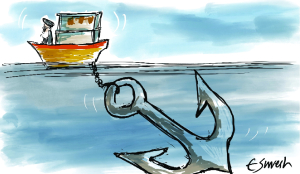
The more important question is what kind of multipolarity BRICS is actually trying to construct. The declaration calls for reform of global institutions, condemns unilateral sanctions, demands greater representation for developing countries and promotes resilient supply chains and technological cooperation. But the central weakness of BRICS remains obvious. It is much easier to agree that the existing system is unfair than to agree on what should replace it. Its members can unite against sanctions, Western dominance and technological exclusion, but become considerably less comfortable when the question turns to whose technology, capital, markets and security interests will define the alternative. BRICS invokes strategic autonomy as though it were an established reality, yet its continuing dependence on external markets, technologies, finance and security structures exposes the concept, for now, as more a rhetorical aspiration than genuine collective autonomy. In that sense, BRICS increasingly embodies Broken Rhetoric, Incomplete Collective Strategy, projecting an ambition for strategic autonomy that its members have yet to acquire the collective capacity to realise. The organisation does not function because its members agree. It functions because they have discovered that disagreement need not prevent them from sitting in the same room.
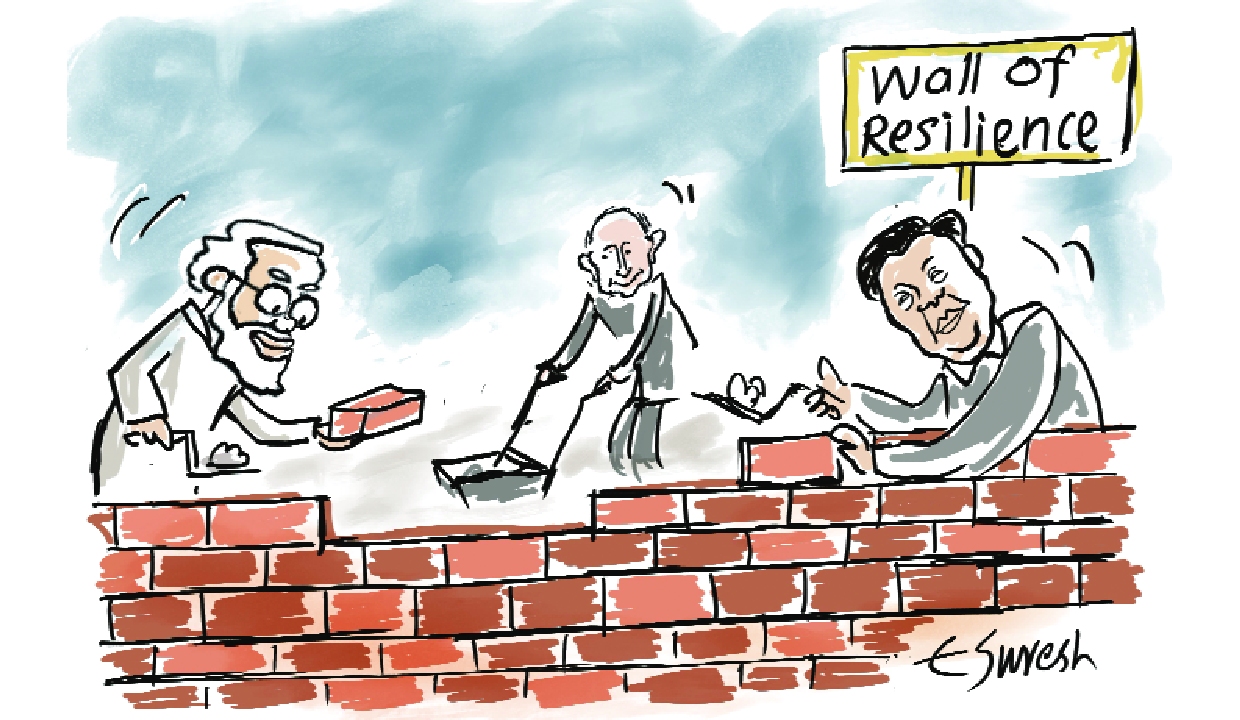
Xi’s offer of cooperation in open-source artificial intelligence, smart manufacturing and advanced technological training was an unmistakable statement about where Beijing believes future influence will come from. Modi’s warning about the weaponisation of technology and critical minerals was equally significant. A country can escape dependence on Western finance and still become dependent upon Chinese manufacturing. It can embrace artificial intelligence while remaining dependent on foreign computing infrastructure, semiconductors and technical standards. An alternative order cannot be built on dependence merely because the identity of the dominant supplier has changed.
Developing countries deserve greater representation in institutions such as the United Nations Security Council and the international financial system, but replacing Western predominance with a more dispersed distribution of power does not automatically produce justice. China can challenge Western technological dominance while creating dependencies of its own. Russia can challenge the Western security order while pursuing its own interests. India can advocate for the Global South while protecting its own priorities. Iran and the UAE can sit inside the same organisation while pursuing sharply different regional strategies. That is why the Iran-UAE contradiction at New Delhi was so revealing. Both had to find language sufficiently broad to coexist within the same declaration, with the call for maximum restraint in the Middle East reflecting the limits of what the organisation could agree upon. BRICS has therefore discovered that its value may lie less in forcing countries to agree than in giving adversaries an institutional space in which they can disagree without walking away.
The same tension is visible in India’s own regional position. New Delhi wants to speak for the Global South while China is steadily increasing the economic, technological and strategic choices available to India’s neighbours. South Asian states increasingly have more than one external partner from which to seek infrastructure, finance, technology, trade and defence cooperation. India’s traditional predominance is therefore being challenged, not necessarily destroyed. The uncomfortable consequence is that the philosophy giving India greater room to manoeuvre internationally also gives its neighbours greater room to manoeuvre around India.
BRICS can condemn unilateral sanctions while its members remain deeply integrated into Western markets. It can demand technological sovereignty while remaining dependent on foreign intellectual property and advanced components. It can advocate resilient supply chains while geopolitical conflict repeatedly exposes their vulnerability. It can speak about peace while containing states engaged in wars or regional confrontation. And it can describe itself as a vehicle of Global South solidarity while the interests of its largest members collide with one another.
American technology, Chinese manufacturing, Russian energy, Gulf capital, Iranian geography, Indian markets, African resources and Asian shipping routes are becoming components of a fragmented system of power. The Houthi advance around Bab el-Mandeb demonstrates that geography can be as consequential as finance or semiconductors. The challenge for the Global South is therefore not simply to oppose the West, but to construct a system in which dependence is reduced without replacing one hierarchy with another.
That is the paradox at the heart of BRICS. It was born from the conviction that the world should not be governed by a small group of established powers, yet its members are themselves becoming centres of power capable of producing new dependencies. It promises multipolarity because unipolarity is inadequate, but multipolarity can produce rivalry without justice, fragmentation without freedom and competition without genuine autonomy.
The Global South cannot secure its future merely by choosing which great power to depend upon. The real test is whether it can acquire the capacity to depend less on all of them. That struggle is now being fought in semiconductor factories, currency markets, ports, pipelines, mineral mines, artificial-intelligence laboratories and the narrow waters of Bab el-Mandeb. BRICS represents the Global South’s desire to escape dependence while simultaneously revealing how difficult genuine independence has become. That may be the most important truth to emerge from New Delhi. BRICS may not yet be the alternative world order its advocates promise, but it has become the arena in which the struggle over whether such an order is even possible is being fought.
In May 2026, BRICS foreign ministers met in India and failed to produce a joint communiqué because members could not agree over the war involving Iran, the United States and Israel. Iran wanted the organisation to condemn the conflict and accused the UAE of involvement. The UAE rejected those accusations and defended its sovereign right to respond to Iranian attacks
The author is a columnist based in Colombo; Views presented are personal.