Bastar: Unfolding a new chapter beyond Naxalism
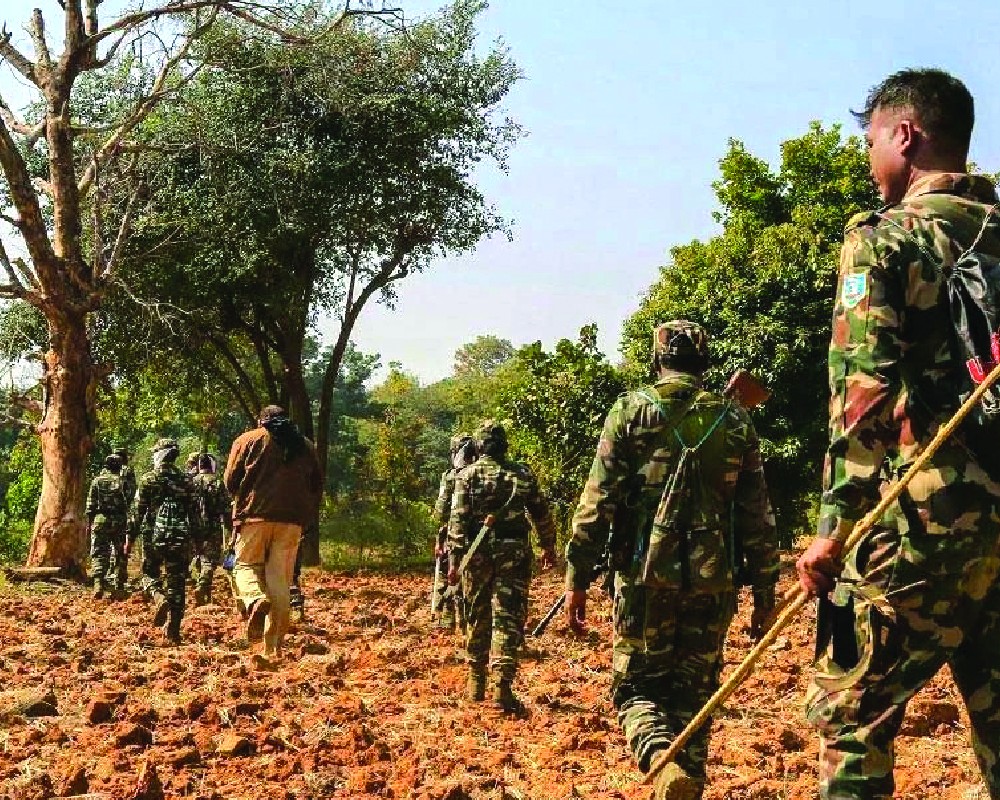
When leadership truly possesses the will to solve a problem, even the toughest challenges eventually bow down. The remarkable decline of Naxalism the country is witnessing today is a direct outcome of the unwavering resolve displayed by both the Central and State governments. Permanent peace is now gaining ground in Bastar, which was once known as the epicentre of Naxalism.
Faced with relentless administrative and strategic efforts, Naxal cadres are now surrendering or being eliminated in security operations. On the other side, villages that were cut off from progress for decades are finally witnessing the presence of roads, electricity, healthcare, education, and other essential facilities. The same tribal population that past governments and Maoists misled and kept away from democracy is today stepping into the mainstream of development. Even though Naxalism is now on its last breath, its decades-old wounds are deep and painful. The killing of hundreds of soldiers and innocent civilians, the deprivation of entire generations of development, and the perpetuation of an atmosphere of fear are all horrific legacies of Naxalism. In the early 2000s, Naxalism had reached its peak. Then Prime Minister Manmohan Singh described it as the “most serious internal security threat” to India, yet due to political hesitation and lack of resolve, successive Congress governments failed to take decisive action.
During those years, Naxal terror spread beyond Bastar to Rajnandgaon, Kawardha, and Gariaband. Their goal was to hoist the red flag from Dantewada to Delhi, which was actively supported by an urban ideological network. But the then governments ignored this serious threat, as a result of which about 200 districts came under the grip of Maoist terror and development was badly affected. In contrast, the current Modi government is moving forward with the firm vision of making India a developed nation by 2047. The government clearly understood that the country could not achieve full development by leaving Naxal-affected areas to fend for themselves. The results of strong will and firm action are evident today.
Today, not only Bastar but the entire Dandakaranya region is eager to write a new chapter of development. This region is linked to Lord Rama’s exile. Rampal village in Bastar, the Ramaram Temple (Sukma), Rakashahara, and Kanger Valley National Park in Bastar are also associated with Lord Rama. Bastar is now freeing itself from the ravages of Naxalism. The glory of Lord Rama is being re-established here once again. Under the guidance of Prime Minister Shri Narendra Modi Ji and Union Home Minister Amit Shah Ji, the Vishnu Deo Sai government is committed to establishing Ram Rajya here. That is the difference between governance driven by intent and governance weakened by indifference. But it is unfortunate that the opposition of the country is also looking at this success through negative lenses. Some politicians are now promoting the idea that the fight against Naxalism is only an excuse to acquire land for industrial interests. Even more dangerous, some political rhetoric portrays Naxalites as protectors of tribals and forest preservers. This is a clear attempt to keep alive a brutal, violent ideology-a very dangerous sign for the future.
Nurturing violence in the name of Hidma Some people have emerged as sympathisers of Hidma, the Naxalite commander recently killed in an encounter. Some are even trying to portray him as the protector of Bastar. But there is a need to be cautious of this political move. Hidma was not innocent; his hands were stained with the blood of hundreds of people. To glorify such a violent figure or portray him as an ideal or a symbol is tantamount to fostering Naxalism. How can this notorious killer be a role model for Bastar?
What is even more concerning is when senior leaders like Digvijay Singh attempt to question the government regarding Hidma. During his tenure as Chief Minister, Bastar was known as the “Kalapani Punishment” in undivided Madhya Pradesh, and during that period, Naxalites strengthened their roots here. It was during Digvijay Singh’s tenure, in 1995, that many young people, including Hidma, turned to the path of red terror due to government neglect. We firmly believe that Lord Birsa Munda, the great warrior Gundadhur, Raja Gend Singh of Paralkot, and Shaheed Veer Narayan Singh are the true role models of tribal society. The tribal community cannot accept violent extremists like Hidma or Basav Raju as their heroes, because their tradition has revered these great heroes for centuries.
This irresponsible politics is dangerous for the future. If we recall the root causes of the rise of Naxalism in Bastar, the most prominent reason was the exploitation and continued neglect of tribal people by the government machinery. The Congress governments of the time were indifferent not only to Bastar but to all tribal areas across the country. Taking advantage of this vacuum, Maoists from Andhra Pradesh succeeded in establishing a foothold here. Whether it was the murder of Bastar Maharaj Pravirchand Bhanjdeo on 25 March 1966 at the instigation of the State Congress government, or the police atrocities, these incidents created a deep gulf of distrust between the government and the tribals. It was in this gap that the Maoists deepened their roots and operated a parallel regime for decades. It is worth noting that Pravirchand Bhanjdeo was immensely popular among the tribals in Bastar. He was one of the first kings to sign the Instrument of Accession before Sardar Vallabhbhai Patel, which led to his close relationship with Patel Ji.
Bhanjdeo had also helped merge some other princely states, which is why he had become a thorn in the side of a large faction within the Congress. It is no secret that, after Patel Ji’s death, Congress governments after independence attempted to downplay his contributions. Bhanjdeo’s differences with the Congress leadership resulted in his resignation from the MLA post and his departure from the party. After this, his differences with the Congress grew, ultimately leading to the police brutally firing and killing this great leader near the Durbar Hall. The Congress is repeating this historical mistake even today by spreading confusion about the elimination of Naxalism.
Therefore, today it is essential to be vigilant against this new “illusionism.” In this crucial phase of eradicating Naxalism, the nation must stand united, not attempt to undermine this national achievement through false illusions and political spectacle.
The writer is, State Vice President, BJP Chhattisgarh; views are personal