Assassination bid on Farooq Abdullah exposes grave security lapses
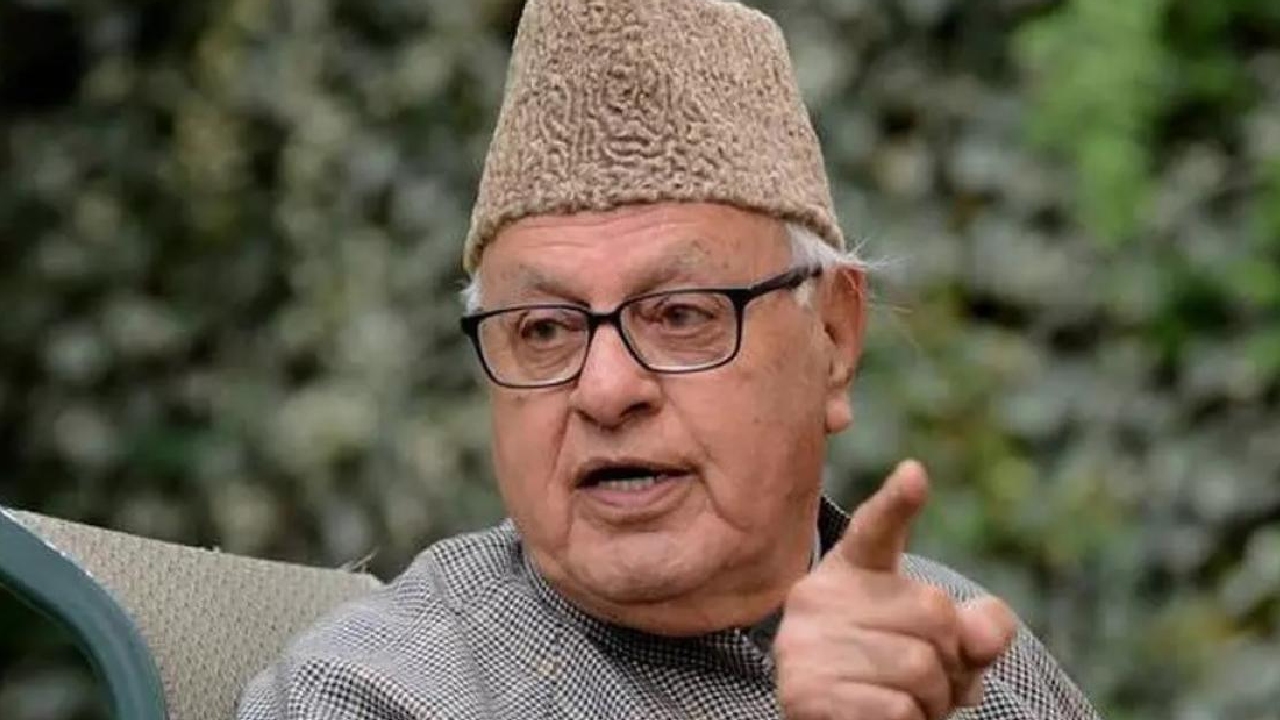
On March 11, 2026, former Chief Minister of Jammu and Kashmir (J&K) and President of the Jammu & Kashmir National Conference (JKNC), Farooq Abdullah, survived an assassination attempt on his life at a marriage function in Jammu’s Greater Kailash area.
In the CCTV footage released soon after the attack, as soon as Dr Farooq was leaving and started walking towards the exit, the assailant came from behind and was seen pulling out a pistol while moving closer to Farooq Abdullah from behind and firing a shot at him while he was leaving the event, along with Deputy Chief Minister Surinder Kumar Choudhary, Chief Minister Omar Abdullah’s adviser Nasir Aslam Wani, and other party leaders. The alert security guards overpowered the assailant and took control of his hand and the weapon the moment he fired while deflecting the shot.
Farooq Abdullah has Z+ security (the highest level of protective cover in India) and is among the most highly protected politicians in the region, prompting some politicians to describe the incident as a “major security lapse”. The security personnel from the close protection team overpowered the assailant to foil a bid to end the former Chief Minister’s life. The assailant was eventually overpowered by the security personnel of the Deputy Chief Minister, Surinder Choudhary, who detained the attacker and transported him in a security vehicle for handing him over to the police. No doubt, it was a close shave. A miracle has saved him.
The police deployment was poor and an investigation should be conducted to get to the bottom of this very disturbing security lapse. Why was the facility of frisking unavailable at the event? There are more questions than answers at the moment, including how someone was able to get this close to a Z+ NSG-protected former Chief Minister. How such a breach could occur despite 88-year-old Farooq Abdullah being a Z+ protectee, the highest level of civilian security in the country that entails round-the-clock protection by the elite National Security Guard (NSG) commandos along with local police deployment, is a serious concern.
The function was attended by many VVIPs, including sitting High Court judges, retired Chief Justices, and High Court judges. There was no bandobast of local police, when the SP South, Dy SP, and even the concerned Station House Officer were conspicuous by their absence from the banquet hall. Those entrusted with maintaining law and order must be held accountable.
While such condemnation and demands for accountability are necessary, the incident should not be viewed as an isolated act. It is gravely shocking and disturbing that if Farooq Abdullah, a towering national leader, is not safe in this environment, then who else can be? Although First Information Report No. 29/2006 has been registered under Section 109 of the Bharatiya Nyaya Sanhita (BNS) (attempt to murder) read with Section 3/25 of the Indian Arms Act, and a seven-member Special Investigation Team (SIT) headed by DIG JSK Range Shiv Kumar Sharma has been constituted by the Inspector General of Police, Jammu, to conduct a thorough probe into the assassination bid on National Conference President and three-time former Jammu & Kashmir Chief Minister Farooq Abdullah, the investigation is being conducted scientifically and technically in a satisfactory manner, but unfortunately an independent committee headed by a retired High Court judge has not been constituted to thoroughly investigate the serious and grave security lapse by the local police and fix accountability for appropriate action.
The Home Minister, who personally spoke to Farooq Abdullah immediately after the assassination bid, checked on his well-being. The Home Minister assured Farooq Abdullah that the motive of the assailant would be fully ascertained and the investigation would be transparent.
Although His Excellency the Lieutenant Governor of the Union Territory of Jammu & Kashmir, Manoj Sinha, spoke with National Conference President and former Chief Minister Farooq Abdullah following the assassination attempt on the veteran leader during a wedding function in Jammu, and assured that a thorough investigation would be carried out into the incident, further directing the Director General of Police, Nalin Prabhat, to leave no stone unturned in getting to the bottom of the matter and ensuring that appropriate action follows swiftly, the security establishment needs to be instructed to guarantee airtight security arrangements for Farooq Abdullah. These assurances are significant, but the gravity of the incident requires that the inquiry into the security lapse itself be placed beyond all doubt.
While the registration of the FIR and constitution of the SIT are necessary and welcome steps, they address only one part of the issue, namely the criminal investigation into the assailant, his motive, his background, and the larger circumstances of the attack. An equally serious and distinct issue arises regarding the apparent security failure and the adequacy of local police arrangements at the venue.
The disturbing question that still cries for an answer is this: how could an armed individual come so close to a Z+ protectee and discharge a firearm at a public function attended by several dignitaries? If such a breach could occur in relation to Farooq Abdullah, then the matter transcends an individual incident and becomes one of institutional failure demanding urgent review and accountability.
The incident, therefore, cannot be viewed as an isolated act alone. It raises grave concerns regarding:
- Venue sanitisation and access control;
- Frisking arrangements and weapon screening;
- Local police presence and bandobast;
- Co-ordination between central protection personnel and local police;
- Perimeter security and crowd regulation; and
- Emergency reaction protocols in mixed civilian-VVIP gatherings.
The fact that the assassination bid was ultimately foiled does not dilute the seriousness of the lapse; rather, it highlights how narrowly a tragedy was averted. A failed assassination attempt on such a heavily protected senior leader is itself evidence of a deeply troubling breach in the protective security architecture.
In these circumstances, a separate and independent inquiry should be constituted to examine the entire chain of security arrangements and to fix responsibility wherever negligence, omission, or dereliction of duty is found.
The incident has also compelled an immediate reassessment of existing VIP security protocols. Given the extraordinary nature of the breach, the competent authorities may also consider a review and strengthening of Farooq Abdullah’s already existing security arrangements, including stricter venue access control, enhanced local co-ordination, and any other additional measures deemed necessary by the security establishment. Recent reporting indicates that the Home Ministry is reviewing VIP security protocols following the incident.
An attack on Farooq Abdullah is not merely an attack on an individual politician; it is an attack on a senior public figure whose life and role are deeply intertwined with the political history of Jammu and Kashmir. The people are entitled to safety, stability, and confidence in the institutions entrusted with maintaining law and order. Those entrusted with such responsibility must be held accountable where serious lapses are revealed. Therefore, responsibility of the concerned local police and supervisory officers must be fixed after due inquiry, and
Farooq Abdullah’s security arrangements must be immediately reviewed and strengthened so as to guarantee airtight protection against any recurrence.
The writer is a Senior Advocate and President of the National Conference Legal Wing (headed by Dr Abdullah); views are personal