Army revises social media policy
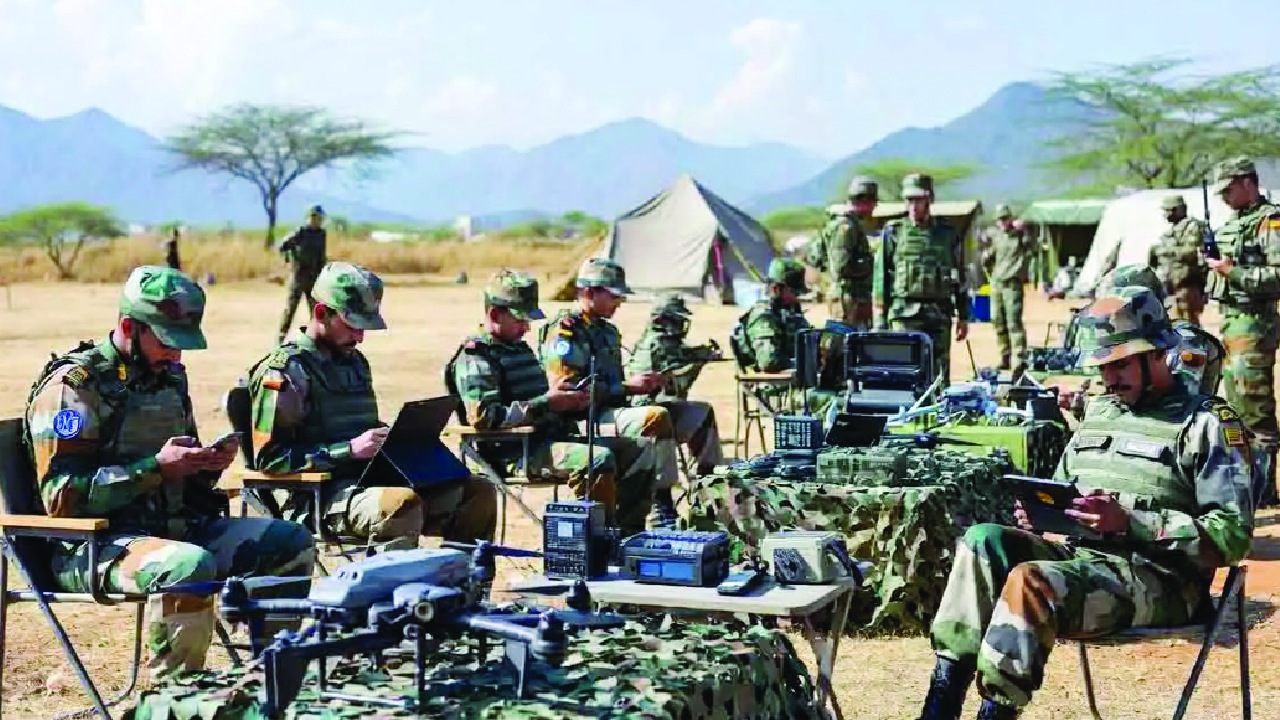
The Army has amended its social media policy for Instagram, WhatsApp, LinkedIn and others, allowing the personnel to have access to Instagram, but strictly in a view-only mode.
Under the revised guidelines, the soldiers and officers are permitted to view and monitor content on Instagram solely for information awareness.
Posting, commenting, sharing, reacting or sending messages on the platform remained prohibited. For messaging apps such as Skype, WhatsApp, Telegram, and Signal, personnel are allowed to exchange unclassified information of a general nature, but only with known contacts, sources said, adding that users are responsible for ensuring they are sending information to the correct recipient. The move, however, comes with strict guidelines, allowing personnel to only view and monitor content while prohibiting posting, commenting, or online interaction, to safeguard operational security.
The directive has been issued by Army Headquarters through the Directorate General of Military Intelligence (DGMI) branch and has been implemented with immediate effect.
The move also reflected the Army’s attempt to balance digital awareness with operational security, allowing soldiers to stay informed without exposing themselves or their units to potential vulnerabilities.
For platforms such as YouTube, X (formerly Twitter), Quora and Instagram, only passive use for accessing information and knowledge is allowed. The Army has described the permitted access as “passive participation,” making it clear that engagement of any kind is not allowed.
The letter issued by the army authorities states that, with immediate effect, the use of Instagram, for purposes of viewing and monitoring only, by personnel of the Indian Army has been permitted. “No comments, views will be communicated on Instagram,” the letter stated.
Further, listing the limited use of social media, the army has instructed to use Skype, Telegram, WhatsApp, and Signal for the exchange of unclassified information of a general nature, contents permitted.
The letter further stated that the contents were to be exchanged only with known persons, with the responsibility of correctly identifying the recipient lying with the user.
For microblogging platforms X, Quora, Instagram, and YouTube, only passive participation to obtain knowledge or information has been permitted. The new guidelines restrict the uploading of user-generated content and messages.
The army has authorised its personnel to use LinkedIn, the employment-oriented social networking service primarily used for professional networking and career development. However, the platform is to be used only for uploading a resume for obtaining information on potential employees and employers.
However, prior permission must be sought from the Directorate General of Military Intelligence (DGMI).
The recent amendment also advises the personnel not to access or use generic sites, those with cracked, pirated software, free movie, Torrent & VPN Software,’ and web proxies, anonymised websites, chat rooms and file transfer sites. “The cloud data storage sites may also be used with extreme caution,” the letter read.
Existing social media guidelines have been updated to formally include Instagram under restricted-use platforms. The Army has also reiterated its warning against the use of VPNs, torrent websites, cracked software and anonymous web proxies, citing security risks linked to such tools.
The move reflected the Army’s attempt to balance digital awareness with operational security, allowing soldiers to stay informed without exposing themselves or their units to potential vulnerabilities.
These instructions have been issued to every army unit and department, sources said, adding the aim is to allow soldiers to view and monitor content on social media for their own awareness and information gathering.
Soldiers will also be able to flag fake or misleading posts that they find to senior officers.
The army has periodically issued guidelines on using social media platforms like Facebook, X (formerly Twitter), and Instagram. Restrictions were previously imposed on their use for security reasons.