A world without Kissinger’s back channels
We are living in darkness while believing we possess light. We are entrenched in disorder, deceived into thinking that international law, respect for judicial authority, or even the concept of an “orderly” world exists. We are confused, stranded on a precarious portal between illusion and reality, living in an interregnum where some will pass through history with legacy, while others perish, leaving nothing but despair, agony, and the hubris of leaders who have perpetually clung to power.
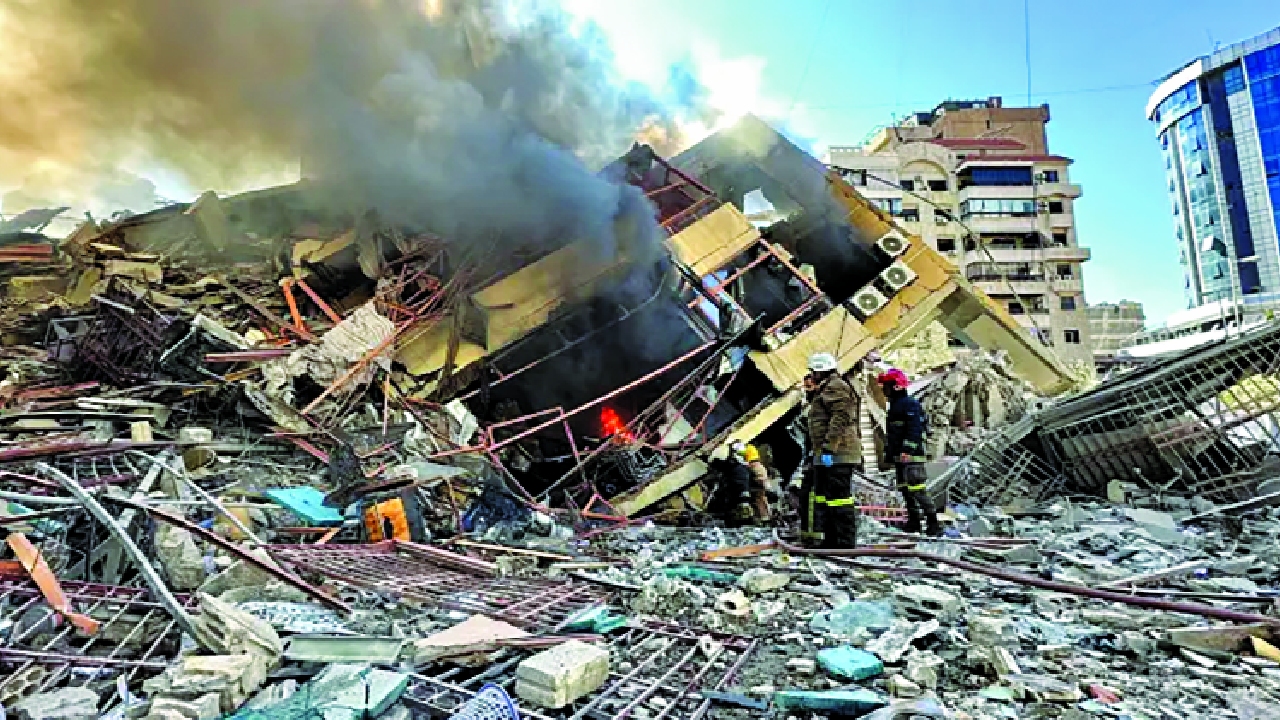
Meanwhile, the United States — whose military budgets dwarf comprehension-spends millions on luxury indulgences while preparing the machinery of indiscriminate death. Recent reports revealed that the Department of Defense (War) spent $2 million on Alaskan king crab, $6.9 million on lobster tails, $15.1 million on rib-eye steak, and hundreds of thousands on doughnuts, ice-cream machines, and sushi tables. Nearly $100,000 was spent on a Steinway & Sons grand piano for the Air Force chief of staff’s home, while Apple devices, Herman Miller chairs, and lavish furniture accounted for hundreds of millions more. And to digest these excesses, they unleash bombs that obliterate innocents, killing schoolchildren in Iran, and call it “decapitation”.
Who can justify this? Who can stand for it? The modern theatre of war is a shocking carnival of unaccountable power. A conflict in Iran spiralled into chaos, bolstering the political fortunes of Donald Trump, who, in public and private, sought exits to rationalise the mayhem. When the Iranian warship IRIS Dena was attacked in Sri Lankan waters (EEZ), over 130 sailors perished, and Trump’s generals allegedly expressed a morbid glee, describing the slaughter as “fun”. This is no Hollywood scene; this is the reality of twenty-first-century warfare, where extrajudicial justice is applied at whim, judicial process is hollowed out, and even local courts are mocked, as seen in the exposure of the Epstein files.
In this void of discreet strategy, of subtle diplomacy, the world is poorer. And as I wrestled with this horror, I returned to one of my favourite-and yet the most annoying-scholars and diplomats: Henry Kissinger. The world is missing him. Kissinger, for all his moral ambiguity and Machiavellian manoeuvres, operated in a sphere that demanded secrecy, subtlety, and, above all, back-channel communication. He understood, with ruthless clarity, that public posturing and moral grandstanding are liabilities in the orchestration of power. He once noted, “We are not that moral, except for Ziegler,” acknowledging the calculated deception necessary to manage war and diplomacy. He was conscious of the stakes of secrecy, telling Pakistan’s ambassador in 1971, “I just wanted to tell you for your own information and slight peace of mind that we are working very actively on getting military equipment to you-but for God’s sake don’t say anything to anybody!”
Tom Wells’ newly published The Kissinger Tapes: Inside His Secretly Recorded Phone Conversations offers a revelatory glimpse into this era. The book demonstrates that Kissinger understood the messy machinery of power, and the peril of transparency in a world that does not reward discretion. “If it is leaked we can have it denied. Have it done one step away,” Nixon instructed, exemplifying the strategic use of deniability-an art that modern administrations have lost. Today, everything is on display. Every threat, every posture, every escalation is staged for cameras and social media. The result is appalling: diplomacy is paralysed, adversaries emboldened, allies terrified, and civilians are left as collateral in a theatre of performative statecraft.
Kissinger’s conversations reveal the cold logic that once underpinned American policy. On Vietnam, he observed that U.S. forces were not designed for the war they faced: “They are not designed for this war... In fact, they are not designed for any war we are likely to have to fight.” Nixon’s impatience with military caution was palpable: “You’ll hit something,” he ordered, impatient with any delay. The brutality was deliberate. The psychological impact of bombing was calculated: “It is going to break every window in Hanoi.” And yet, every act of destruction was framed in the language of leverage and negotiation. Kissinger reflected, “All they understand is brutality or deviousness,” capturing the dark pragmatism of an era in which moral considerations were subordinated to outcomes.
Kissinger’s mastery of clandestine diplomacy was ruthless, precise, and unapologetic. On the India-Pakistan conflict of 1971, he was explicit: “We can’t be neutral. Of course we’re not neutral. Neither are the Indians. They’re always neutral against us.” His actions were designed to tilt outcomes without public exposure. He advised feeding the press selectively: “I will just step into his briefing,” recognising the power of narrative control without sacrificing operational secrecy. And in moments of existential risk, he remained brutally honest about the stakes: “Starve them out if necessary,” he told Nixon regarding North Vietnam. The language is shocking, even repulsive, but it is candid, unvarnished, and strategic.
The consequences are both predictable and terrifying. When there is no subtlety, no back channel, no trusted whisper between statesmen, diplomacy is replaced by bluster. Threats become commitments by default. Negotiation is abandoned for posturing. Allies are alienated; adversaries are emboldened. Civilian populations are killed without pretext beyond headline value. Kissinger’s dark pragmatism, which once shielded innocents while advancing national interest, is now absent, and the result is a theatre of atrocity in plain view.
The Kissinger tapes also reveal the depth of human calculation behind power. He understood ambition, loyalty, and fear as instruments. “I am not going to wind up as an Ehrlichman — an errand boy in the White House,” he told himself, acknowledging his own indispensability. He observed, “They are trying to deprive you of any success,” understanding that enemies and friends alike operate on incentives and resentment. His manipulation of allies and adversaries alike-his delight in exposing bureaucratic rivalries, his ability to reward intransigence, his willingness to abandon those who failed the test of strategy-illustrates a world in which power is preserved not through virtue but through clarity, courage, and cunning. In reading Wells’ book, one realises that Kissinger was both brilliant and morally flawed, terrifying and indispensable. “I think the motives were honourable,” he claimed when justifying his wiretapping and surveillance, yet his honesty never obscured his ruthlessness. He knew that the pursuit of national interest is rarely moral, often horrifying, and always human. His secrecy, his calculations, his manipulation of perception, his ability to operate two steps ahead, made the United States formidable even in the darkest of crises.
The Kissinger tapes remind us, with unsparing clarity, of what we have lost: the art of the back channel, the subtlety of influence, the moral ambiguity of statecraft wielded with skill. What Kissinger once achieved through secrecy, calculation, and the delicate balance of threats and concessions is now impossible, replaced by a performative brutality, an administration untrained in subtlety, and a theatre in which every action is interpreted, judged, and weaponised against both friend and foe.
We are missing Kissinger. The absence of back channels, of hidden dialogue, of carefully calibrated deception, has left the United States vulnerable to both moral criticism and strategic failure. Wells’ book, with its chronological transcripts, illuminates a world in which the exercise of power was deliberate, cold, and guided by ruthless logic. “Every goddamn second-rater talks his stupid head off... it’s absolutely killing us,” Kissinger complained of leaks undermining negotiations. Today, that dynamic is not just evident-it is amplified. Every misstep, every threat, every military operation is broadcast, commented upon, and politicised in real time, often with lethal consequences.
The writer is a columnist based in Colombo; views are personal