A gathering beyond the vocabulary of politics
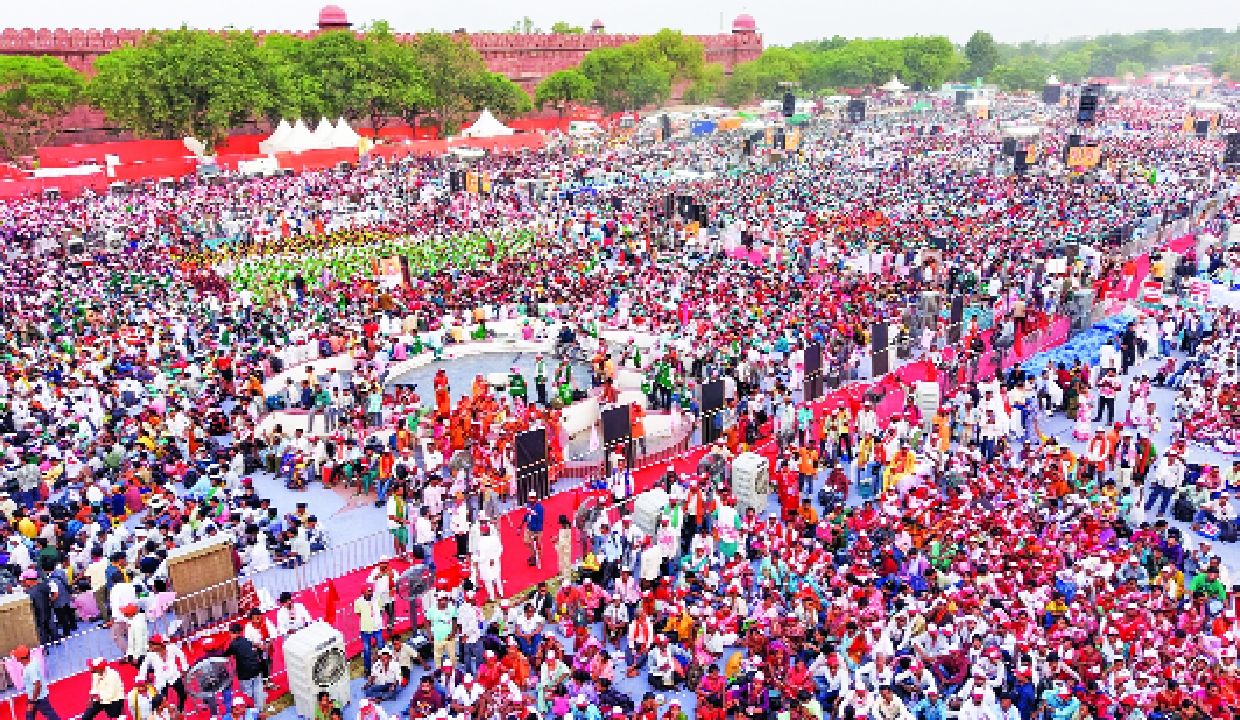
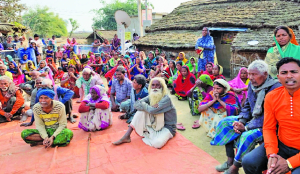
The recent Janajati Samagam convened at the historic Red Fort in Delhi was far more than a routine socio-political congregation. It constituted a profound civilisational moment-a collective act of remembrance, reflection and reaffirmation. Bringing together lakhs of Janajati representatives, scholars, cultural practitioners, spiritual custodians and community leaders from across Bharat, the gathering transcended the immediate concerns of policy and governance. It sought instead to rekindle an enduring conversation about memory, faith, identity and the cultural foundations of the nation.
Among the many issues deliberated upon, one demand acquired particular prominence: the call for the delisting of those who have embraced non-indigenous religions from the Scheduled Tribe category. Predictably, much of the public discourse that followed reduced the issue to the language of electoral arithmetic, affirmative action and political contestation. Such interpretations, however, remain profoundly inadequate. They fail to engage with the deeper philosophical anxieties and civilisational concerns that animate the demand.
At stake is not merely a question of constitutional entitlement. The debate touches upon far more enduring concerns: the preservation of indigenous worldviews, the continuity of ancestral memory and the future of cultural traditions that have shaped the civilisational landscape of Bharat for millennia. Contemporary discourse often situates tribal communities at the margins of history and society. Such a characterisation is not only historically inaccurate but also conceptually impoverished. Janajati communities have never been peripheral to the civilisational experience of Bharat. Rather, they have served as some of its most enduring custodians. Across forests, mountains, hills, river valleys and ecological frontiers, indigenous communities nurtured sophisticated systems of knowledge concerning governance, agriculture, medicine, ecological stewardship and spirituality long before the emergence of modern, Western-centric institutions and written archives. These traditions survived through oral transmission, ritual performance, collective memory and inherited cultural practice. The Janajati worldview is distinguished by an ontological orientation fundamentally different from that of Western industrial societies. Human beings are not conceived as sovereign masters of nature but as participants within a larger cosmic order. Rivers are revered as living presences, forests as sacred abodes and hills as repositories of ancestral memory. Embedded within these traditions is an ethic of reciprocity, restraint and ecological harmony that contemporary societies increasingly seek to recover under the language of sustainability and environmental ethics.
It is therefore no exaggeration to suggest that the civilisational conscience of Bharat continues to find expression within its Janajati communities. They remain living repositories of memories that predate colonial modernity, preserving cultural inheritances that have endured across centuries.
One of the most persistent misconceptions in contemporary discussions on tribal societies is the tendency to separate religion from culture. Such distinctions emerge from intellectual traditions in which religion is primarily understood as adherence to doctrine, scripture or ecclesiastical authority. Indigenous societies operate according to an entirely different philosophical grammar. For Janajati communities, faith is not a compartmentalised sphere of existence; it is an embodied mode of being in the world. It finds expression in sacred groves, seasonal festivals, ancestral commemorations and community rituals. The sacred is not external to life; it permeates life itself.
A forest may remain protected because it is understood as the dwelling place of ancestral spirits. A harvest festival is an affirmation of the interdependence between humanity, nature and the transcendent. This integrated worldview resonates with the broader Indic understanding of reality, which similarly refuses rigid separations between the sacred and the secular. Both traditions emphasise harmony over domination, duty over entitlement and relational existence over atomised individualism. Janajati traditions therefore represent one of the most ancient and enduring currents within the larger civilisational continuum of Bharat. The demand for delisting must be situated within this broader philosophical context. Beneath the legal and constitutional dimensions of the debate lies a more fundamental question: What precisely is being protected through the constitutional recognition accorded to Scheduled Tribes? If such recognition is understood solely as a mechanism for addressing material disadvantage, then cultural and religious transformation may appear largely irrelevant. However, if constitutional safeguards also carry the responsibility of preserving distinctive indigenous cultures, social institutions and worldviews, the matter assumes a very different significance.
Many tribal organisations contend that religious conversion frequently entails more than a change in theological affiliation. It often initiates a gradual process of cultural displacement, weakening ancestral traditions, customary institutions and indigenous cosmologies. The central question is not whether individuals possess the freedom to choose their faith-a principle guaranteed within a democratic society-but whether constitutional provisions intended to safeguard indigenous cultural traditions can remain detached from the preservation of those traditions themselves.
In this sense, the debate over delisting is not merely administrative. It is fundamentally a debate about civilisational continuity, cultural inheritance and the future of indigenous knowledge systems within Bharat. It compels Bharat to confront a larger civilisational question: how can a nation preserve the cultural traditions and worldviews of its indigenous communities while remaining faithful to the principles of justice and constitutional equality?
The concerns articulated at the Janajati Samagam are not unique to Bharat. Across the world, indigenous communities face mounting pressures from religious conversion, Western ideology and cultural homogenisation. The Samagam serves as a reminder that the future of Bharat cannot be disentangled from the future of its indigenous communities. To safeguard the Janajati is not merely to protect a demographic category; it is to preserve a civilisational inheritance. For when the oldest custodians of memory disappear, nations lose fragments of their civilisational soul.
The writer is an Assistant Professor at the Centre for the Study of Social Systems, Jawaharlal Nehru University; Views presented are personal.