A flood of neglect, not just rain
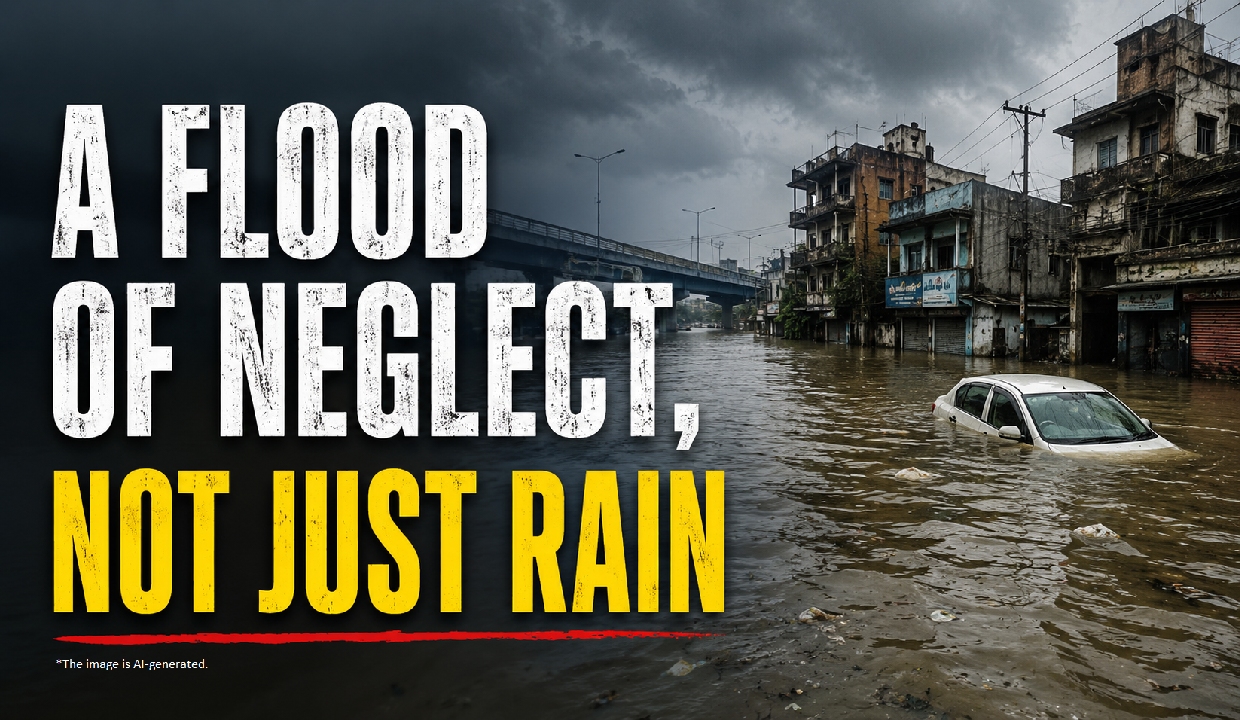
Every year the rains return and Mumbai drowns. This year’s erratic monsoon should force some overdue questions about who is accountable.
Mumbai is underwater again, and the experience suggests it always will be, year after year. This week’s red alert brought shuttered schools, a landslide on the Mumbai-Pune highway, suspended flights, and a collapsed chawl in Mankhurd that killed six people. The Andheri subway went under, as it does every year. Low-lying junctions across the suburbs turned into small lakes, as they do every year.
None of this is a surprise. It is a script the city re-enacts each monsoon, and the real tragedy is not the rain — it is our refusal to prepare for it. Ask who is responsible, and the honest answer is: everyone, which is another way of saying no one. The Brihanmumbai Municipal Corporation, among the richest civic bodies in the country, still treats desilting as a pre-monsoon ritual rather than a year-round discipline. This year’s Mithi river desilting contract was cleared only in April, and was still short of the halfway mark with barely two weeks left before the BMC’s own deadline.
The state government has a long history of eyeing wetlands and salt-pan land for real estate instead of guarding them as flood buffers. Builders have spent three decades concretising floodplains and mangroves that once absorbed this very water — the Bandra-Kurla Complex itself rose on reclaimed Mithi wetlands, shrinking the river to half its original width. Add unregulated construction and dumping along the banks, and a river built to carry the suburbs’ stormwater now struggles to carry itself.
None of this is new information. The Supreme Court rapped civic authorities for neglecting the Mithi as far back as 2017. Auditors have already flagged crores spent on the river’s clean-up between 2013 and 2016 that were never properly accounted for. Every year the contracts are signed late, the monsoon arrives on time, and residents pay the difference in flooded homes and lost workdays. This year carries an added complication: erratic monsoon rains. The India Meteorological Department went into the season expecting just 90 per cent of the long-period average rainfall, with an El Nino pattern likely to suppress rain across most of the country. Yet Mumbai and the Konkan coast have been battered by intense, concentrated bursts — some parts of the city logging close to 600mm of rain in just four days — after a noticeably drier June. That is the real climate story: not simply more or less rain, but rain arriving in fewer, fiercer spells that would strain even a well-maintained drainage system, and Mumbai’s is far from that. Cities can no longer plan around an “average” monsoon when the average itself is breaking down. None of this is unfixable. It requires desilting audited by independent engineers, not self-certified by the same contractors year after year; encroachments removed regardless of whose signature approved them; and mangroves and wetlands treated as flood infrastructure rather than land banked for the next tower. Mumbai does not lack money, expertise, or warning. It lacks the will to treat this as a crisis for twelve months of the year, instead of remembering it only in July.