Winter smog: Why Delhi’s air crisis is getting deadlier

North India, while going through its familiar winter haze, faced a worse situation when plumes of ash from the Hayli Gubbi volcano in Ethiopia, which erupted after 12,000 years of dormancy, sent sulphur-rich gases climbing to high altitudes. The volcanic plumes, being at aircraft cruising height, disrupted flight movements as they posed hazards to aircraft engines, sensors and navigation systems. However, they did not contribute any additional emissions close to the ground and thus had no effective
impact on air quality for the millions of people in the Delhi NCR region and the Indo-Gangetic Plain.
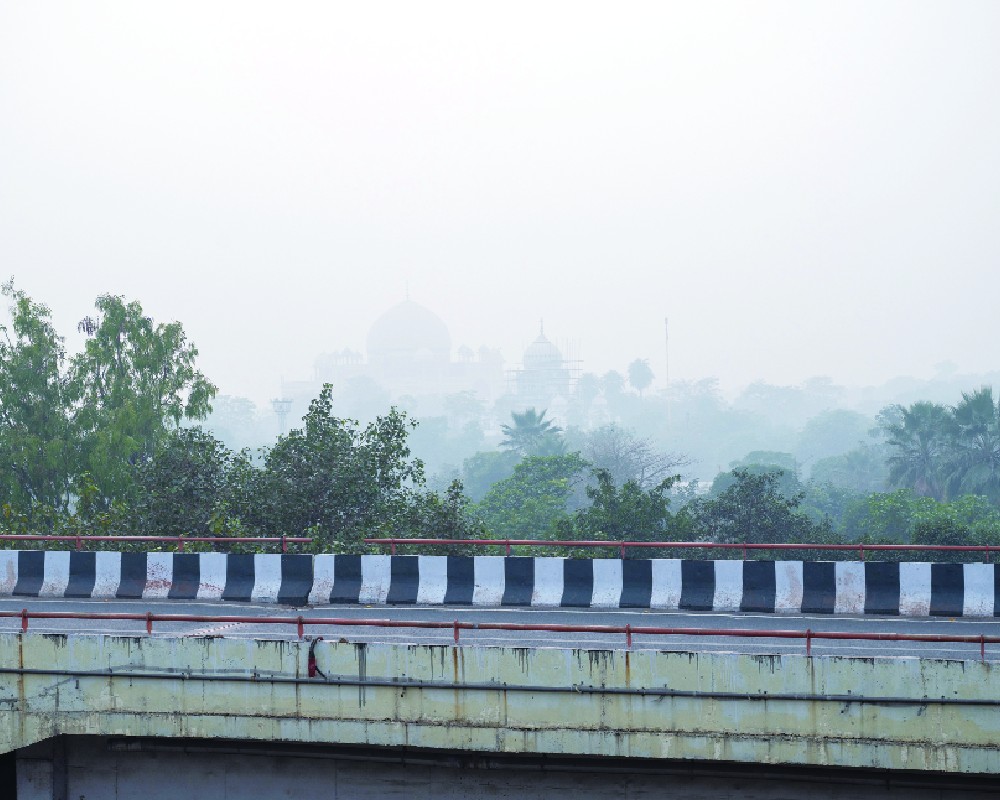
A mix of high emissions from vehicles, industries, construction, crop burning and meteorological factors such as temperature inversion and poor wind conditions traps pollutants near the ground, creating severe smog and haze in the Delhi NCR region from October to January. Pollution has been worsening with each passing year, and governments have not taken hard decisions towards long-term solutions.
Satellites have detected carbon monoxide and aerosol concentrations across the Indo-Gangetic Plain that remain close to the ground during winters and pose serious health risks to people breathing the air.
Beyond human health, aerosol loads from both sources-ground emissions and volcanic ash-can have some impact on radio and microwave signals, which in turn may disturb weather equipment and communication links. Volcanic aerosols and sulphur at higher altitudes can affect remote-sensing systems. Though telecommunication is not impacted considerably, it may be critical for aviation
navigation. Nevertheless, by mapping concentrations at different altitudes, sensor effects can be corrected.
The most severe consequence of winter haze is its impact on human health. Experts have repeatedly pointed out that millions of people in the region suffer from coughing, burning eyes and breathlessness. The damage extends quietly beyond the lungs to the heart, brain, kidneys and metabolic systems. Dr Randeep Guleria, former Director of AIIMS Delhi, says, “The heart is especially vulnerable as toxic air causes inflammation in coronary vessels, raising the risk of heart attacks and worsening heart failure. The brain is also affected. Long-term exposure increases the likelihood of stroke, early dementia and memory decline.” He explains that strong evidence from animal and human studies shows PM2.5 and ultrafine particles (under 0.1 micron) crossing from the lungs into the bloodstream, raising the risk of heart failure, hypertension and strokes. PM2.5 also carries toxic chemical ‘hitchhikers’ that magnify damage to multiple organs.
Junior Health Minister Prataprao Jadhav, while answering a question in the Rajya Sabha on the health emergency in the national capital, admitted that cases of acute respiratory illness (ARI) are rising. Data show that Delhi’s six central hospitals together reported 67,054 ARI emergency cases in 2022, 69,293 in 2023 and 68,411 in 2024. Admissions also rose from 9,878 to 10,819 over the same period. The Minister added that similar spikes were also observed in Chennai and Mumbai.
Thomas Smith, Associate Professor of Environmental Geography at the London School of Economics, has written a paper with co-author Felicia Liu examining how seasonality is evolving due to rapid human-driven change on Earth. Based on experiences in Malaysia and Singapore, the authors observed that people refer to part of the year as the ‘haze season’, when smoke arrives routinely. They noted that this phenomenon did not exist prior to the 1980s. While seasonal changes such as El Niño years being drier and La Niña years wetter have always existed, the introduction of industrial agriculture into moist landscapes such as tropical rainforests drains land and exposes soil to the sun, creating conditions for fires that would not have occurred earlier. Human impact combined with El Niño and La Niña now produces smoke every year.
In an interview, Thomas Smith said, “Northern Thailand’s smoky season is linked to agricultural fires. Delhi’s smog, linked to cars and industry, is also connected to agricultural burning that happens at a particular time of the year. As seasons change their rhythms, much of this is due to climate change. In Western Europe and North America, summer used to last three months; it now feels like six. Spring seems very short before transitioning into hot weather. Autumn comes later, and in many places people lament the loss of winter-there is no snow or frost.” He added that London’s smog in the early twentieth century occurred in winter when people burnt coal and wood for heating. Cold winter air does not mix well, causing smoke to remain near the ground. This killed thousands each year, rising to tens of thousands in the early 1950s. There were no microfibre technologies for masks or air purifiers and little scope for adaptation. Smog began to disappear only after coal power plants were shut.
Earlier this century, Beijing faced a similar emergency. While the wealthy could afford masks and air purifiers, the poor were far more vulnerable. China took drastic measures to overcome pollution. Stubble burning was controlled, coal- and wood-consuming industries were transitioned to cleaner energy, and coal-fired power plants unable to access cleaner alternatives were relocated far away. Public transport systems were revamped, with strong last-mile connectivity to metro stations, railway stations, airports and city centres. Private transport was made prohibitive, and people shifted to public transport and cycling. The government also implemented strict vehicle controls, including lotteries for petrol cars, promotion of electric vehicles and heavy truck rerouting, while coordinating regional pollution control with neighbouring areas.
While an authoritarian regime like China can implement strict measures swiftly, democracies like India face greater challenges. However, since pollution is a major human health hazard, governments must take hard decisions and accelerate implementation. Unless coal and wood burning is stopped and a transition to cleaner energy is achieved, pollution will intensify in the coming years. Businesses unable to access clean energy must be relocated to distant areas or shut down. Governments must continue educating farmers to give up agricultural residue burning and redesign harvesters so that crops are cut just above the ground, allowing residues to be collected and utilised in gasifiers for energy generation. Public transport must run on clean energy and be made efficient enough for the majority of people to use it.
The Aravalli hills have sheltered India’s northern states from the Thar Desert and checked desert expansion for centuries. These hills influence the climate of north-west India and beyond. Mountain ranges generally guide monsoon clouds eastwards towards Shimla and Nainital, helping bring rainfall to the Himalayan region and recharge river catchments. In winter, the Aravalli hills protect the alluvial valleys of the northern plains from westerlies originating in Central Asia. However, these hills have been plundered and gradually degraded. Deforestation, stone mining and urban expansion on the outskirts of Delhi have intensified pollution and dust storms in the Delhi NCR region and the northern plains.
India has proposed reforesting 1.15 million hectares across Delhi, Haryana, Rajasthan and Gujarat by 2027 to create a green wall along the Aravallis. However, the government’s elevation-based definition of the Aravallis above 100 metres, while opening remaining areas for mining and real estate, is a bizarre move. In the absence of massive afforestation along the Aravalli range, pollution in the Delhi NCR region will only worsen.
The writer is Retired Head of Karnataka Forest Force and presently teaches Economics in Karnataka Forest Academy; views are personal