Will the Middle East transform into a strategic node in global trade?
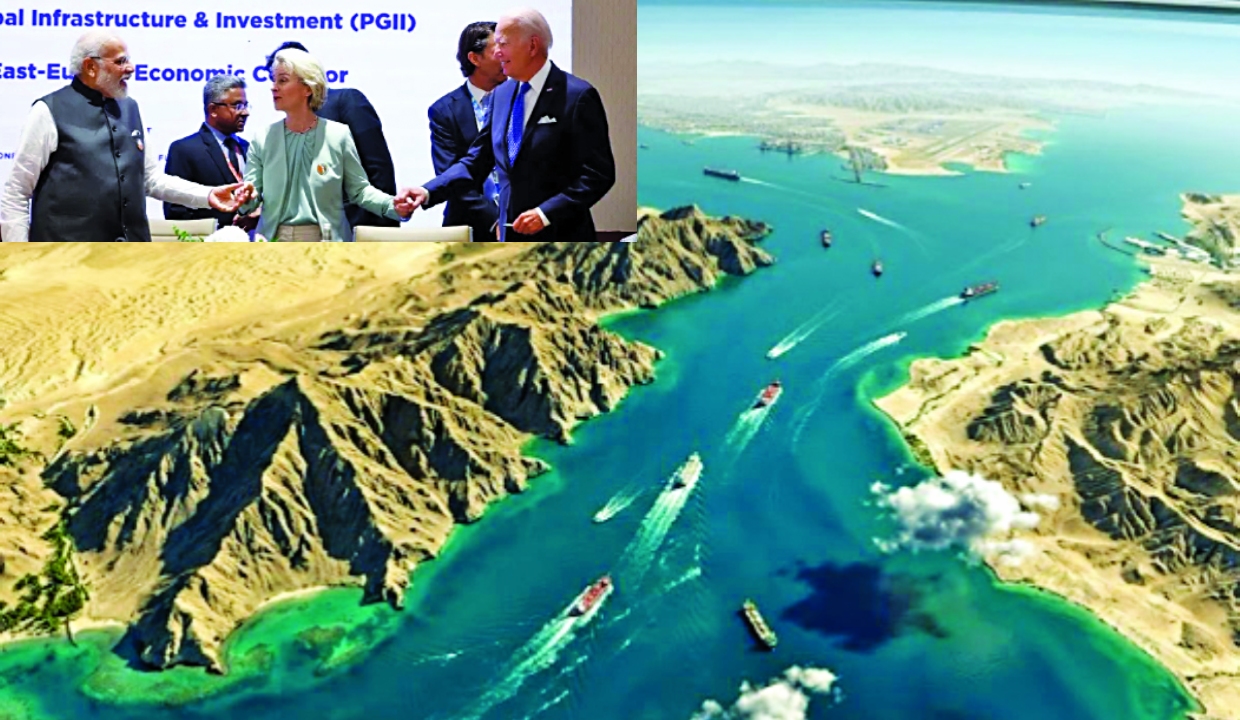
Since the announcement of the India-Middle East-Europe Economic Corridor (IMEC) on the sidelines of the G20 Summit in New Delhi on 9 September 2023, the discussion has no longer been limited to a new logistics connectivity project. It has expanded into a broader vision for redrawing the lines of trade, investment, energy, and data flows between Asia, the Middle East, and Europe. The Memorandum of Understanding signed by India, the United States, the European Union, Saudi Arabia, the United Arab Emirates, France, Germany, and Italy stated clearly that the project consists of an eastern corridor linking India to the Gulf region and a northern corridor linking the Gulf region to Europe. It also made clear that the initiative is not limited to transport alone, but also includes railways, port connectivity, data cables, electricity lines, and clean hydrogen infrastructure.
However, what is being discussed in some analytical and policy circles under what may be described analytically as “IMEC Plus” reflects an important evolution in the understanding of the project. The idea is no longer merely a corridor for moving goods, but a broader platform for integrating trade, industry, energy, Digitalisationn, value chains, and strategic investment within a single route. In other words, the project in its expanded form is not only about shortening the distance between India and Europe. It is about reorganising the economic geography of the region between them - the Arab world and the Middle East - as part of a new structure of production and connectivity, rather than as a mere transit zone. This interpretation is also clearly reinforced by the joint EU-India strategic agenda adopted on 27 January 2026, which linked IMEC directly to the objectives of diversifying trade routes, strengthening supply chains, and enhancing maritime, digital, and energy connectivity.
Why Is the Project Gaining Such Importance Now?
The answer is linked, first, to the transformation of the global trade environment. International trade is no longer driven only by the logic of efficiency and cost. It is increasingly shaped by economic security, risk diversification, logistics resilience, and the repositioning of supply chains. The disruptions in the Red Sea and the Suez Canal since late 2023 revealed the vulnerability of the global trading system when it depends on a limited number of sensitive corridors. According to estimates by the United Nations Conference on Trade and Development (UNCTAD), the Suez Canal carried between 12 per cent and 15 per cent of global trade in 2023, before the volume of trade passing through it declined by 42 per cent in just two months with the onset of the Red Sea disruptions in early 2024.
In its latest report on maritime transport, issued on October 22, 2024, UNCTAD explained that the situation had deteriorated further by mid-2024. Cargo volumes transiting the Gulf of Aden had fallen by 76 per cent, while cargo volumes transiting the Suez Canal had declined by 70 per cent. At the same time, arrivals via the Cape of Good Hope increased by 89 per cent. More importantly, this shift was not merely a change of route. Because alternative routes are longer, it increased global demand for ship “tonne-miles” by 3 per cent and raised demand for container ships by 12 per cent.
These figures explain why thinking about alternative or complementary corridors such as IMEC has become more urgent. The issue is not simply the creation of a new route, but the establishment of a broader structure that can reduce excessive dependence on a single bottleneck, particularly at a global moment marked by increasing geopolitical disruption and pressure on maritime transport. UNCTAD also estimates that disruptions in the Red Sea and Panama pushed the China Containerized Freight Index (CCFI) up by around 120% between October 2023 and June 2024, revealing the direct impact of maritime corridor bottlenecks on global prices. Its estimates also indicate that these shocks could increase global consumer price levels by around 0.6% by the end of 2025.
IMEC Is Not a Theoretical Idea: It Rests on an Existing Trade Base
If we examine the current trade figures among the parties that this corridor is expected to connect, the importance of the project becomes even clearer. The European Union now describes India as a clearly growing trading partner. Trade in goods between the European Union and India reached EUR 120 billion in 2024, including EUR 71 billion in European imports from India and nearly EUR 49 billion in European exports to India. The European Commission confirms that the European Union is India’s largest trading partner in goods, that this exchange now represents 11.5% of India’s total trade, and that trade in goods between the two sides has increased by around 90% over the past decade.
From the Indian side, official data issued on 27 January 2026 indicate that merchandise trade between India and the European Union reached approximately USD 136.54 billion in 2024-2025, while trade in services reached USD 83.10 billion in 2024. These figures do not merely reflect the intensity of commercial exchange. They also mean that any improvement in connectivity between India, the Middle East, and Europe could affect one of the largest emerging trade circles in the global economy.
At the Gulf level - the presumed Arab heart of the corridor - the picture is even clearer. According to India’s official data, bilateral trade between India and the countries of the Gulf Cooperation Council reached USD 178.56 billion in the 2024-2025 fiscal year, including USD 56.87 billion in Indian exports and USD 121.68 billion in imports. This represents 15.42 per cent of India’s total global trade. In addition, Gulf investments in India exceeded USD 28.28 billion as of December 2024. These are not marginal figures. They mean that the Gulf is not merely a station within IMEC, but already a heavyweight economic partner in the system on which the project is built.
When the picture is examined in greater detail within the Gulf, we see, for example, that trade between India and the United Arab Emirates exceeded USD 100.06 billion in the 2024-2025 fiscal year, an increase of 19.6%, according to the official statement of the third meeting of the Joint Committee under the Comprehensive Economic Partnership Agreement between the two countries on 27 November 2025. Trade between India and Saudi Arabia also reached USD 41.88 billion in the 2024-2025 fiscal year, including USD 11.76 billion in Indian exports and USD 30.12 billion in imports, making Saudi Arabia India’s fifth-largest trading partner.
These figures mean that discussing a corridor linking India to the Gulf and then to Europe is not a leap beyond reality. Rather, it is an attempt to build an infrastructure and institutional framework on top of existing, large-scale trade relationships. Therefore, IMEC does not emerge from a vacuum. It emerges from a network of exchange, investment, and partnerships that already exists, giving it an economic foundation more solid than many geopolitical projects that remain confined to conceptual visions.
The Middle East Is Not Merely a Transit Space
The central point here is that the success of IMEC, or what may be described analytically as IMEC Plus, will not be measured only by the speed at which shipments move. It will be measured by the extent to which the Middle East is transformed from a “corridor” into an economic node with added value. If goods merely pass through the region’s ports without being connected to industrial zones, advanced logistics services, digital connectivity, medium or light manufacturing, and distribution and re-export centers, the local return will remain limited. However, if the project is used to build new links in value chains, the region will move from being a bridge between two ends to becoming an active economic player within the system itself.
This argument is not theoretical. Port performance in a number of the region’s ports demonstrates that the Middle East and North Africa already possess competitive infrastructure that can be built upon. In the World Bank’s 2024 Container Port Performance Index (CPPI), Port Said ranked third globally, Tanger Med ranked fifth, Hamad Port in Qatar ranked eleventh, and Salalah Port in the Sultanate of Oman ranked fifteenth. The same report also indicates that the Middle East and North Africa were among the best-performing regions in terms of port performance, although they were clearly affected by the Red Sea crisis during 2024.
This is highly significant because it means that discussion of a new corridor does not begin from zero. The Arab region already has some of the world’s most efficient ports. It also possesses financial and logistics capabilities, free-zone networks, and geographic locations positioned at the center of trade routes between Asia, Europe, and Africa. Yet the difference between limited success and strategic success lies in whether these assets will operate as scattered elements or as an interconnected network within a broader economic vision.
But Is Geography Alone Enough?
The clear answer is no. Geography creates opportunity, but it does not guarantee success. The recent experience of the Suez Canal offers a highly important lesson. Although the canal remained for decades one of the most vital points in global trade, regional tensions led to a sharp decline in its use. According to official data reported by reliable international agencies, Suez Canal revenues fell from USD 10.25 billion in 2023 to USD 3.991 billion in 2024, while the number of transiting vessels declined from more than 26,000 ships in 2023 to 13,213 ships in 2024. The Egyptian president also stated in March 2025 that Egypt was losing around USD 800 million per month in canal revenues because of regional disruptions.
These figures do not diminish the importance of the Suez Canal. Rather, they clarify something else: the value of major trade corridors has become more closely linked than ever to security, stability, resilience, insurance, and political readiness. Accordingly, if this expanded IMEC framework is to become an actual project, it must move beyond reliance on geography alone and toward building a system that includes regulatory coordination, customs clearance, port-to-rail connectivity, upgraded digital services, harmonised standards, secured investments, and reduced risks of disruption.
Why Do Europe & India Seem More Interested in Than Ever Before?
Because the project aligns with the ongoing shift in both sides’ policies toward what is known as de-risking. For years, the European Union has sought to reduce unilateral dependence on specific routes, markets, and supply chains. India, in turn, is working to consolidate its position as an alternative manufacturing and trading power capable of deeper integration with European markets. This explains why IMEC has become part of the official European-Indian agenda in 2026. The most prominent development in this context was the conclusion of the EU-India Free Trade Agreement negotiations in January 2026, pending ratification; according to the European Commission, the agreement would reduce customs duties on more than 90% of goods. Reliable reports also indicated that the agreement would cover 96.6 per centof the value of goods exchanged on the European side and 99.5 per cent of Indian goods over a transitional period, with expectations that European exports to India would double by 2032.
This linkage between preferential trade, infrastructure, and geographic connectivity is exactly what gives this expanded analytical framing of IMEC its real weight. When trade expands, the need for more efficient and secure routes, as well as more integrated logistics nodes, becomes more urgent. When this is coupled with energy links, hydrogen infrastructure, and digital cables, the project is transformed from a traditional corridor into a multifunctional strategic structure.
The Most Important Arab Idea Lie?
The most important idea is that the Arab region - particularly the Gulf, the Levant, and the major ports on the Red Sea and the Mediterranean - could be either the greatest beneficiary or the greatest loser, depending on how this transformation is handled. If the region’s role is limited to receiving and passing through goods, the benefits will remain confined to limited fees and services. However, if the project is linked to national and regional strategies for manufacturing, advanced logistics services, special economic zones, clean energy, and the digital economy, it could become a genuine instrument for repositioning Arab economies within global trade chains.
Here, it should be noted that what may be described analytically as IMEC Plus is not an automatic alternative to the Suez Canal or to existing corridors. Nor is it a fully implemented project yet. It remains in a political and strategic phase that requires financing, implementation agreements, operational details, institutional arrangements, and greater clarity on the timetable. Its real value, however, lies in the fact that it reflects a clear global trend: the world is rethinking economic corridors, and the Middle East is at the heart of this reassessment, not on its margins.
What may be described analytically as IMEC Plus, in the broader sense of the term, is not merely a transport project between India and Europe through the Middle East. It is an expression of a new phase in which trade, energy, digittasation, economic security, value chains, and geopolitics intersect within a single equation. The figures confirm that the project is not based on a theoretical vision: trade relations between India, Europe, and the Gulf are already large and growing; EUR 120 billion in goods trade between India and the European Union in 2024, USD 178.56 billion in trade between India and the Gulf Cooperation Council in 2024-2025, and more than USD 100 billion in trade between India and the United Arab Emirates alone, alongside Arab port infrastructure that includes ports ranked among the best in the world. At the same time, however, the figures related to the Suez Canal and the Red Sea disruptions show that geography alone is no longer sufficient and that trade corridors now require more than location. They require stability, resilience, connected infrastructure, regulatory integration, and the capacity to absorb shocks. Therefore, the real question is not whether IMEC will pass through the Arab region, but whether the region will succeed in turning that passage into added economic value, industrial and logistics positioning, and a new strategic place within the global economy.
Writer Dr Khaled Hanafy is the Secretary General of the Union of Arab Chambers, former Minister of Supply and Internal Trade in Egypt, Professor of Economics and International Business, Board Member in 16 Arab Foreign Joint Chambers and board member of the General Council of the Federation of International Chambers (ICC) and various boards of directors and trustees; Views presented are personal.