Why the UGC Mess Exposes the BJP’s Biggest Blind Spot
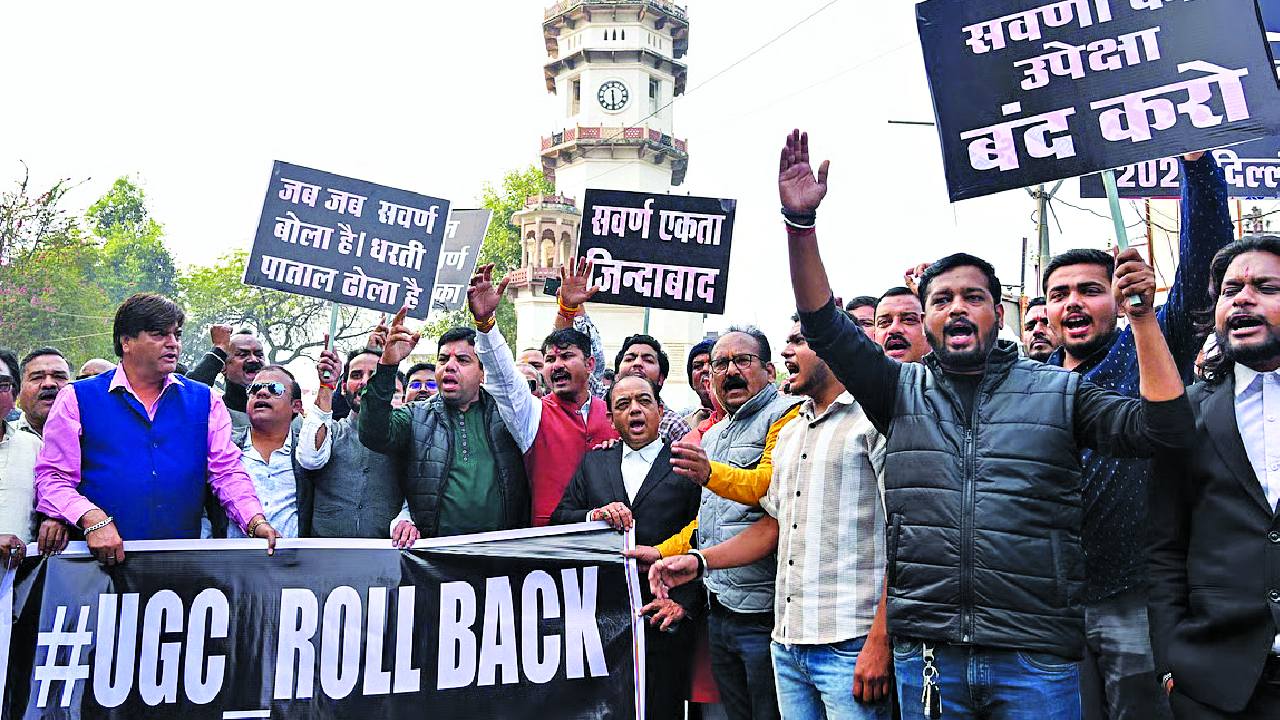
The UGC mess may be in abeyance given the Supreme Court reprimand, but the facts are it is going to erupt again - one way or another. The problem lies in the fact that if the guidelines are watered down, the non-general category will erupt. If the guidelines are not watered down, the general category will erupt again. The problem in itself has been discussed in depth in the op-ed columns of the pioneer and will not be regurgitated again. But the larger question is how did the government walk into this mess? What are the larger issues involved? And how do we ensure that this does not happen again. In a nutshell, the problem is a lack of human capacity in the BJP and the solution lies in fixing that huge gap.
Historically it has been the humanities that has controlled the sciences and not the other way around. Sadly so far the government's attempts at building depth in the humanities has been limited to IKS (Indian knowledge systems), which,
while it has produced some remarkable finds - say ballpark 10 per cent, but the remaining 90 per cent are primarily grifters gaming the system. You can see a similar pattern across the board - be it "quantum", "startups" or "AI" where every transparent fraud is able to game the system, play the funding and valuation game and exit with money, leaving banks to pick up the tab.
The Prime Minister is very clearly aware of this problem, when in a recent speech he asked local AI developers to stop working on "toys" and instead focus on serious stuff.
The problem stems from the fact that most ideologues within the Sangh parivar have historically rejected the epistemology and frequently the methodology of the west, without even coming out with a comprehensive epistemology or their own or indeed a basic methodology.
In this view, large chunks of the humanities are rejected as "western constructs" as opposed to "academic constructs" and are not engaged with or opposed with factual and academic rigour, but rather with rhetoric. While it is undeniable the epistemology of the humanities is overwhelmingly constructed, defined and populated by the left, the fact remains that the modern nation state - India included is run by ideas, structures and institutions that are also western constructs, and the education and economic systems need to integrate and interact with the world.
This is where - paradoxically - the BJP seeks, nay craves, desperate validation from the left - both individuals and western institutions that function in the same left-constructed epistemology. Why for example, should some Europeans attending the last Mahakumbh be more newsworthy than millions of Indians doing the same?
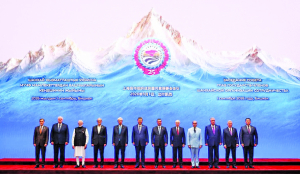
It wasn't just newspapers, but government handles that were actively promoting Euro-American participation and ensuing certificates of quality. Just this week, why is Ursula Von Der Leyen telling us that Indian mathematicians were key to Europe's age of enlightenment, broadcast with such gusto?
Why would the same government that rejects Bloomberg, Harvard or V-DEM institute's assessment of out democracy, then have ministers trot out figures from Stanford validating our AI "prowess" in Davos?
It is the acute inferiority complex of the BJP - collectively - from top to bottom, and the comically desperate need for left and western validation - from the same first class flying, champagne swigging, cigar smokers - that has brought this current crisis upon the government. Much of this has to do with a lack of ideological training across the BJP rank and file, despite the Sangh having a very clear ideology. Why else would the BJP associate with and actively promote rank casteists who call for caste segregation, despite this being absolutely anathema to Hindutva, and indeed the main (false) trope that the left hurls against it?
One can argue that by its very nature, a "rank and file" cannot be trained to the same level of ideological clarity, but why not then focus on a train the trainer programme - where 100 candidates are selected every year - trained in and validated by left-western institutions, to argue in a western epistemological environment and to use their own methods against them as the American right has done so successfully? To date, Dr Vikram Sampath is the only one who has managed to argue on the same footing, with the same qualifications, and create institutions and scholarships to build capacity.
And that exactly is where the UGC guideline debacle comes in. You stuffed it with people who were left aligned or had no clue about the humanities, or so politically isolated that they had no clue of the political consequences of their action, or so blasé as to not care.
So much so that they couldn't even navigate the conundrum of drafting specific guidelines as per court orders, and bringing back the "presumption of guilt" and other draconian provisions of the SC/ST act that the same Supreme Court had read down earlier.
While nobody serious is accusing Dharmendra Pradhan, the education minister of a "crime of commission" he certainly stands guilty of significant "errors of omission". Did he know how the UGC guideline panel was stacked? For sure, he does not have to check their work, but only if he is sure of their competence. The problem then arises, what is his experience or competence to run the Nation's education?
Clearly, by appointing someone as electorally and politically irrelevant as Mr Pradhan, the party itself is singling that education is not a priority.
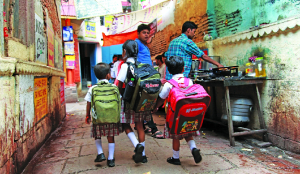
That in itself is a telling indictment, for a country where their children's education is the highest priority for every parent, and educational reform the highest priority of party ideologues who have complained for decades of the entire system being corroded by leftist indoctrination.
That the party's consultation and communication mechanisms failed spectacularly during the crisis is quite another thing, but root cause remains the embarrassing lack of human capacity within cabinet, party and functionaries, and that too on a subject so near and dear to both voters and ideologues.
Abhijit Iyer Mitra is Senior Fellow (Nuclear Security Programme) at the Institute of Peace & Conflict Studies; views are personal