Why the Supreme Court’s scrutiny of Haryana’s Zoo Safari matters
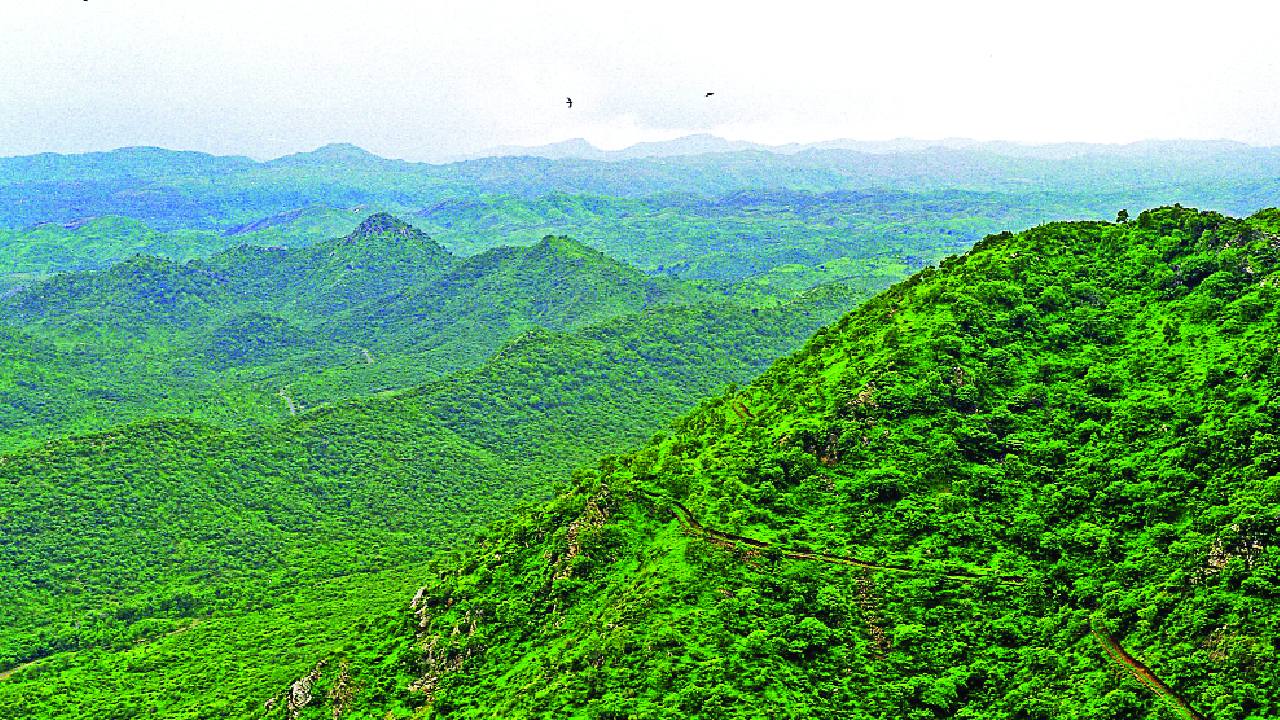
The Supreme Court of India’s recent directive to the Central Empowered Committee to scrutinise the proposed Zoo Safari project in the Haryana Aravallis marks a critical juncture in the preservation of one of India’s most fragile ecological spines. Spanning a massive 10,000-acre enclosure on forest land, the project has come under intense legal and environmental scrutiny, with the strategic transfer of its jurisdiction from the Tourism Department to the Forest Department in January 2025 being seen as a tactical attempt to bypass the approval requirements of the Van Sanrakshan evam Samvardhan Adhiniyam, 1980 (VSSA).
The project prioritises tourist “dwell time”, night safaris, the development of permanent infrastructure, and entertainment. It clearly risks violating the Public Trust Doctrine, which mandates that such vital natural ecosystems cannot be traded off for commercial gain. The State’s subsequent stand to proceed with a first phase of about 3,300 acres serves as a textbook example of ‘salami slicing’, where a large-scale intervention is presented in smaller, seemingly more palatable portions to mask its cumulative impact. The impacts of some projects in similar areas around the world cannot be overlooked.
Global precedents, such as the Tucson case in the United States, illustrate the severe risk of hydrological depletion. To maintain lush, visitor-friendly enclosures in the arid Sonoran Desert, deep wells led to a “cone of depression” in the water table. In the Aravalli context, diverting limited sub-surface water for a massive safari project could similarly desiccate the ecosystem, including the surrounding village commons, or bani, which millions rely on for groundwater recharge.
The imposition of artificial boundaries triggers the ‘Island Syndrome’ and changes in microclimate, as seen in Middle Eastern desert projects and Nairobi National Park. Fencing for controlled areas disrupted wildlife movement, and fragmentation led to overgrazing, soil degradation, and genetic isolation of species. In the Gurgaon-Alwar stretch, such fencing could restrict apex predators like leopards to smaller, unsustainable pockets and inevitably escalate human-wildlife conflict.
Middle Eastern desert projects have shown that microclimate alteration killed sensitive xerophytic flora unable to withstand sudden temperature spikes caused by asphalt and concrete — a necessity for roads and administrative blocks. The localised heat island effect can effectively neutralise the Aravallis’ role as a natural cooling barrier for adjacent areas, including the National Capital Region.
The Florida precedent warns of ‘pathogen spillover’, where the disposal of organic waste from exotic captive animals introduced foreign diseases to native populations. Compounding this is the visual and acoustic pollution documented in South African private reserves, where tourist vehicles and artificial night lighting disrupt the mating and hunting cycles of nocturnal arid-zone wildlife. This sensory intrusion often leads to a ‘silent extinction’ in which, despite the physical presence of animals, the population’s reproductive viability crashes. The project, notably, does not categorically state that exotics shall not be introduced into the safari zoo.
In essence, global evidence suggests that the massive footprint required to support safari-related mass tourism in dryland ecosystems is fundamentally at odds with the preservation of natural capital. To honour the Public Trust Doctrine and ensure long-term resource sustainability, the focus must shift away from permanent entertainment infrastructure.
While traditional zoos and safaris in arid regions have been found to trigger ecological decline, transitioning to a ‘Living Natural History Museum’ with a ‘Native Only’ policy, minimal permanent structures, a xeriscaping approach, rigorous water frugality, avoidance of deep-aquifer extraction, and banning energy-intensive climate control systems has been successfully implemented at the Arizona-Sonora Desert Museum. The Al Ain Zoo in the UAE utilises a ‘Safety Net’ model to breed desert ungulates like the Arabian oryx in semi-wild paddocks for reintroduction into the wild. Focusing on desertification education rather than mere animal display, the facility functions as a zero-waste nursery. In California, The Living Desert Zoo and Gardens operates as a renewable energy hub, minimises the urban heat island effect, and converts animal waste into compost for native reforestation projects, thus moving beyond the ‘commodification trap’ to nourish the surrounding landscape.
With apparently no link between the project and any in-situ government conservation programme, and with the project’s core vision tethered to a commercial tourism agenda aimed at creating the country’s premier tourism destination, the evident fragility of the xerophytic landscape cannot withstand the attempted commodification of nature. Establishing the truthfulness of the State’s claim that the project is aimed at ecological restoration and sustainable eco-tourism warrants a critical examination of whether rigorous scientific data — pertaining to vegetation inventory, tourist carrying capacity, hydrology of surrounding water-stressed landscapes, sub-surface geological connectivity, sustainability of biodiversity corridors, and the imminent increase in human-wildlife interface — justifies the proposed diversion of land use.
In a project of this scale, upholding the Public Trust Doctrine requires expanding the project’s ‘event horizon’ beyond its physical boundaries to the entire ‘provision shed’. The project must respect the carrying capacity of the xerophytic landscape to prevent pollution and animal disturbance. It must comply with the Wildlife (Protection) Act, 1972, the National Zoo Policy (1998), and the Recognition of Zoo Rules (2022). Under Section 38H of the WPA and NZP 3.1.4, any zoo’s primary mandate is to complement and strengthen national conservation by prioritising local and regional species over exotic displays. Schedule I of the RZR and NZP 3.3.3 further mandatesthat establishments must be congenial to animal welfare on appropriate-quality land.
Considering the Environment (Protection) Act, 1986, Central Ground Water Authority notifications, and the National Capital Region Planning Board Act, 1985, the project must ensure the long-term resource sustainability of the Aravallis as an integrated ecological spine for air and water security.
Developing a zoo safari within a xerophytic and ecologically sensitive zone like the Aravallis risks an ‘ecological mismatch’ of catastrophic proportions. In view of global examples and the precautionary principle, the project report deserves a complete overhaul if outright rejection is not pursued. As an alternative, a suitably located ‘Native Biodiversity Park’ on a limited area could be planned after due consultation with local populations and settlement of rights.
The park should have zero permanent structures, infrastructure on less than 5 per cent of the area, no obstructive fencing, commitment to in-situ conservation, a low-impact model prioritising ecological integrity over commercial density, a 100 per cent water-neutral footprint relying on advanced rainwater harvesting and recycling, and a strictly native species policy. It should ensure zero fencing along migratory paths, use sunken barriers allowing wildlife movement, adopt off-grid renewable energy, implement waste systems supporting forest restoration, regulate sensory pollution through Dark Sky-compliant lighting, use non-motorised internal transport, and train local communities including Gujjar and Meo youth as naturalists and digital stewards.The project must be assessed in terms of Net Biodiversity Gain, improvement of NDVI in buffer zones, and its function as an in-situ nursery for endangered Aravalli flora and fauna. It is high time there was a paradigm shift in our treatment of the Aravallis — from commercial commodification to serious conservation.
The writers are Former PCCFs of UP and Maharashtra; views are personal