Why India must end the reuse of single-use medical devices
When news broke from Satna in Madhya Pradesh that several children had tested HIV positive after blood transfusions in a government hospital, it felt less like a headline and more like a personal sorrow — a stark reminder of how devastating a single lapse in medical safety can be. After three decades in India’s medical technology sector, such incidents no longer shock, but they still wound, because they show how far our systems can drift from their first duty: to protect patients, especially the most vulnerable.
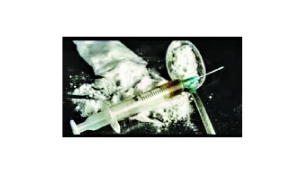
India’s medical technology has advanced rapidly, yet basic patient safety is still compromised by the continued reuse of single-use devices in some hospitals, eroding public trust and endangering lives. Such cost-driven workarounds, often without patient disclosure or consent, raise ethical concerns as well. Recent HIV transmission cases in states such as Jharkhand and Madhya Pradesh have revived fears rooted in earlier episodes where reused syringes and catheters spread infections. The message is clear: regulatory progress has not yet translated into a uniform safety culture.
The causes: Economics over ethics
While institutional policies may acknowledge safety norms, real-world practices often diverge due to a mix of systemic pressures and, at times, commercial discretion. In under-resourced public hospitals, severe cost constraints, weak audit systems, and inconsistent sterilisation oversight often convert single-use into multi-use. However, in some private settings, the reuse of single-use devices can occur not due to resource scarcity but as a cost-saving measure, sometimes without patient knowledge or
consent. In both cases, each reused device carries an invisible cost: increased infection risk, patient harm, and erosion of trust in the healthcare system.
For example, a spinal needle designed for single use can dull or deform when reused, causing tissue trauma, pain, and infection risk. In orthopaedic procedures, reused drill burrs, saw blades, and craniotomy blades may develop fatigue-induced cracks or fracture. These fragments can remain in bone or soft tissue, causing nerve damage, bleeding, or necessitating revision surgery. Similarly, devices and probes with specialised coatings lose their functional integrity with repeated reprocessing, increasing friction and microbial growth. As their surfaces degrade, friction increases-along with the likelihood of microbial colonisation. Likewise, reprocessed single-use trocars, particularly shielded or bladed designs, may develop micro-cracks or malfunctioning safety shields, increasing the risk of visceral or vascular perforation, including catastrophic aortic injury and severe intra-abdominal bleeding. These lapses reveal a system where procedural compliance is mistaken for ethical responsibility.
The same applies to airway management. Poorly cleaned reusable laryngoscope blades and handles have been implicated in bacterial contamination and outbreaks, prompting a strong shift in many settings towards sterile, single-use blades to reduce cross-infection risk. In interventional cardiology, reused balloon angioplasty catheters may fail to deflate fully or lose their original profile, heightening the risk of vessel dissection, perforation, or embolisation of debris during PCI, even when overt infection is absent.
In the United States, the FDA requires third-party re-processors of selected single-use devices to submit rigorous validation data and treats them as manufacturers in the eyes of the law, holding them to the same quality systems, reporting, and labelling requirements. Experience with reused pacemakers and other cardiac devices also shows higher device malfunction rates, for example, set-screw and lead-connection failures-leading to loss of pacing, syncope, or the need for urgent re-intervention, despite similar infection rates compared with new implants.
The gap: Regulation without enforcement
India’s Medical Devices Rules, 2017 prohibit reuse of single-use devices, and the scientific basis is clear: such devices are not designed, tested, or labelled for safe reuse. According to the WHO’s Global Model Regulatory Framework, they should not be reused except in rare, life-threatening conditions, as unvalidated reprocessing poses serious risks.
Despite this, enforcement remains inconsistent. Healthcare-associated infections (HAIs) affect roughly one in ten patients globally, reaching up to 15 per cent in developing economies. What India needs today is a unified reprocessing policy that clearly defines which devices can be safely reused, under what validated conditions, and with transparent documentation. Hospitals must treat sterilisation records and quality control with the same seriousness as surgical outcomes, and patients have a right to know what is being used on them.
The evidence: Lessons from the world
Unsafe reuse of injection equipment once caused 21 million hepatitis B cases, 2 million hepatitis C cases, and 34,000 HIV cases annually, until the World Health Organisation’s reforms introduced auto-disable and ‘smart’ syringes, cutting reuse sevenfold. That change came when safety became a system priority, not an optional cost.
International experience underscores that firm regulation and traceable accountability work. The European Union allows reprocessing of single-use devices only under strict national laws, where any re-processor is held to full manufacturer obligations under the Medical Device Regulation. Similarly, the US FDA treats authorised re-processors as manufacturers, requiring complete validation and reporting. Where such guardrails exist, reprocessing is science-based, limited, and controlled, and not a budget improvisation.
The solution: Safety is non-negotiable
Under India’s Medical Devices Rules, 2017, medical devices that are intended for single use must be clearly labelled as such, and there is no provision in the rules that permits their reuse. India’s healthcare system must move from tacit tolerance to strict enforcement, ensuring that what is labelled ‘single use’ is treated as such across all settings.
This shift is essential to reduce hospital-acquired infections and rebuild public confidence as India positions itself as a global MedTech hub. Technology will help India treat more people, faster and better; but ethics will ensure they are treated safely. Safety is not an administrative check-box; it is the soul of healthcare. Every scalpel, catheter, or syringe used once and responsibly discarded is a quiet affirmation of care, trust, and respect for human life.
The writer is Chairman, Medical Technology Association of India (MTaI); views are personal