Why India cannot afford gender-blind trade policies any longer
For much of its post-reform history, India’s trade policy has been guided by a focus on growth, competitiveness, and market access. Questions of social inclusion, including gender, were largely addressed through parallel policy tracks-labour laws, welfare schemes, and social programmes-rather than through trade itself. This division was understandable when trade policy was viewed primarily as a technical instrument for expanding markets. Today, however, that separation has become increasingly difficult to sustain.
In an economy where exports are expected to drive growth, jobs, and global relevance — and where female labour-force participation remains among the lowest in the G20 — the gender dimension of trade policy can no longer be treated as incidental. Evidence from India and across the Global South shows clearly that trade affects women and men differently. Ignoring this reality does not make trade policy simpler or more efficient; it makes it less effective.
The Limits of Gender-Neutral Trade
The multilateral trading system was built on the assumption that trade rules apply uniformly to all economic actors. WTO agreements do not explicitly mention women or gender equality, reflecting the belief that markets would allocate opportunities efficiently and that distributional concerns lay outside trade policy’s remit. India too broadly shared this worldview. During its early engagement with the WTO, India focused on safeguarding development space, agricultural interests, and equity between countries — not addressing inequalities within them.
Yet this neutrality has proved illusory. In India, women account for a significant share of employment in export-oriented sectors such as agriculture, textiles, garments, leather, and certain services. According to Periodic Labour Force Survey (PLFS) data, women constitute over 60 per cent of employment in apparel manufacturing and a large share of informal agricultural exports. Despite this, gender has remained largely absent from trade strategy.
Firm-level and labour-market studies now show that trade outcomes are shaped by pre-existing inequalities — unequal access to land, skills, finance, technology, mobility, and time. Markets do not erase these constraints; they interact with and often magnify them. Trade policy, whether policymakers intend it or not, operates within these social structures.
How Trade Hurts and Helps — Women in India
The gendered impact of trade in India operates through several channels. Women are disproportionately concentrated in sectors that face higher trade barriers and intense competition. Agriculture and food processing encounter stringent sanitary standards; textiles and garments face tariff escalation in developed markets; leather exports confront regulatory and sustainability barriers. These constraints limit firms’ ability to upgrade, thus keeping wages low and productivity gains uneven.
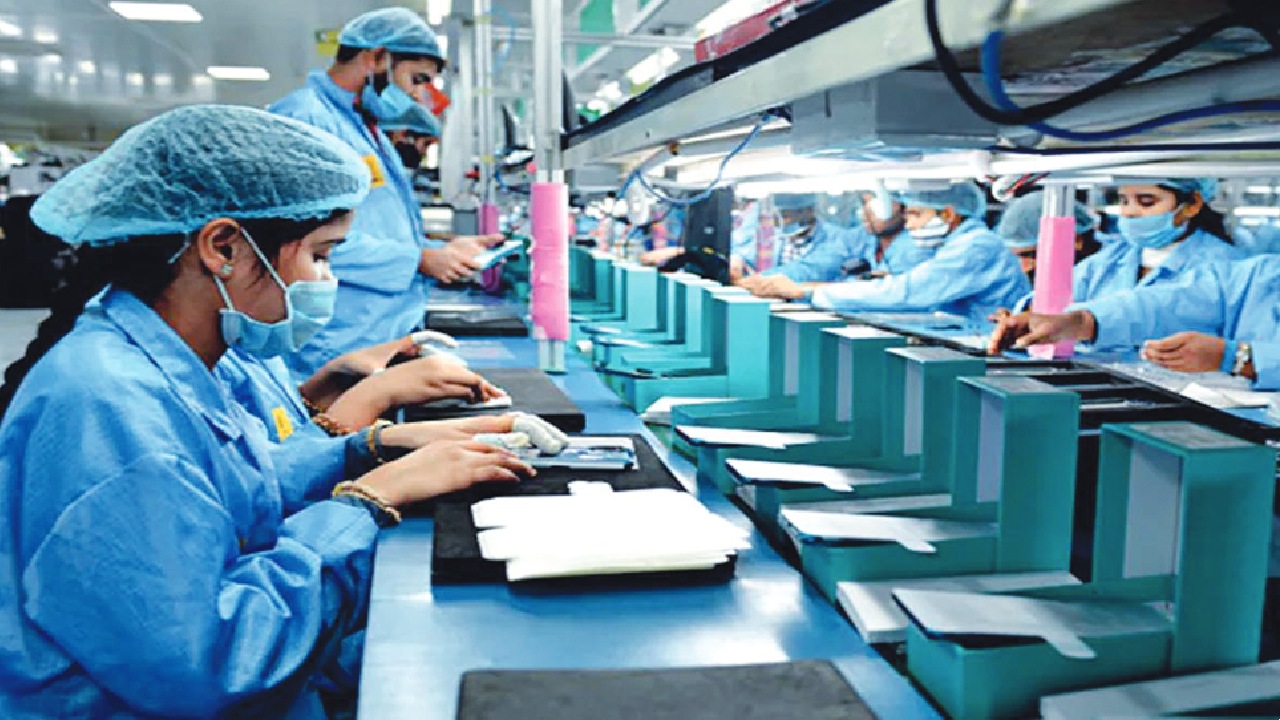
India’s textile and apparel sector illustrates this clearly. While it employs millions of women, most remain confined to low-skill, labour-intensive roles. Tariff escalation discourages higher value-added exports, while better-paid functions - design, branding, logistics, and management - remain male-dominated. As a result, women’s employment expands without commensurate economic mobility.
Non-tariff measures further compound the problem. Certification requirements, customs procedures, and compliance costs impose fixed burdens that fall hardest on micro and small enterprises, where women are over-represented as entrepreneurs. Studies across South Asia suggest that women-owned firms experience longer border-clearance times and higher transaction costs even after controlling for firm size and sector. In India, where over 95 per cent of women-owned enterprises are micro-scale, these frictions prove decisive.
At the same time, trade has also been one of the most powerful engines of women’s paid employment in the developing world. Exporting firms consistently employ a higher share of women than non-exporters - roughly one-third compared with one-quarter on average. Global value chains have created formal jobs for women in garments, electronics assembly, agri-processing, and IT-enabled services, often offering better wages and conditions than informal domestic work.
India’s experience, however, reveals a paradox. Despite export growth, female labour-force participation fell from about 37 per cent in the mid-2000s to around 23 per cent by 2019, with only a modest recovery since. This decline reflects broader structural constraints - care responsibilities, skill mismatches, safety concerns, and social norms — that trade alone cannot overcome.
Jobs Are Not Enough: The Question of Value
The deeper challenge lies not merely in job creation, but in value capture. Across India and the Global South, women contribute a substantial share of labour embodied in exports yet capture a smaller share of domestic value added. They remain concentrated in low-skill, low-wage tasks, while men dominate higher-value functions involving technology, management, and capital.
This pattern limits both equity and competitiveness. Evidence from India’s manufacturing and services exports suggests that firms upgrading technologically tend to demand new skills — yet women are less likely to access training or promotion pathways. Global value chains can act as ladders into formal employment, but without deliberate policy support, women will continue to remain stuck on the lowest rungs.
An economy that systematically underutilises half of its talent pool cannot sustain productivity growth or move decisively up the value chain. Gender inequality in trade is therefore not a niche social issue; it is a structural economic constraint.
What India Must Do Now
The way forward does not lie in turning trade policy into social policy, but in aligning trade more closely with labour-market realities. Export-oriented strategies have expanded women’s access to formal employment, but this participation remains fragile. Trade reforms must therefore be complemented by domestic measures — skills development, access to finance, childcare infrastructure, safe mobility, and workplace standards — so that women can progress rather than stagnate within global markets.
Reducing the asymmetric trade costs faced by women-led enterprises is equally important. Simplifying customs procedures, digitising border processes, improving transparency, and easing access to trade finance can have a powerful gender-equalising effect without altering tariff schedules or negotiating mandates. In India’s MSME-dominated export base, such reforms could unlock significant participation gains. Global value chains should be approached strategically. Evidence from India’s apparel and electronics sectors suggests that technology upgrades and better logistics reduce informality and physical intensity, making factory employment more accessible to women. Trade policy that encourages upgrading — rather than pure cost competition — can quietly but decisively improve job quality. Finally, international cooperation must move beyond symbolic recognition. Investing in gender-disaggregated trade data, supporting women exporters through targeted capacity-building, and evaluating trade-facilitation reforms by who benefits — not just aggregate efficiency — will be critical. Inclusive trade is not achieved by rhetoric alone; it requires intentional design and accountability.
Trade Policy Must Catch Up with India’s Reality
The debate on whether trade affects women differently is settled. The real question is whether India is willing to design trade policy for the economy it has. A trade strategy that ignores gender will underperform on exports, employment, and productivity. A trade strategy that integrates gender will be more competitive, more resilient, and
more legitimate. Inclusive trade is not a moral indulgence; it is an economic necessity — one that India can no longer afford to postpone.
Mr Shishir Priyadarshi is President of the Chintan Research Foundation and former Director of WTO, with extensive experience in international trade, finance, and industry; views are personal