Why India’s future will be decided in its neighbourhood
India stands at a moment of strategic contradiction. Its global profile has expanded, its diplomatic reach has widened, and its economic ambitions have grown. Yet it is surrounded by one of the most unstable and contested neighbourhoods in the world, where shifts in power directly shape its security and global credibility.
In the 1990s, India and China were broadly viewed as peer competitors. By 2026, that balance has altered decisively. China has surged ahead economically, technologically and militarily, while deepening its strategic alignment with Pakistan, including military support during crises with India.
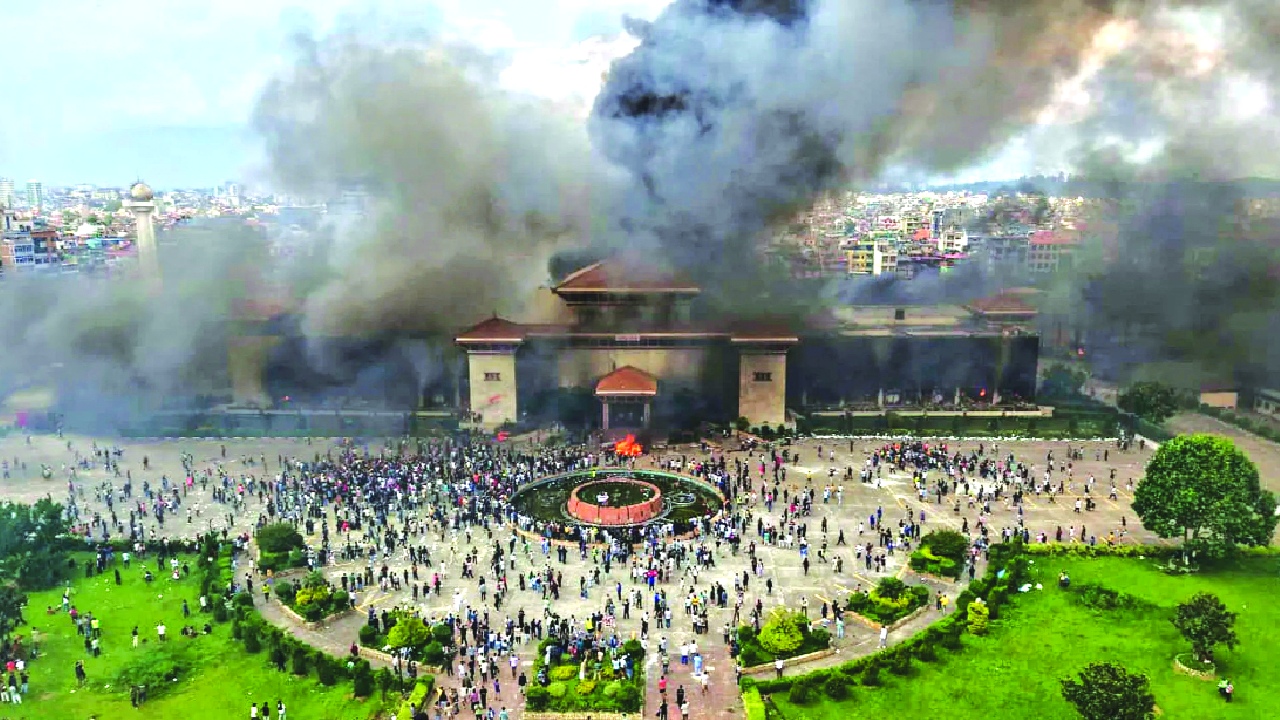
At the same time, South Asia is marked by political churn and economic stress. Sri Lanka, Bangladesh and Nepal remain fragile; the Maldives has oscillated sharply in its foreign policy orientation; Afghanistan continues to pose humanitarian and strategic dilemmas; and Pakistan remains locked in internal instability. All this is unfolding at a time when the United States, the world’s only superpower, is reassessing its global commitments, including the degree to which India fits into its long-term strategic calculus.
Against this backdrop, India’s Neighbourhood First Policy is not a diplomatic slogan or an exercise in goodwill. It is a strategic necessity.
A simple but often overlooked truth needs emphasis: India’s future will not be decided first in Washington, Beijing or Brussels. It will be shaped, above all, in Kathmandu, Dhaka, Colombo, Malé and Islamabad. These are not merely neighbouring capitals; they are the strategic nodes that directly influence India’s security, economic prospects and global credibility. This reasoning aligns closely with structural realism theory, which emphasises that geography and regional balances of power shape a state’s strategic destiny more decisively than intentions or rhetoric. States operate within structural constraints imposed by proximity and power distribution,
and India’s neighbourhood represents precisely such a constraint.
For decades after Independence, India’s neighbourhood policy was guided by moral idealism, non-alignment, anti-colonial solidarity and the assumption that shared history would automatically produce trust. That approach was ethically sound, but experience has delivered a harsher lesson. Good intentions do not guarantee stable neighbourhoods, and shared history does not automatically translate into shared interests.
Neighbourhood First represents India’s strategic maturation. It acknowledges that India’s internal transformation and its global aspirations are inseparable from regional stability. This policy is neither an act of charity nor a display of benevolence. It is a clear expression of enlightened self-interest.
In contemporary South Asia, power does not operate through sentiment; it operates through transactions and tangible outcomes. New Delhi has recognised that being a friendly neighbour is not enough. India must become an indispensable partner — economically, infrastructurally and strategically.
This recalibration is inseparable from China’s expanding footprint in the region. India has drawn two clear conclusions. First, China cannot be wished away. Second, India does not need to displace China to succeed. Rather than confrontation, New Delhi has opted for calibrated realism.
The core of this approach lies in building asymmetric interdependencies - relationships in which neighbouring countries derive concrete, long-term benefits from engagement with India. When cooperation delivers results, strategic deviation becomes costly. This realism explains why India engages with governments it agrees with and those it does not. Political leadership changes; ideologies shift; rhetoric fluctuates. Geography does not.
Across Sri Lanka, Nepal and the Maldives, India’s priorities are increasingly defined by dialogue, delivery and durability. Connectivity has emerged as the most powerful instrument of this strategy. Railways, ports, power grids, digital payment systems and energy corridors are no longer just development projects; they are strategic assets. From the Greater Malé Connectivity Project to hydropower cooperation with Bhutan and electricity trade with Bangladesh, India is quietly reshaping South Asia’s economic geography. Infrastructure, today, is quiet geopolitics.
Equally important is India’s development cooperation model. While some external powers rely heavily on collateralised loans and opaque financing, India has emphasised grants, concessional credit, humanitarian assistance and crisis support. Its role during Sri Lanka’s economic collapse, debt relief to the Maldives, and disaster response across the Bay of Bengal have all contributed to trust-building.
Yet, realism demands humility. Outcomes have been uneven. Bhutan remains India’s closest partner but is also exploring diversification. In Nepal, domestic politics frequently weaponises anti-India sentiment. Bangladesh and Sri Lanka value India, even as they remain deeply embedded in Chinese economic networks. The Maldives has demonstrated how quickly domestic nationalism, amplified by external actors, can dilute Indian influence.
The most complex challenges remain Pakistan and Afghanistan. India’s policy towards Pakistan, even after calibrated military signalling through Operation Sindoor, has yielded only modest results, reinforcing deterrence without producing a fundamental shift in Pakistan’s strategic behaviour. In Afghanistan, New Delhi continues to walk a tightrope between humanitarian responsibility and strategic risk, particularly as China consolidates its presence.
Perhaps the greatest source of diplomatic anxiety for India today is not a single adversary but an unstable neighbourhood.
Elections, from Nepal to Bangladesh, Myanmar to Thailand, are taking place amid economic distress, youth disenchantment and declining faith in traditional politics. This is where Neighbourhood First faces its real test.
First, India must recognise that the most credible proof of diplomacy is delivery. Projects must be completed on time, commitments must be visible, and assistance must be felt on the ground. Strategy succeeds only when it moves beyond paper and alters lived realities.
Second, Neighbourhood First must be elevated beyond government policy into a durable state strategy. Elections in neighbouring countries will come and go; great-power competition will persist. India’s partnerships in connectivity, energy, trade and education must not become hostages to political cycles. Institutional continuity is the foundation of lasting influence.
Third, India must engage South Asia’s emerging political generation. Much of the new leadership does not come from an era when India was the natural reference point. Diplomacy must therefore move beyond capitals to universities, parliaments, media and youth networks. Academic and youth engagement are no longer auxiliary tools; they are central to strategic relevance.
Fourth, leadership must be paired with sensitivity. The perception of a “big brother” has often undermined Indian influence. Listening diplomacy, respect for sovereignty and restraint in public messaging are not signs of weakness; they are markers of strategic confidence.
Fifth, competition with China must be framed as a contest of options, not confrontation. Not every initiative needs a China-versus-India lens. When India offers better, more sustainable and more transparent alternatives, the comparison works in its favour. The objective is not to exclude China, but to make India indispensable. Finally, India must institutionalise crisis response. Its swift assistance during economic and natural disasters has shown that presence during crisis is the most persuasive diplomacy. This capability must move from ad hoc responses to a standing rapid-response framework.
If pursued with consistency and seriousness, Neighbourhood First can become more than a policy; it can define India’s strategic identity. South Asia is entering a phase of political churn where power will be contested, trust will be tested, and leadership will need repeated validation.
India will not secure this region through dominance. It will do so through credibility, built on presence, continuity and sensitive leadership. Because India’s neighbourhood is not merely its periphery; it is its strategic soul.
Mahendra Kumar Singh teaches international politics at DDU Gorakhpur University; Akhilendra Kumar Singh is a research scholar, Department of Political Science, DDU Gorakhpur University; views are personal