Why Fashion Must Unite Human Rights and Climate Action Now

The global fashion industry, a major pillar of India’s manufacturing strength, is now facing converging pressures that are no longer possible to treat separately. On one side, the European Union’s Corporate Sustainability Due Diligence Directive (EUCSDDD), which came into force on 25 July 2024, requires all in-scope companies to identify and address human-rights and environmental risks across their full value chains. On the other, the sector has already acknowledged that the Paris Agreement demands achieving net-zero emissions in the second half of this century. Since most of fashion’s climate impact lies in manufacturing rather than retail, these are not two different races. They share one path and one common finish line.For years, brands handled “social” and “environment” as if they were two different silos.
A social audit focused on worker age, fire exits and documentation. Meanwhile, another team measured kilowatt hours, water discharge or effluent levels. But this separation no longer reflects reality. Purchasing practices that push for the lowest price and the fastest turnaround—issues traditionally considered social—directly force suppliers into cheaper, higher-polluting options such as coal-fired boilers. Hazardous chemicals used in dyeing create environmental damage but also pose direct occupational-health risks. Leather sourced from deforested land becomes not just an environmental concern but a human-rights one, tied to indigenous land rights. Today, no company can call itself socially responsible if its environmental performance is weak, and the reverse is equally true.
Human rights and environmental due diligence (HREDD), adopted by the European Commission in 2022, already integrates these issues. It requires companies to identify, prevent, mitigate and account for the negative impacts of their operations and those of their subsidiaries, subcontractors and suppliers. This framework moves the industry away from checklists towards a continuous process.The next barrier is finance. Small and medium suppliers do not have the capital to upgrade heat systems, electrify machinery or install water-loop technologies.
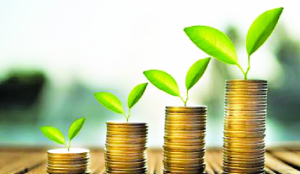
Climate finance must therefore enter the value chain itself. Carbon insetting is one way forward: instead of buying offsets outside the supply chain, brands can channel funds into emission-reduction projects inside their own production networks. If a part of the verified revenues is reserved as a Just Transition Dividend, then climate gains can translate into direct worker benefits through a transparent fund managed at the factory level. Such a fund can support skills development, scholarships and preventive health, keeping due diligence active between audits.
Brands and mills can follow a practical blueprint. Start with purchasing. Contracts should provide predictable volumes, realistic lead times and pricing that factors in wages and capital payback. Plans should not be split into social and environmental sections. One team should handle human rights, climate and chemicals with one risk map, a unified corrective-action plan and a common dashboard. Link wage pilots with energy upgrades to make incentives support each other. Most mills can adopt proven efficiency measures such as heat recovery, insulation, condensate return, improved dye recipes, low-liquor-ratio machines and variable-speed drives. These actions reduce cost, emissions and local pollution simultaneously. Investment in people must continue, with OHS treated as part of operational efficiency and reskilling included whenever new equipment changes maintenance or operational roles.Insetting can unlock capital when brands co-invest with suppliers and share savings across three buckets: the supplier, the buyer’s Scope 3 targets and the worker-dividend fund.
Traceability systems should also be strengthened so that material origin, process data and emission factors remain connected.For India, this convergence is an opportunity. When resource efficiency, safe work and climate finance move together, the factory improves its margin, the brand receives verified reductions where they occur and workers gain safety and a share in future improvements. A sustainable industry cannot be built on an unequal social foundation. The work holds only when it is done as one.
The author is MD Solidaridad; views are personal