When political expedience precedes political weightage
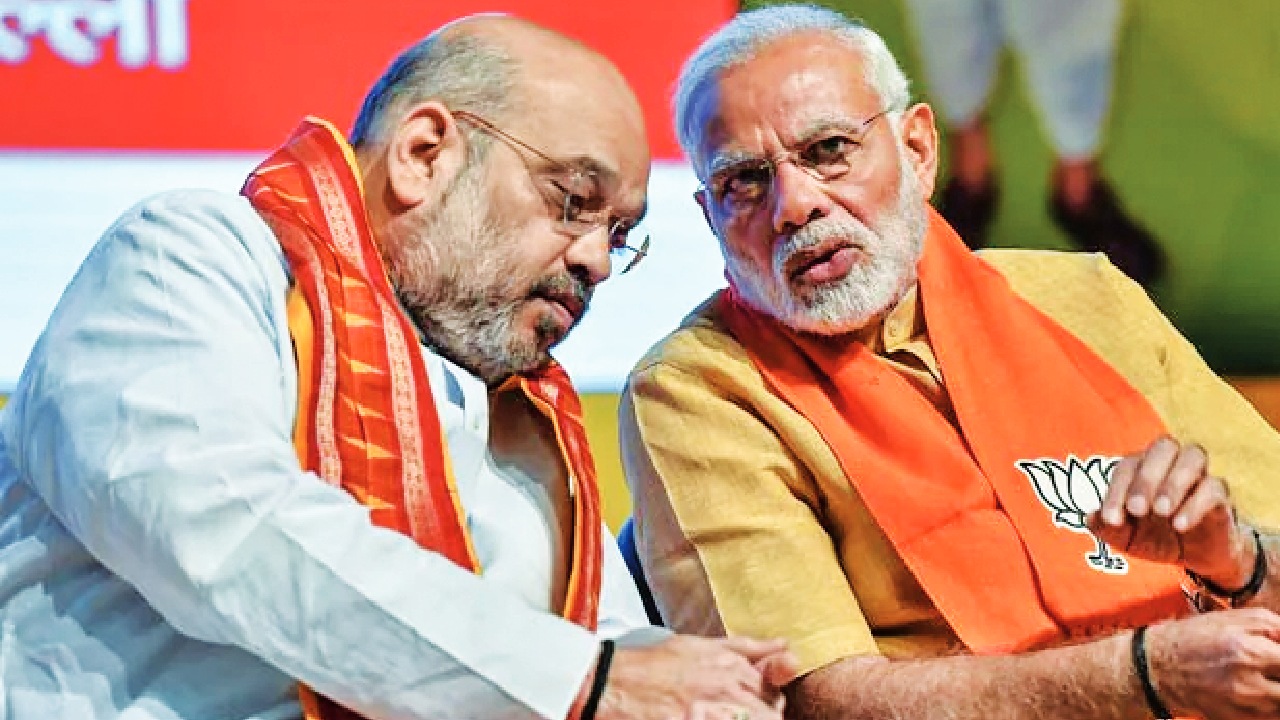
Once upon a time in Indian politics, you had to be an ardent nationalist, a true soldier of the party, a man of strong conviction and firm in your ideology to rise the political ladder. No more. In recent years, the Bharatiya Janata Party has quietly rewritten the rules of political power. The pattern is unmistakable: instead of elevating heavyweight regional leaders with strong mass bases and independent authority, the party increasingly prefers comparatively lesser-known, politically lightweight figures for high offices — chief ministers, party presidents, and key organisational posts. Loyalty, not stature, has become the principal qualification for rising the political ladder.
The surprise appointment of 45-year-old Nitin Nabin as BJP president is the most striking example of this shift. For party workers and political observers alike, the choice was unexpected - not merely because of Nabin’s relative anonymity, but because it further hollows out the once-formidable stature of the BJP president’s office. Compare this with the party’s earlier chiefs — Atal Bihari Vajpayee, L.K. Advani, Rajnath Singh, Nitin Gadkari, Amit Shah - leaders who commanded authority in their own right and shaped the party’s ideological and organisational direction. For Nitin Nabin, stepping into such a lineage is less a challenge than a contradiction.
This centralisation has come at a cost. Popular regional leaders with proven electoral appeal — Shivraj Singh Chouhan, Vasundhara Raje Scindia, Saurabh Patel, BS Yediyurappa — have been gradually sidelined. The BJP’s famed “second line of leadership” today resembles a political unicorn: much discussed, rarely seen, and almost extinct.
JP Nadda’s tenure as party president epitomised this transformation. More a figurative presence than a commanding leader, Nadda neither set the party’s course nor led it from the front. Despite discord with the RSS, Modi-Shah duo prevailed again. Nitin Nabin, an MLA from Bankipur, Bihar was elevated — much to the surprise of political pundits as well as to Nabin himself. Though it is also a calculated electoral gamble in Bihar, where BJP wants to stand on its own. Nabin’s rise therefore can be attributed to loyalty and electoral expediency rather than anything else. Ironically, this makes even Nadda appear retrospectively more substantial than he ever was.
This template is not confined to party presidents. The 2024-25 cycle saw the BJP appoint a string of chief ministers across the Hindi heartland who fit the same mould: politically lightweight, low-profile, and dependent on central authority for survival
Take Madhya Pradesh. After routing the Congress, the BJP bypassed established leaders and chose Mohan Yadav, a three-time MLA and former higher education minister, as chief minister. His selection — reportedly finalised barely two weeks after the election results - stunned observers. Though OBCs constitute over half the state’s population, the Yadav community is not among the most politically dominant. Yadav himself acknowledged the nature of his elevation, describing himself as “a small party worker” grateful for the opportunity. Rajasthan followed a similar script. Bhajan Lal Sharma, a first-time MLA from Sanganer, was a rabbit-out of-the-hat trick. Originally from Bharatpur, Sharma was not even fielded there because the seat was deemed unwinnable for him. Yet, in spite of towering political personalities present in the state, the BJP opted for a fresh face with minimal statewide recognition.
This approach to choosing state leaders has done wonders to the careers of Rekha Gupta (Delhi), Pushkar Singh Dhami (Uttarakhand), Nayab Singh Saini (Haryana), Manohar Lal Khattar (Haryana), Mohan Yadav (Madhya Pradesh), Bhajan Lal Sharma (Rajasthan), Bhupendra Patel (Gujarat) — the list goes no endlessly. The message is loud and clear: election victories belong to the national leadership, not to individual state satraps. By curbing the rise of powerful regional figures, the BJP prevents the emergence of alternative power centres that could challenge central authority. Organisational appointments increasingly prioritise loyalty, caste arithmetic, and internal balance over charisma or mass appeal. Though this approach minimises factionalism and keeps the party’s central command in firm control it risks wiping away the talent that could enrich the party’s legacy and help it achieve its cherished goal of development and progress. The message from the party’s top is crystal: stature is optional, obedience is mandatory!
The writer is senior editor, The Pioneer; views are personal