When neglect is mistaken for tradition: The real debate over Kashi
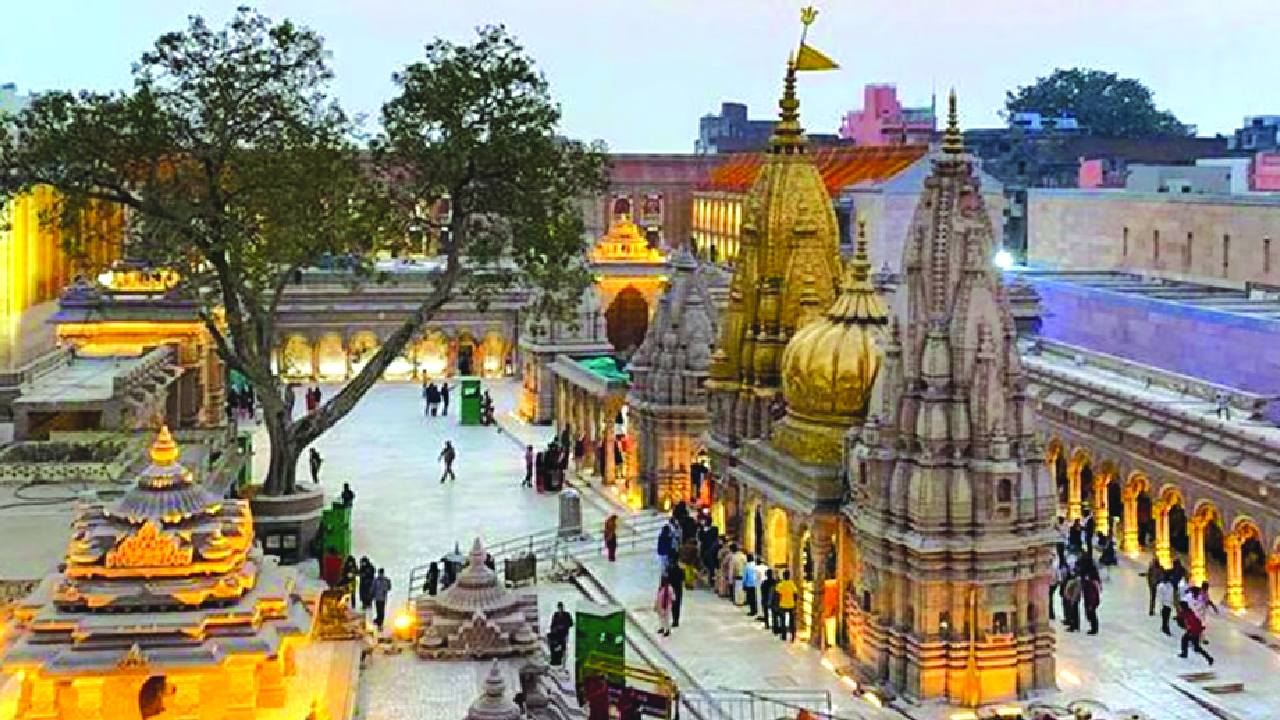
One of the strangest habits within Hindu society is this: every serious attempt to improve a sacred space is first branded an act of betrayal, only to be celebrated centuries later as timeless heritage. The present outrage over the Kashi Vishwanath Dham Corridor is not new. It is merely the latest chapter in a long, repetitive cycle of resistance, regret, and retrospective reverence.
Those who claim that corridors, plazas, and open spaces “damage” Kashi’s ancient character assume that Hindu sacred geography emerged fully formed and untouched by human intervention. History tells a very different story.
When Lokmata Ahilyabai Holkar undertook the construction of Manikarnika Ghat and works around the Kashi Vishwanath Mandir in the 18th century, she did not receive universal praise. She faced fierce opposition from sections of the very city she sought to serve. This is not conjecture or folklore; it is recorded in Holkar state archives. Letters from her appointed officer in Kashi explicitly describe how influential locals obstructed the work out of jealousy, hostility, and factional conflict. The official notes, with visible exhaustion, that only Ahilyabai’s extraordinary resolve and fortune allowed the project to be completed at all.The pattern is unmistakable. The ghat that today is treated as an eternal symbol of Kashi’s sanctity was once denounced as an unwelcome disruption. The woman now invoked as an icon of Hindu piety was, in her own time, accused of interfering with tradition.This alone should temper the moral certainty of today’s critics.
Yet the resistance to modern redevelopment goes further. It is driven by a peculiar belief that inconvenience is an essential ingredient of Hindu devotion. Development is tolerated only until it personally benefits the critic. Airports, express trains, hotels, and smooth highways are embraced without complaint. But once improvement reaches the shrine itself - once sightlines open, congestion clears, and dignity replaces disorder — it is suddenly declared “anti-Hindu”.This selective outrage exposes the hollowness of the argument.
No scripture mandates filth, chaos, or suffocation as proofs of faith. Hindu civilisation has always adapted its sacred spaces to changing realities. Riverbanks became stepped ghats. Forest paths turned into pilgrimage routes. Shrines evolved into temples. Each generation built upon what it inherited, not to erase sanctity but to sustain it. What has changed is not Hindu tradition but Hindu confidence.
Centuries of hostile rule, followed by decades of post-independence hesitation, froze Hindu pilgrimage centres in time even as the population exploded. Sacred cities were denied the right to expand, reorganise, or breathe. Encroachments filled the vacuum. Drainage collapsed. Safety deteriorated. Instead of confronting this failure, many chose to romanticise it, treating decay as authenticity.
This romanticisation has consequences. Hindu families quietly avoid major shrines because the experience is physically exhausting and unsafe. Children associate their own sacred spaces with confusion and discomfort, while encountering spacious, orderly religious complexes elsewhere. Over time, perception hardens into preference.Civilisations do not lose the next generation through debate; they lose them through experience.
The Kashi Vishwanath Dham Corridor challenged this trajectory. It rejected the notion that Hindu devotion must survive in cramped alleys and sewage-lined paths. It restored spatial dignity to one of Hinduism’s holiest sites, allowing devotees to see, breathe, and gather without fear. Predictably, this assertion unsettled those who had grown comfortable equating neglect with tradition.
The same critics who deride the corridor as a ‘concrete jungle’ show remarkable tolerance for actual open drains and hazardous congestion. The same voices that invoke Ahilyabai Holkar to attack present-day redevelopment conveniently ignore that she herself endured similar abuse for doing precisely what she did — build.
History is unforgiving to such contradictions. Those who once opposed Manikarnika Ghat are nameless today. The ghat remains. Rulers change. Structures endure.
The same will be true of the Vishwanath Corridor, the Ram Mandir in Ayodhya, the ghats of Kashi in the future, and the proposed Bankey Bihari Mandir corridor in Vrindavan. Architectural objections about scale, symmetry, or materials are less about aesthetics and more about discomfort with visibility. Grand, organised Hindu sacred spaces disrupt an old equilibrium where Hinduism was expected to remain inward, fragmented, and apologetic.
Other faiths do not impose this restraint on themselves. Mecca was radically restructured to accommodate pilgrims. Vatican City functions as a meticulously planned religious capital. Across the Islamic world, vast mosques funded by modern wealth are celebrated as symbols of religious strength. These developments inspire pride among the young. They do not provoke civilisational self-doubt.
Only Hindus are told that confidence corrupts faith.
Opponents often claim to speak for tradition, yet their worldview denies tradition its most fundamental quality: continuity through change. Hinduism has survived not by fossilising itself, but by absorbing time, power, and circumstance into its sacred geography.
The irony is sharp. Those who accuse builders of being “tradition-breakers” will, two centuries from now, be forgotten. The corridors, ghats, and temples they opposed will be cited as proof of Hindu endurance — just as Ahilyabai Holkar is today.
This is the real lesson of Kashi. Sacred spaces are not museums. They are living civilisational organisms. When they are allowed to grow with dignity, they strengthen faith. When they are forced to stagnate in the name of purity, they slowly lose relevance.
The question, therefore, is not whether redevelopment harms Hindu tradition. The question is whether a civilisation that refuses to build for its future can reasonably expect that future to carry its faith forward.History suggests the answer.
The writer is commentator on socio-political issues; views are personal