War-induced momentum for energy self-reliance
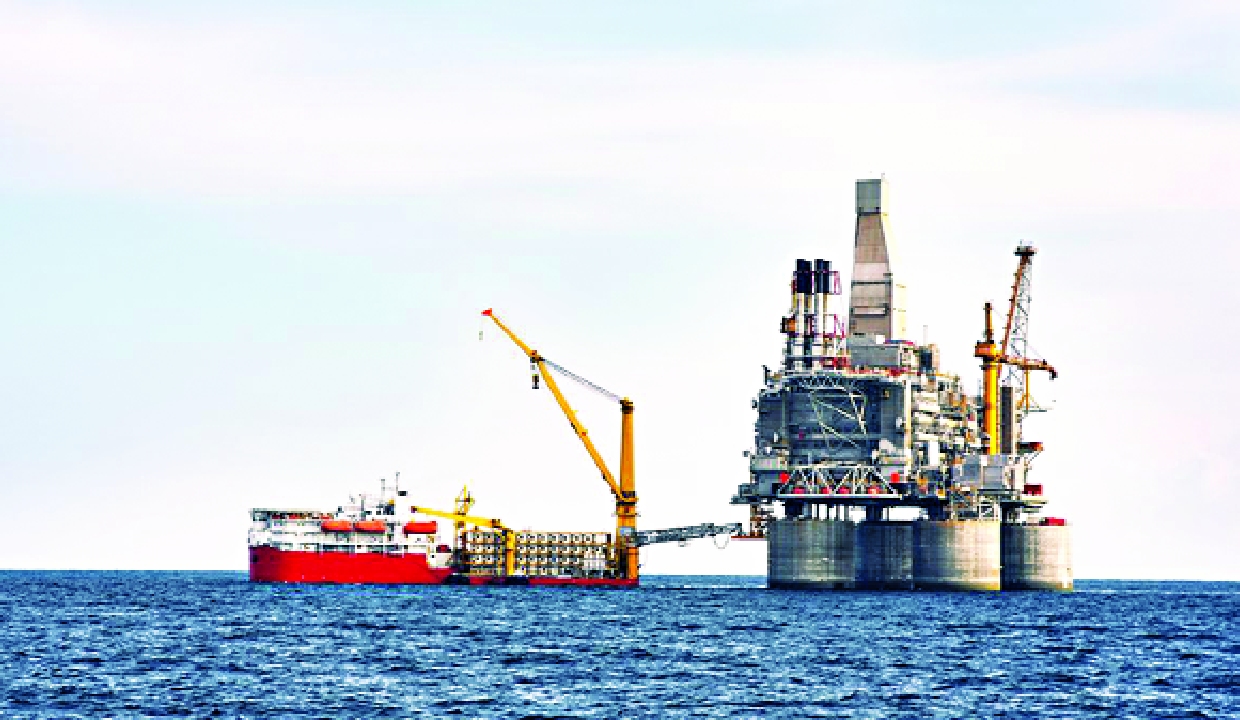
Following the peace agreement between the US and Iran after the roughly three-and-a-half-month-long Gulf conflict, the Strait of Hormuz-a vital conduit for massive crude oil shipments-has reopened. It is worth noting that the closure of the Strait of Hormuz not only disrupted oil transit but also caused a drastic surge in oil prices. Crude oil prices, which hovered around US $70-80 per barrel before the war, spiked to as high as US $126 per barrel during the conflict. Although prices fluctuated, they largely remained in the vicinity of US $100 per barrel. The public was affected not only by shortages resulting from supply disruptions but also by rising inflation worldwide, driven by soaring oil prices. Even though the US is self-sufficient in petroleum supplies, it was also not immune to the impact of these high prices. Against this backdrop, a global conversation-including within India-began regarding the need to reduce dependence on imported crude oil. The primary question that arose was: Is fuel self-reliance achievable?
Currently, India relies on foreign sources for approximately 88 per cent of its crude oil and imports 50 per cent of its gas requirements. The sudden shortage of these commodities following the blockade of the Strait of Hormuz impacted not only prices but also businesses ranging from small restaurants and roadside tea vendors to gas-dependent industrial establishments. Consequently, the country began deliberating on how to achieve self-reliance in fuel and energy.
The seven appeals Prime Minister Narendra Modi made to the nation to conserve foreign exchange-such as using public transport, carpooling and working from home-directly pointed towards reducing the country’s dependence on petroleum products. However, it must be understood that while we can save foreign exchange in the short term by consuming less energy, energy self-reliance is the only viable option for the long term. Biogas can emerge as a significant alternative to petroleum gases. India possesses abundant resources-such as cattle dung, agricultural residues and household waste-that can be used to produce biogas, yet we are currently utilising only about 5 per cent of this potential. Naturally, with concerted efforts, biogas plants could be established at the village or village-cluster level. This would not only meet local fuel needs and reduce reliance on imported gas but also significantly lower fuel costs. Moreover, with minor modifications, vehicles can also be made to run on biogas.
While petrol and diesel have long been considered indispensable for vehicles in the country, we must recall that just a decade ago, India was facing power shortages. Today, however, the entire nation enjoys 24-hour electricity supply, and a surplus of power is being recorded, especially during off-peak hours. Concurrently, there has been a massive expansion in renewable energy generation capacity.
Renewable energy capacity, which stood at a mere 35 gigawatts in 2014, has now surpassed 200 gigawatts, with an additional 25 to 30 gigawatts of capacity being added annually. Although rising energy prices had previously motivated us to strive for energy self-reliance, the further price hikes and supply disruptions caused by the war have accelerated these efforts. Thanks to the establishment of substantial power generation capacity, India has become virtually self-reliant in the energy sector; in fact, we even generate surplus electricity during off-peak hours. Increased incentives in the form of subsidies for residential solar installations have started boosting power generation capacity even more. The government is striving to ramp up domestic production of solar and wind energy equipment, which will further enhance the potential for expanding power generation capacity. Therefore, the time has come to shift from petrol- and diesel-powered vehicles to electric vehicles. We can readily adopt electric buses, trucks, cars and scooters.
This could lead to substantial savings in petrol and diesel, thereby reducing dependence on overseas sources and conserving valuable foreign exchange. Traditionally in India, automobiles used to run on either petrol or diesel and later on CNG. In the last few years, the use of hybrid cars has also increased, where fuel consumption is lower, as vehicles run partially on petrol and partially on batteries. In more recent times, the use of electric vehicles has started increasing. The popularity of EVs can be seen from the fact that, in June 2026, the share of EVs in the scooter segment increased to more than 10 per cent, while electric cars constituted nearly 8 per cent of total car sales, and this has continuously been increasing over time. Before the war, in January 2026, the share of electric cars in total automobile purchases was hardly 3.6 per cent. Beyond transportation, we can also make greater use of electric cooking appliances, such as induction cooktops. New developments in research on nuclear power generation in the country could further strengthen our energy security. The government is giving a major push to biogas production; furthermore, research and development are facilitating the compression of biogas, making its use in vehicles feasible. Such experiments are already proving successful. Overall, it can be said that while efforts towards energy self-reliance were already underway, the conflict between the US and Iran-and the resulting surge in oil prices and supply disruptions-has provided a significant impetus to this goal. We must not allow this momentum to slow down. The country needs to undertake comprehensive and organised efforts to eliminate its dependence on imported crude oil. Simultaneously, a shift in the mindset of the general public is essential. Entrepreneurs must be encouraged to invest in the energy sector, and the active participation of young people in research and development (R&D) activities must be ensured.
Developing an extensive charging infrastructure is also imperative to popularise electric cars and other electric vehicles across the country. Although there is adequate electricity generation, the power supply is frequently interrupted in many areas due to deficiencies in the grid system. The government needs to make concerted efforts to resolve this issue. Despite these challenges, none of them are insurmountable. With well-planned policies, strong willpower and coordinated efforts, India can drastically reduce its dependence on foreign crude oil over the next decade. This is the need of the hour.
The writer is the National Co-convenor of the Swadeshi Jagaran Manch and a former Professor at PGDAV College, University of Delhi; Views presented are personal.