India can be a trusted textile manufacturer the world is looking for
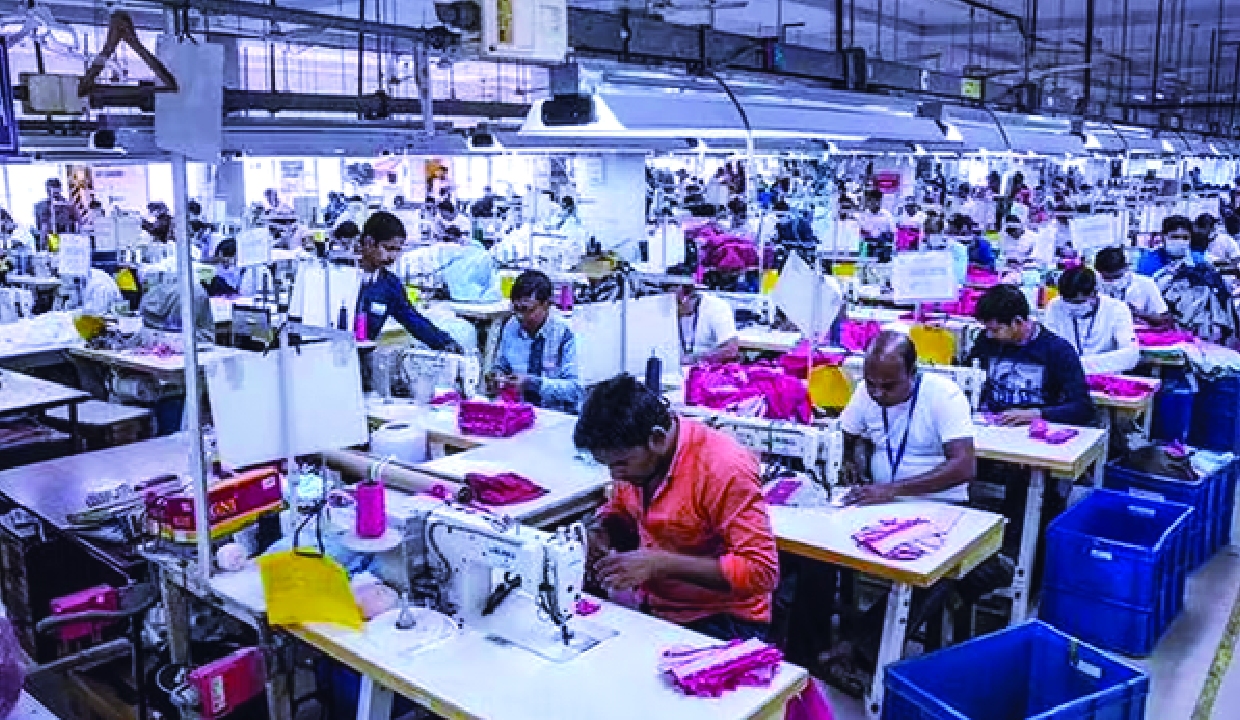
India’s textile moment has arrived. The world is looking for a trusted manufacturing partner. The question is not whether India can lead, but whether it can execute with the speed and certainty this moment demands
Global supply chains are being reconfigured at a pace not seen in decades. The world is no longer merely open to alternatives-it is actively searching for them. For the first time in modern textile history, major consumer markets are simultaneously seeking diversification, resilience and trusted manufacturing partners.
Few countries are better positioned than India to answer this call. Yet India accounts for only about USD 37 billion in textile and apparel exports today-far below its potential.
Opportunities of this scale do not emerge often. When they do, countries either build industries around them — or spend decades wondering what might have been.
India possesses a complete textile value chain, deep manufacturing capabilities, a large domestic market and a young workforce. Yet positioning alone does not win markets. Investment does. Execution does. Policy certainty does.
The next decade will not be won by the country that produces the cheapest T-shirt. It will be won by the country that global buyers trust the most.
If India is serious about achieving USD 100 billion in textile and apparel exports by 2030-31 and building a USD 350 billion textile economy, it must prepare for one of the largest investment cycles in the sector’s history.
India’s textile and apparel market today stands at approximately USD 194 billion, comprising exports of around USD 37 billion and a domestic market of nearly USD 157 billion. Reaching the 2030-31 vision requires the creation of almost USD 156 billion of additional market opportunity within the next five years. This is not incremental growth. It is structural transformation.
Industry assessments suggest that nearly USD 60 billion of fresh investment may be required across the value chain-from fibre and spinning to weaving, processing, garmenting and technical textiles. Beyond exports, this investment can create large-scale employment, strengthen rural economies, deepen manufacturing capabilities and reinforce India’s position in global value chains. As one of India’s largest employment-generating sectors, textiles can convert manufacturing growth into broad-based economic opportunity.
For decades, textile competitiveness was measured largely through labour costs and production efficiency. Today, the equation has changed. Global buyers increasingly evaluate sourcing destinations through a broader lens: reliability, compliance, sustainability, traceability, resilience and execution capability. The experience of leading exporting nations demonstrates that long-term success is built not only on cost competitiveness, but on buyer confidence. Trust has become a strategic asset.
India’s opportunity, therefore, is not simply to become a larger textile producer. It is to become the world’s most trusted textile manufacturing partner.
What makes this moment exceptional is not merely the global supply chain shift. It is the convergence of three conditions that rarely align simultaneously.
First, political intent is clear. Initiatives such as PM MITRA, Production Linked Incentive schemes and support for technical textiles demonstrate recognition of textiles as a strategic manufacturing sector.
Second, the administrative machinery is increasingly focused on enabling investment and competitiveness through compliance rationalisation, infrastructure development and ease-of-doing-business reforms.
Third, industry is ready to invest. Across the value chain, companies are evaluating capacity expansion, technology upgradation and sustainability initiatives.
When political leadership, effective governance and industry commitment move in the same direction, nations create industries that endure for generations.
Recent trade agreements and ongoing negotiations are helping address long-standing market-access disadvantages faced by Indian exporters. The India-UK FTA, progress in negotiations with the European Union and agreements with key trading partners are steadily improving India’s competitive position in global markets. However, market access alone is not enough. Preferential tariffs without competitive supply remain an unrealised opportunity. Trade agreements create openings. Competitiveness converts them into exports.
Raw material competitiveness remains critical. Manufacturers making decade-long investment decisions need confidence that internationally competitive fibre and raw materials will remain available throughout the life of those investments. Similarly, export remission frameworks such as RoSCTL and RoDTEP require continuity, predictability and appropriate upward revision to keep pace with rising domestic costs and unrebated taxes. These mechanisms are not incentives; they are essential competitiveness tools that neutralise embedded taxes and levies and help maintain a level playing field for Indian exporters. Policy certainty is often the difference between investment announced and investment implemented.
India must also accelerate the development of a textile machinery manufacturing ecosystem. The country continues to import significant volumes of advanced machinery every year. India should not aspire only to manufacture textiles. It should aspire to manufacture the machinery that manufactures textiles. Targeted foreign direct investment, technology partnerships and phased localisation can build capabilities not only in textile production but in textile technology itself. Manufacturing competitiveness ultimately rests on technological competitiveness.
Technical textiles represent one of India’s most promising growth frontiers. From medical textiles and geotextiles to filtration fabrics, defence applications and advanced industrial solutions, this segment combines strategic relevance with high-value manufacturing potential. It offers India an opportunity not merely to participate in global markets, but to build leadership positions in emerging applications where demand is expected to grow rapidly in the years ahead.
China Plus One is no longer a theory; it is increasingly reflected in sourcing decisions across global supply chains. Buyers are actively seeking resilience, diversification and trusted partners. The future will belong not merely to the lowest-cost producer, but to the most trusted manufacturing ecosystem.
India possesses the raw materials, entrepreneurial talent, manufacturing depth, domestic demand and demographic advantage required to emerge as a global textile powerhouse. The question is no longer whether India can achieve USD 100 billion in textile and apparel exports. The question is whether we are willing to make the investments, undertake the reforms and create the policy certainty required to get there.
India’s textile moment has arrived. The world is looking for a trusted manufacturing partner. The question is not whether India can lead, but whether it can execute with the speed and certainty this moment demands.
China Plus One is no longer a theory; it is increasingly reflected in sourcing decisions across global supply chains. Buyers are actively seeking resilience, diversification and trusted partners. The future will belong not merely to the lowest-cost producer, but to the most trusted manufacturing ecosystem
The writer is Chairman, ASSOCHAM National Council on Textiles and Technical Textiles; Views presented are personal.