Wangchuk brings Ladakh to national centre stage
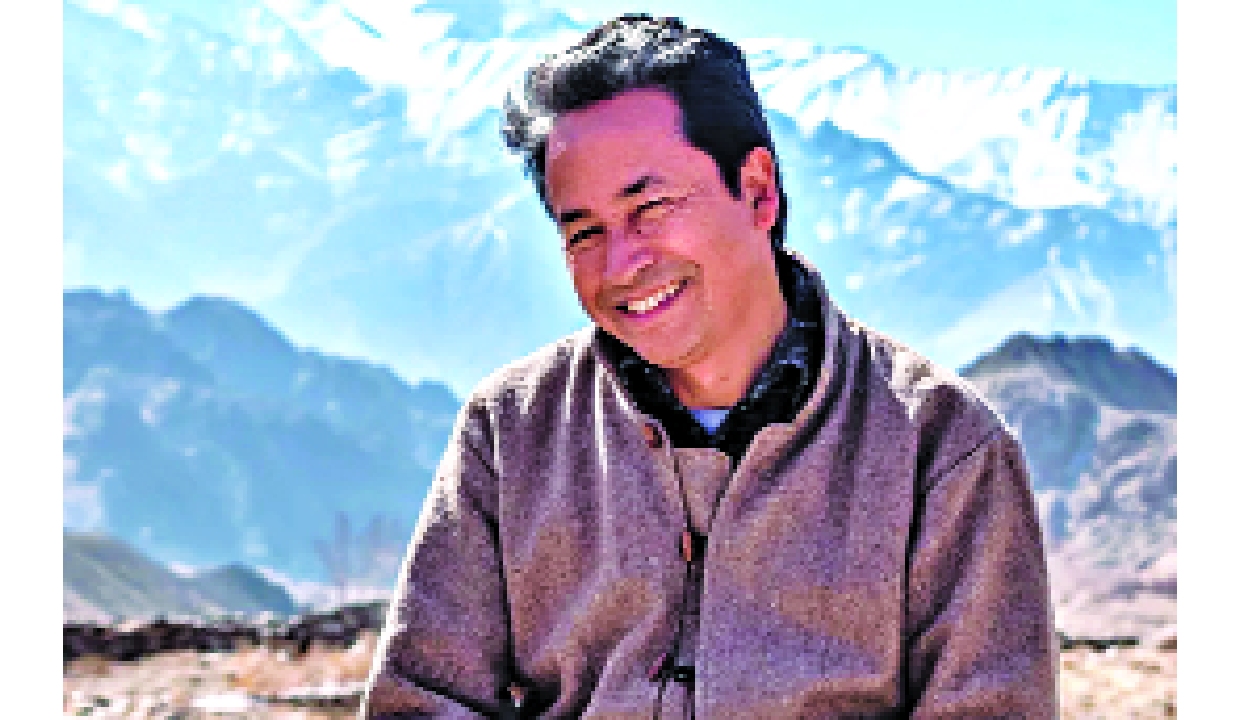
In the midst of the short-lived joy of the Ladakhis, with the Union government reneging on some crucial clauses of the agreement accepted in principle after the May 22, 2026, agreement, educationist and climate activist Sonam Wangchuk has given a new twist to the Ladakh issue while adding grist to the Cockroach Janata Party’s (CJP’s) youth-related issues. He has embarked on an indefinite hunger strike at Delhi’s Jantar Mantar, along with six youth activists, to take the CJP’s protest against repeated leaks of NEET and other examination papers to the next level. Their sole demand is the resignation of Education Minister Dharmendra Pradhan. It is a repeat of what he did a few months back when he sat on an indefinite hunger strike in the cold environs of Leh. His action not only rattled the administration from Delhi to Leh but also added a new dimension to the Ladakhis’ agitation for their political empowerment and the protection of their all-encompassing identity. The outcome was his arrest under the draconian National Security Act and his being confined to the hot environment of a Rajasthan jail, only to be unconditionally released after six months of incarceration, with the clear implication that the tag of being “anti-national” did not stick to him. Wangchuk is brave and astute and carefully chooses his words. He has shown remarkable determination not only in pursuing the Ladakh cause, in the face of attempts by the state machinery to defame him, but also in joining the bigger cause of Gen Z’s sufferings due to the malfunctioning of the education system and the government of the day simply looking the other way around. Notwithstanding the opposition by some of his fellow Ladakhi leaders, though they are few in number, and the state machinery being busy plotting moves to corner him, Wangchuk seems to have crossed all hurdles with aplomb. There is no doubt that Wangchuk’s presence in the CJP stir and his reiteration that education is central to the development of a society and a nation has given strength to the movement, which has entered its second stage. The people of Ladakh (Leh and Kargil divisions) have been fighting for their rights for quite some time, the issue has caught the imagination of the national and international media only sparsely. This is despite the strategic and geopolitical location of Ladakh, bordering China and Pakistan-occupied Kashmir, with Central Asia not far away. Their nationalist credentials have been reflected repeatedly in both peace and war. No one can question their role as the second line of defence in every situation. Sitting at Jantar Mantar, Wangchuk has been mostly speaking about the concerns of students and youth in line with the CJP’s narrative, but his very presence on a forum in the national capital, with the eyes of the world riveted on the youth agitation, brings the Ladakh issue-knowingly or unknowingly-into the limelight. Perhaps he chose the CJP route to silently present the issue on the national platform.
By merging the student-led examination protest with the long-standing campaign for Ladakh’s Sixth Schedule inclusion and statehood, he has turned a regional matter, albeit one of international significance, into a mainstream issue. After all, the two issues have a common thread in the future of both students and Ladakhis, with education being the vital link. And who better than the renowned educationist and environmentalist Wangchuk, who landed at the Jantar Mantar dharna after participating in an international environmental meet in Switzerland? As more than a week has elapsed since the CJP started its second leg of agitation at the same place following the Centre’s (read Prime Minister Modi’s) reluctance to remove the Education Minister, the administration has been handling the situation in a cool and calculated manner, barring the disconnection of electricity and power supply and depriving the protesters of toilet facilities.
Earlier, the agreement with the Centre had raised hopes of Ladakh getting a mechanism to usher in people’s rule with an elected assembly spearheaded by a chief minister-like mechanism. Presently, it is a centrally administered Union Territory, which came into being on August 5, 2019, after the then state of Jammu and Kashmir was demoted and divided into two UTs-Ladakh and Jammu & Kashmir. However, the hopes were short-lived and belied after the Centre allegedly backtracked on the most important part of the May 22 decisions. Nearly a month after their meeting with the Ministry of Home Affairs (MHA), representative groups from Ladakh-the Apex Body Leh (ABL) and the Kargil Democratic Alliance (KDA)-upped the ante by observing a complete shutdown on June 23 to protest against the failure to incorporate key points agreed upon during last month’s meeting on the Union Territory’s political future.
What has triggered the crisis again within such a short span, after hope had been generated for lasting peace? And why? During the sub-committee meeting with the MHA, the Centre reportedly agreed in principle to consider constitutional safeguards for Ladakh under the provisions of Article 371. The proposal had the following key ingredients, among other things: “A democratic structure for Ladakh featuring legislative, executive and financial powers.” “The bureaucracy, including the Chief Secretary, functioning under an executive led by the people of Ladakh.” These provisions went missing from the official minutes released by the government after some delay. Ladakhi leaders asserted that, by omitting these points, the Centre is employing delaying tactics and reneging on its promises. In this backdrop, Wangchuk’s arrival at Jantar Mantar to share the platform with CJP activists has also silently given a new dimension to the Ladakh issue, besides raising the profile of the agitation. In his interviews after starting his protest fast, he gave clear indications that he was prepared for a long haul and that he was undeterred by pressure coming from any side. There is no doubt that his commitment both to the Ladakh cause and now to the cause of students and youth, with a thrust on rights and education, is unflinching. His discourse, both in Ladakh and now in New Delhi, is devoid of any political grandstanding, despite the fact that his detractors have been accusing him of being guided by political ambitions. The fact of the matter is that he unsuccessfully contested elections in the past and may be inclined to do so again in future. He is well within his constitutional rights to do so. No issue in a vibrant democracy such as India can be devoid of politics, and more so if the government or the ruling dispensation themselves are inclined to politicise issues in pursuit of electoral benefits, whatever the cost may be, or to sit on false prestige. As Wangchuk has rightly said, the prestige of a government is enhanced if it admits its faults and is prepared to rectify the course in the larger public interest. This is the ‘mool mantra’ that Prime Minister Narendra Modi and his government should follow on Ladakh, the CJP and other issues concerning the people’s welfare. No matter that a lot of time has already been lost in dithering and clinging to false prestige.
The writer is a political analyst; Views presented are personal.