Vietnam boat capsize: A preventable tragedy
Fifteen families are now mourning the death of their loved ones. The only honest tribute to them would be to ensure that this will not happen again
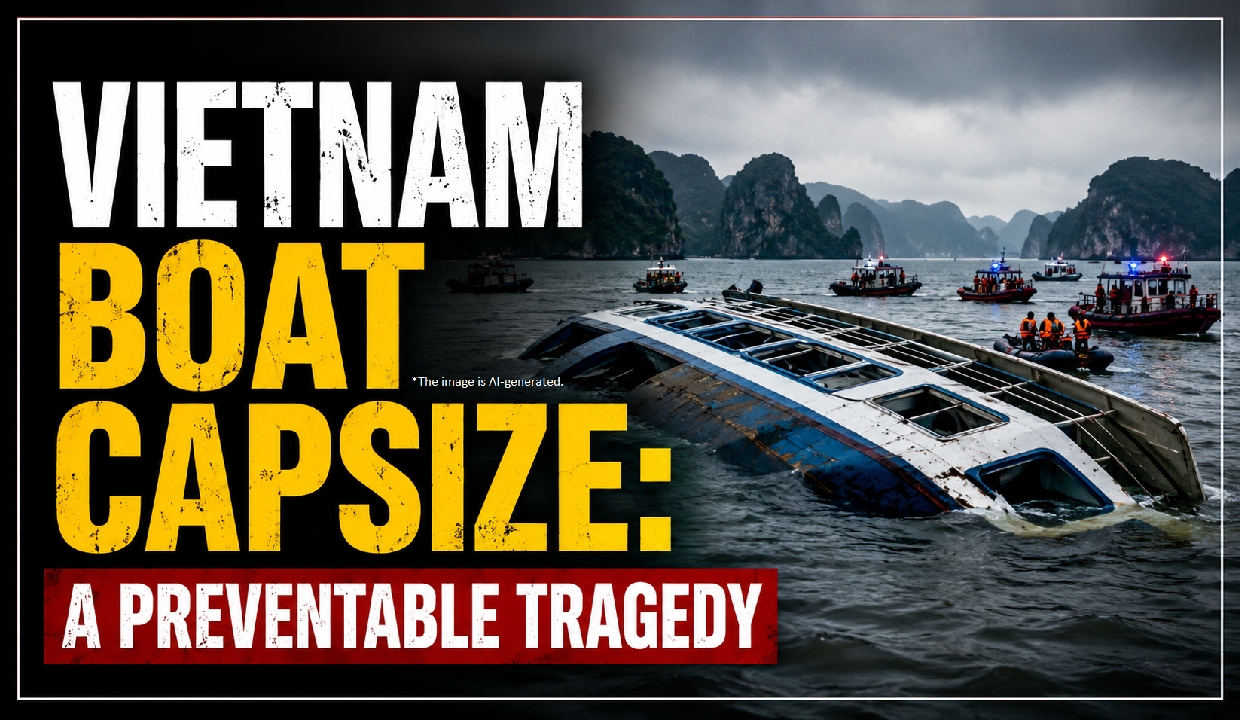
Fifteen Indian tourists — colleagues on what was meant to be a light-hearted company outing — drowned on Saturday when their speedboat capsized barely 400 metres off Vietnam’s Phu Quoc Island. Of the 36 people aboard, 21 survived, pulled out by jet skis and nearby fishermen even as others remained trapped inside the overturned hull. The sea took them so close to shore that this reads less like an act of nature and more like a systems failure — the kind that, with basic precautions, does not have to end in a body count.
Survivor accounts describe a familiar sequence of small failures compounding into catastrophe. The boat left Hon May Rut Ngoai Island into deteriorating weather, and eyewitnesses say it tipped over within minutes, well before it should have been anywhere near open water in such conditions. More troubling still, widely circulated — though not independently verified — video appears to show passengers clutching life jackets instead of wearing them, this despite survivors telling authorities that the crew had instructed everyone to put them on before departure.
A jacket held in the hand saves no one once the water closes over a boat. Investigators are also examining whether the vessel was carrying more passengers than it was certified for, and whether it should have been cleared to sail into worsening seas at all. What makes this hardest to accept as simple misfortune is that Vietnam buried 39 people, most of them its own citizens, in an almost identical disaster barely a year ago, when the tourist boat Wonder Sea capsized in a Ha Long Bay thunderstorm. A country that has already lived through its deadliest sea accident in years cannot plausibly be surprised the next time a boat overturns in rough weather with unworn life jackets aboard. That repetition is the real criminal negligence, and it should shape the response. Vietnamese authorities need enforcement, not exhortation: verified life-jacket checks before every departure, weather-linked suspensions of sailing that individual operators cannot override to protect bookings, and passenger counts checked against certified capacity rather than taken on trust. Prime Minister Le Minh Hung has ordered an investigation; it must end in a public report with real consequences — licence suspensions and prosecutions where warranted — not a quiet settlement followed by business as usual once the next tourist season begins.
India, in turn, cannot treat this as someone else’s regulatory failure. With outbound leisure and corporate travel to Southeast Asia rising fast, the Ministry of External Affairs should move beyond generic country advisories toward route- and operator-specific safety warnings, and press Vietnam bilaterally for verifiable safety certification of tourist-boat operators. Companies organising offsites abroad should vet transport safety with the same rigour they apply to hotels and venues.
Fifteen families are now arranging funerals instead of welcoming colleagues home from a work trip. The only honest tribute left to give them is a system that will not let such thing happen again