US-Iran: The truce that could not hold
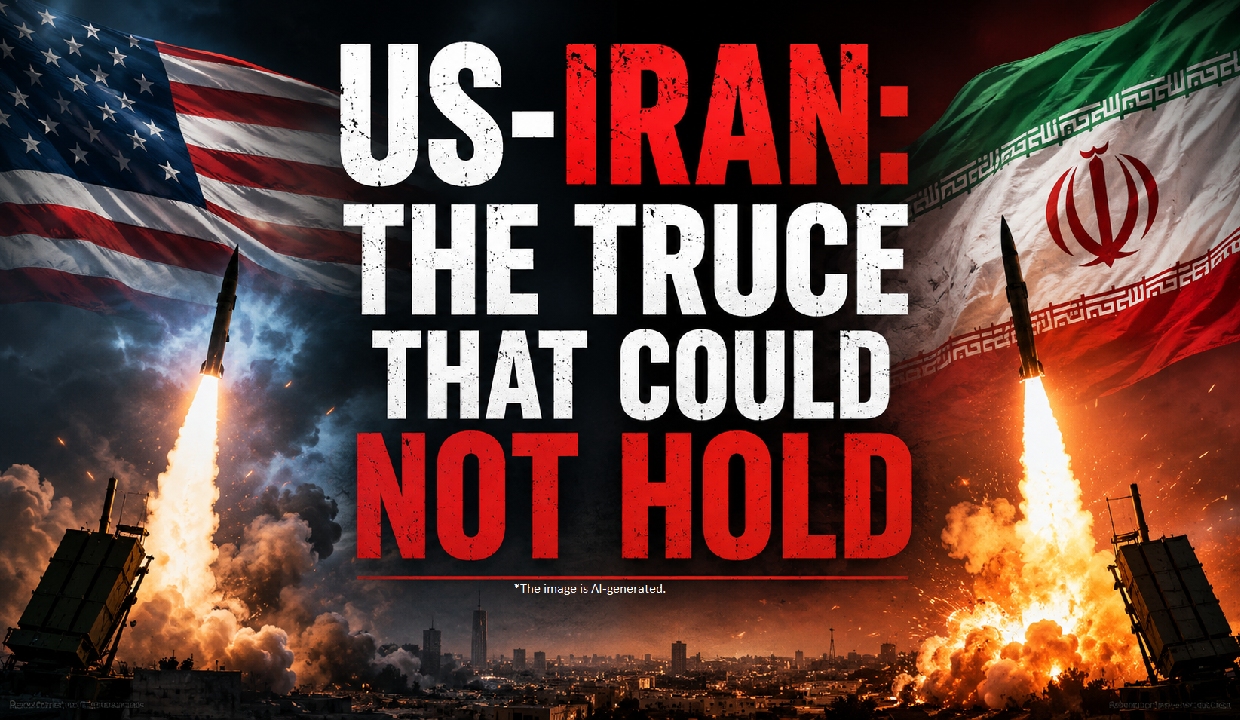
As missiles fly over the Strait of Hormuz again, the fragile peace signed at Versailles in June lies in ruins and once again the world may pay the price
For a few weeks this summer, it looked like the worst had passed. A fourteen-point memorandum, signed with fanfare by Donald Trump and Iran's President Masoud Pezeshkian, had promised a permanent end to hostilities, a reopened Strait of Hormuz, and a path back to sanctions relief. That illusion collapsed this week. After Iranian projectiles struck three commercial tankers transiting Hormuz, the United States answered with strikes on more than eighty targets across Iran. Trump, speaking from a NATO summit in Ankara, declared the agreement "over," calling peace talks a "waste of time" — even as he left the door open, however grudgingly, for negotiators to keep talking. The breakdown was not really sudden. It was the third time Washington has struck Iran even as talks were supposedly underway, and Tehran has said, not unreasonably, that this pattern has poisoned any basis for trust.
Underneath the ceasefire's language always sat the same unresolved fault lines: how much uranium Iran can keep, whether it retains any enrichment capacity at all, how far sanctions relief should go, and who compensates whom for a war that has already cost billions of dollars. A sixty-day pause was never going to settle questions that a decade of diplomacy failed to answer, and the assassination of Ayatollah Khamenei has left Tehran's succession — and therefore its negotiating authority — genuinely unclear. Where this heads next is not known to any human being, given the fact that Iran plays the cards close to its chest and Trump is as erratic as ever. Washington has floated seizing Kharg Island outright. Iran has warned it will strike wherever it judges necessary to protect its coastline and its leverage over Hormuz. The Lebanon front, only loosely stabilized, remains combustible. And every option on the table — a wider blockade, an American occupation of Iranian energy infrastructure, a renewed missile exchange with Israel — points toward escalation rather than resolution. The world will not watch this from the sidelines. Brent crude has already jumped past $78 a barrel on the latest news, continuing a rally that has made this the largest oil supply shock in a generation. Shipping insurers are pricing in war risk through the Gulf; European equities have slid; Central Asian trade routes reliant on Iranian ports are choked; and fertiliser and LPG shortages are rippling through economies from the Philippines to Chile. This is not a regional war anymore — it is a tax on every importing economy on earth. Few nations are as exposed as India, which sources roughly half its crude and the bulk of its LPG through Hormuz. New Delhi's room to maneuver is real but narrow. It cannot broker peace — that leverage now sits with Qatar, Oman, and, awkwardly, Pakistan. What it can do is practical: accelerate the diversification of crude sources it has already begun through renewed Russian and Iranian purchases, expand strategic reserves beyond today's roughly three-week cushion, and use its genuine historical relationship with Tehran to keep a back channel open rather than being seen as leaning entirely toward Washington and Israel. Above all, India should resist being pulled into anyone's camp.