Union Budget Balances Investment and Growth: PM
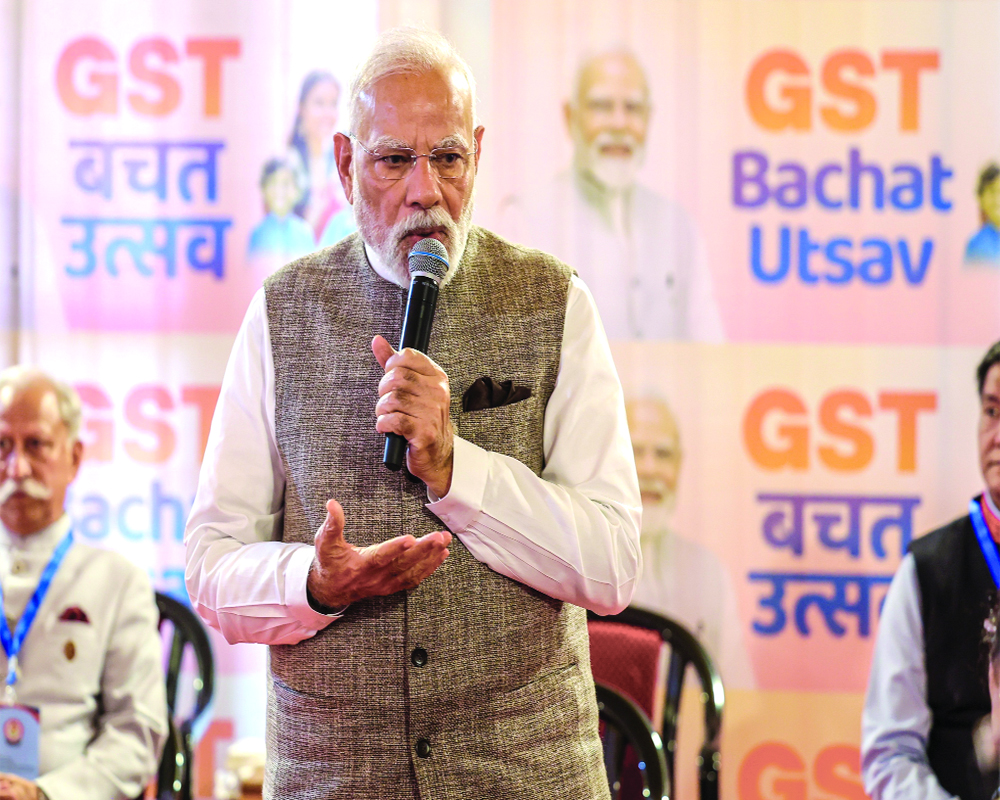
Union Budget 2026 has been pitched as a statement of intent rather than mere arithmetic, with Prime Minister Narendra Modi hailing it as a fine balance between robust capital expenditure and sustained economic growth. Addressing his first reactions after the Budget presentation, the Prime Minister said the proposals reflect confidence in India’s economic fundamentals while reinforcing the country’s growing stature on the global stage.
Describing the Budget as a catalyst for momentum, PM Modi said it captures the spirit of trust-based governance and places people at the heart of economic policymaking. “India is no longer satisfied with being the fastest-growing major economy. Our goal is clear—to become the world’s third-largest economy,” he said, underscoring the government’s long-term ambition.
The Prime Minister noted that the Budget aligns reforms with aspiration, adding fresh energy to what he termed India’s “reform express.” He also highlighted the special focus on tourism-led development in the northeastern region, calling it a step towards unlocking untapped economic and cultural potential while integrating the region more closely with national growth pathways.
Union Finance Minister Nirmala Sitharaman, presenting her ninth consecutive Budget, placed strong emphasis on fiscal prudence alongside growth impulses. A key announcement was the retention of the states’ share in the divisible pool of central taxes at 41 per cent, reaffirming the Centre’s commitment to cooperative federalism.
“As recommended by the Finance Commission, I have provided ₹1.4 lakh crore to states for 2026–27 as grants,” Sitharaman said in her Budget speech. The Finance Commission, chaired by economist Arvind Panagariya, had submitted its report to the President in November 2025 after extensive consultations with states and Union Territories. Several states had sought an enhanced share, but the government opted for continuity, citing stability and predictability in fiscal transfers.
On the macroeconomic front, Sitharaman projected the fiscal deficit at 4.3 per cent of GDP for 2026–27, a marginal improvement from the revised estimate of 4.4 per cent for the current financial year ending March 2026. The calibrated reduction signals the government’s intent to stay on the fiscal consolidation path without compromising developmental expenditure.
In line with deficit moderation, the debt-to-GDP ratio is estimated to decline to 55.6 per cent in Budget Estimates for 2026–27, compared to 56.1 per cent in Revised Estimates for 2025–26. Sitharaman said the gradual reduction in debt levels would ease pressure on interest payments, creating additional fiscal space for priority sectors such as infrastructure, social development and human capital.
Taken together, the Budget reflects an attempt to combine ambition with discipline—pushing growth through capital investment while maintaining credibility on fiscal management. As global investors and domestic stakeholders parse the fine print, the government’s message is clear: India’s economic journey is being steered with confidence, continuity and a long-term vision firmly in view.