Painting women in colours of grace
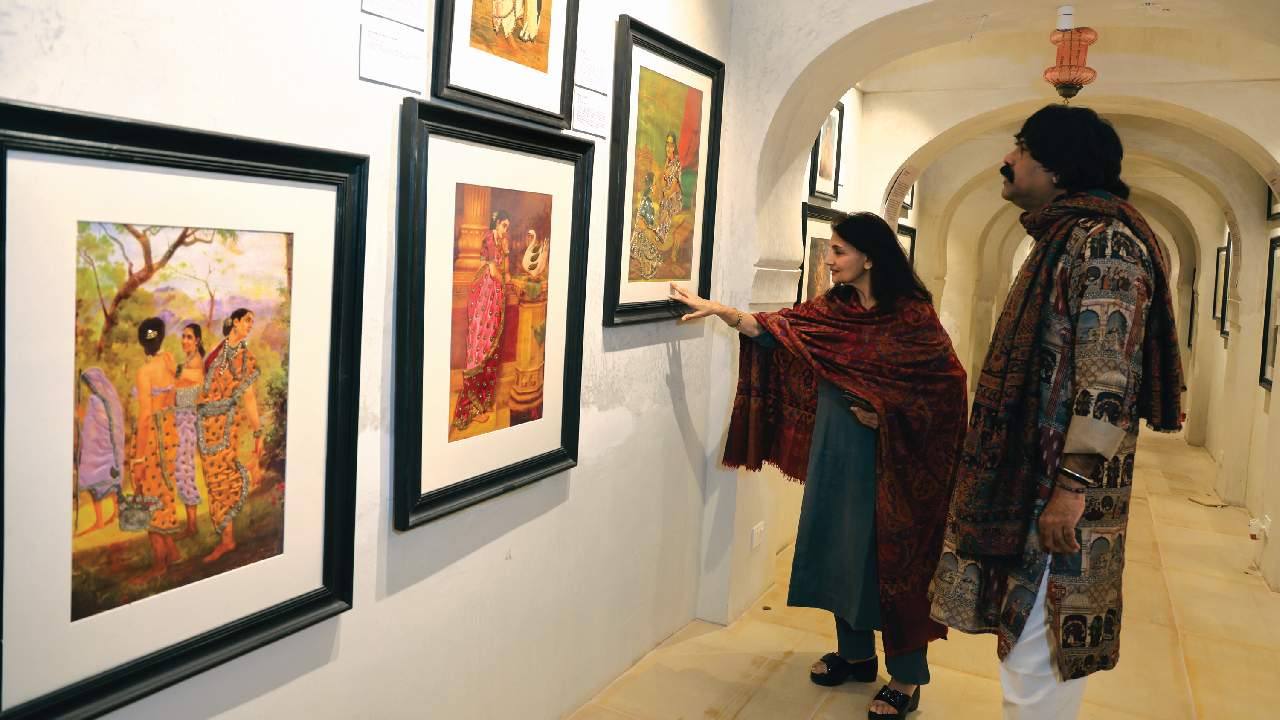
Raja Ravi Verma’s women had dignity and charm
Raja Ravi Varma (1848-1906) occupies a unique place in Indian art history — a painter whose canvas bridged classical Indian narratives and European realism, whose portrayals of women have endured not only as aesthetic delights but as cultural icons. His depictions of sari-clad women and goddesses gave them a dignity and resonance that transcended time.
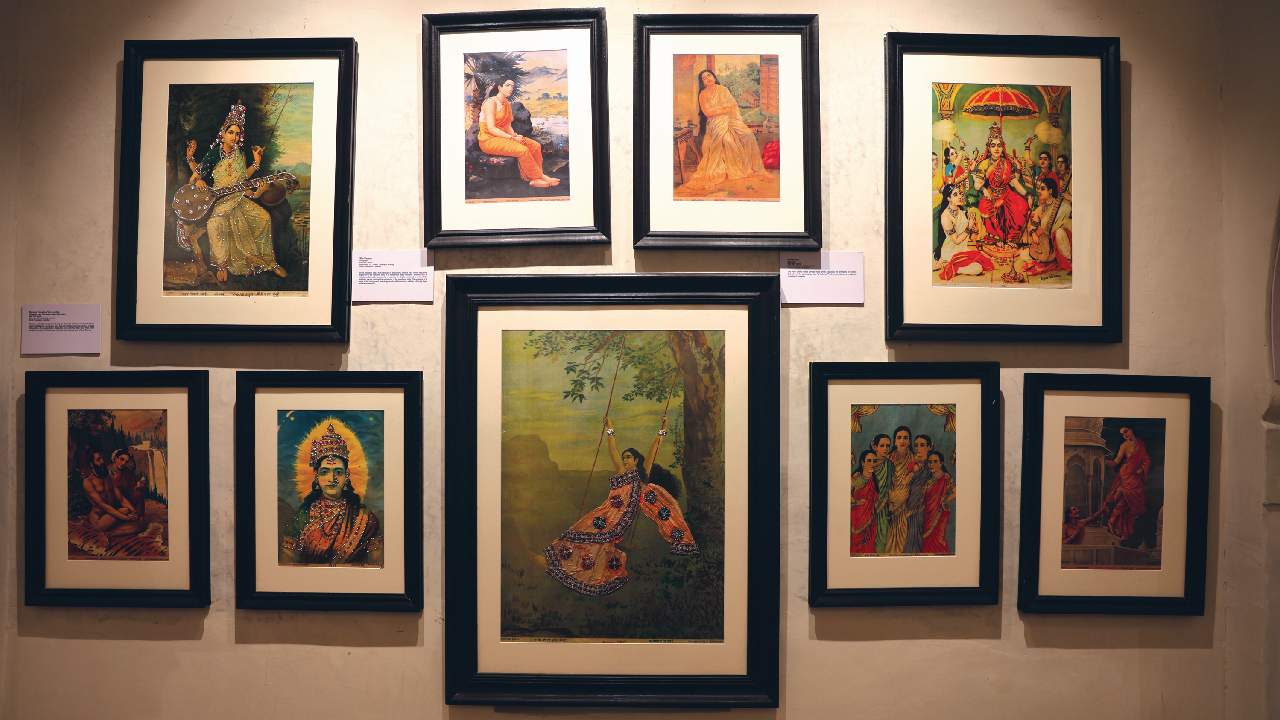
Recently, the legacy of Raja Ravi Varma came alive at MOHAR Haveli in Ramgarh Shekhawati when the art gallery showcased “Women of Raja Ravi Varma” in the presence of his descendant Rama Varma, an accomplished music composer, on the occasion of the VHAH Festival. The Vedaaranya Heritage and Healing Festival (VHAH Fest), held in Ramgarh Shekhawati, is a vibrant blend of art, culture, heritage conservation and wellness.
At VHAH Fest, the Mohar Art Gallery and The Grand Archway exhibitions showcased rare oleographs by Raja Ravi Varma and fellow artist MV Dhurandhar — offering visitors a sensory journey through the beauty and cultural depth of Shringar Rasa, the traditional aesthetic of love and adornment.
In the historic halls of Mohar Haveli, the softly lit galleries brought to life those pioneering prints — elegant women in glowing saris, goddesses with poised countenance, and scenes that speak of both myth and lived experience. The art wasn’t merely on display: it became a living conversation between past and present. Most of the portraits are from the private collection of Shruti Nada Poddar. “We have restored a number of artworks and made a depleted godown into a beautiful art gallery,” she says.
Figures like Shakuntala, Damayanti and Sairandhri — though drawn from epic and classical literature - are not distant mythic figures in his hands. They are women with expression, emotional nuance and corporeal presence.
Ravi Varma’s female divine figures — Lakshmi, Saraswati and Parvati - similarly step off the mythic pedestal and stand in human likeness, their humanised gestures and garments heightening devotion without diluting sanctity. These representations shaped popular visual culture; even today, lithographic reproductions of his goddesses inspire artists. One of Raja Ravi Varma’s most enduring contributions was his embrace of printing technology — especially lithography — to democratise art. By establishing a lithographic press in Bombay in the late 19th century, he made reproductions of his works accessible as affordable prints, posters and calendars.
Lithography, a printmaking technique where an image is drawn on limestone (or metal plates) with a greasy substance and then inked, allowed for the mass replication of detailed oil paintings. This technological leap meant that Ravi Varma’s paintings could enter ordinary households across India — making fine art not just a privilege of the elite, but part of the visual vocabulary of the middle class.
Ravi Varma brought women of every persuasion to the forefront of his art with an almost cinematic presence
Leave a Comment
Comments (1)
It’s a unique art gallery, one of a kind in Rajasthan with an over helming collection of Raja Ravi Varma’s oleographs