Saving our living legacy
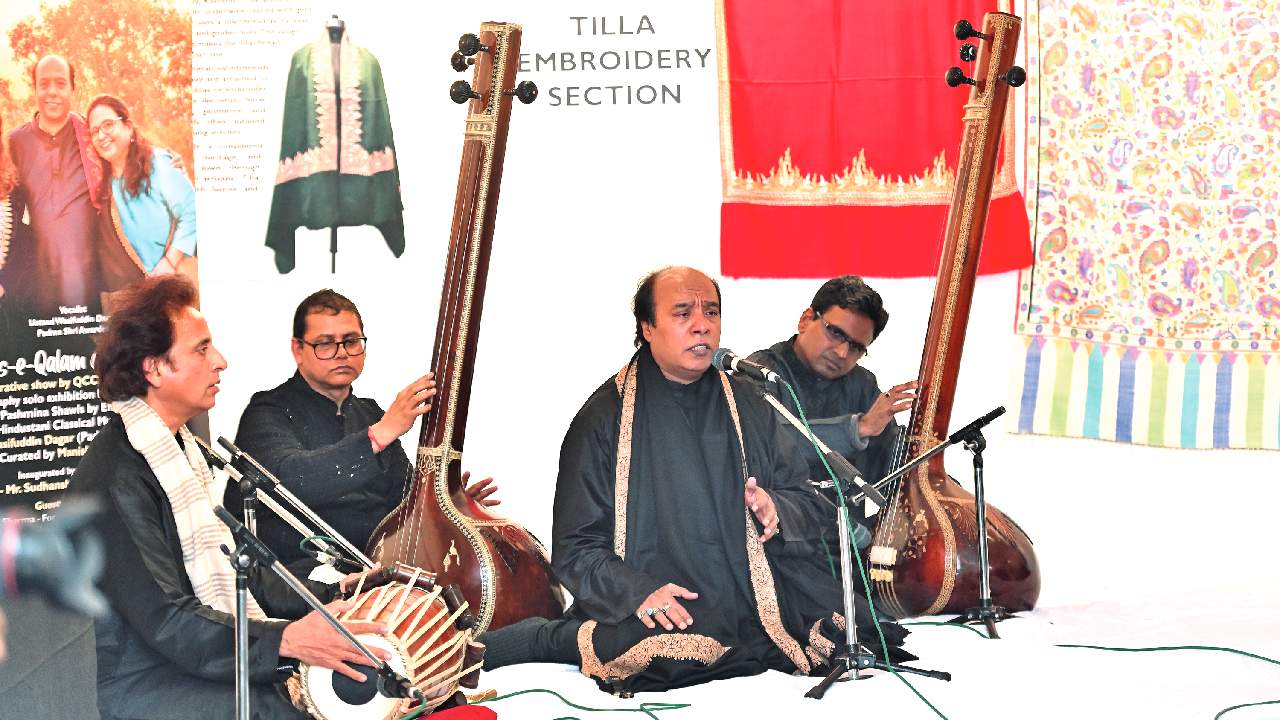
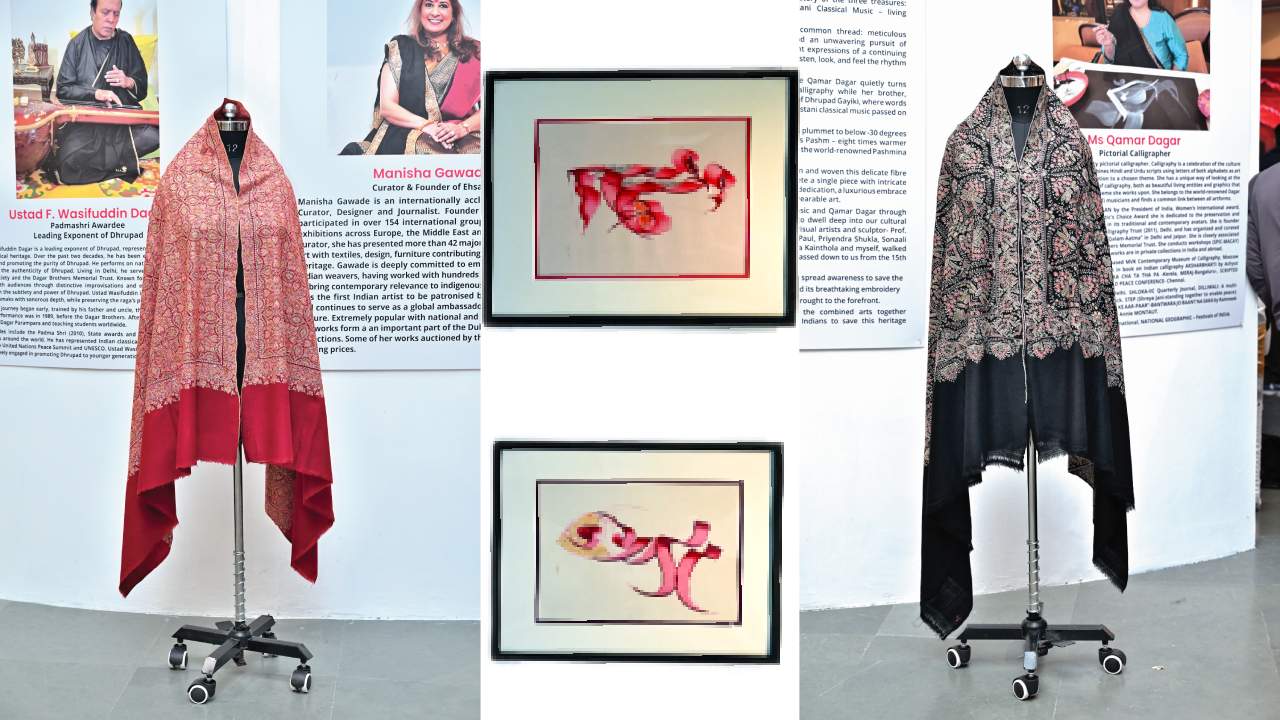
Pashmina comes from the freezing plateaus of Ladakh. For centuries, people in the Kashmir valley have processed this wool by hand. It takes a lot of time and steady hands to get it that soft. The India International Centre is hosting a show called Ehsaas-e-Qalam aur Pashm. It puts this physical work alongside a more spiritual feeling. You can hear a reed pen scratching on paper and the low sound of Dhrupad music while looking at a wooden loom. All these things are in one room. It makes the gallery feel alive.
This initiative by QCCT, IIC, and EHSAAS acts as a shield for a culture at risk of being drowned out by the noise of modern life. When Qamar Dagar applies her qalam to paper, she translates the breath of language into visual form. Her calligraphy carries a raw, human vulnerability; letters appear like living figures, some fading like a distant memory, others standing firm. Concepts like Noor and Anjaam are reimagined as layered expressions shaped by intuition and rhythm.
A haunting connection exists between these strokes and the vocals of Padma Shri Ustaad Wasifuddin Dagar. Whether the medium is voice or ink, the source is a deep, meditative focus. This work demands that the observer actually stops to see the sound. The Pashmina shawls in the room are the silent heroes, putting the spotlight on both the beauty and the thin thread of survival this craft hangs by. Every thread holds months of exhausting, focused work by artisans who pour old-world wisdom into every stitch. Curator Manisha Gawade frames this as a ‘living legacy’ fighting for its future, supported by a documentary featuring senior artists like Niren Sengupta and Niladri Paul.
By merging ancient sound with the grit of the loom, the exhibition, open until 8 February, creates a rare pocket of stillness. It is a reminder that our shared heritage remains the true ‘Rani of people’s hearts.’ This meeting of art and hard work ensures the spirit of India keeps beating with strength, long after the ink dries and the music fades.
Manisha Gawade captures the essence of this movement perfectly. By saying that these art forms ‘walk together,’ she moves away from the idea of a dry museum display