Understanding Lived Experiences of Indian Army War Veterans
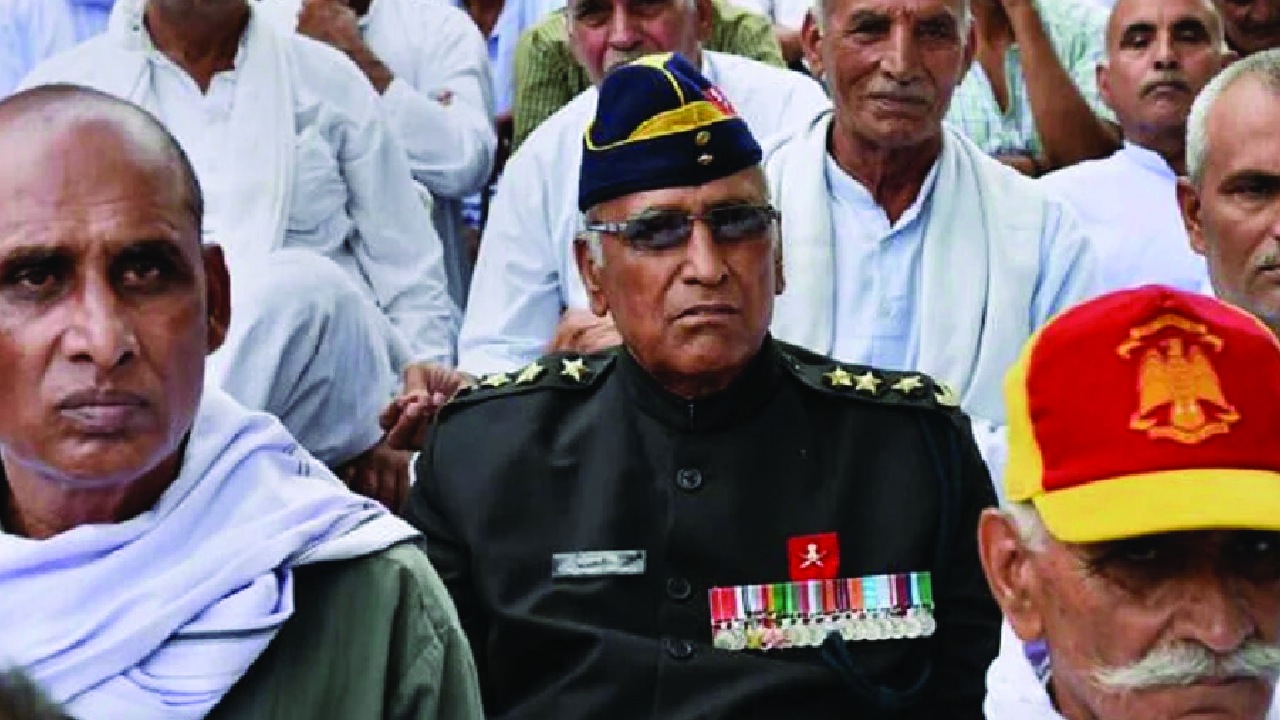
Over 3 million ex-servicemen retire from the Indian Army after 20-30 years of service in conflicts like Kargil (1999), and counter-insurgency operations between the ages of 45-60. For Indian Army War Veterans, readjustment to civilian life is not merely a logistical change but rather a deeply relational process that demands patience while renegotiating factors such as identity, belonging, and purpose. This transition from a structured regimental life to a civilian routine shapes how veterans view themselves and their relationships. Existing research on Indian War Veterans focuses more on policies and welfare association support, rather than community-driven initiatives that address psychosocial readjustment. This contrasts with global studies that emphasise the significant role community efforts and support groups play in readjusting (Daniels, 2017; Guerra, 2022).A recent qualitative study conducted by a Health Psychology student from Christ University, Bengaluru, brings attention to the psychological realities faced by Indian Army War Veterans as they transition from active military service to civilian life.
Despite India’s substantial veteran population, there remains a gap in research that explores lived, subjective experiences that are beyond administrative concerns, such as welfare schemes, pensions, and employment, all of which are important considerations.
The student, along with her research mentor, employed a descriptive phenomenological approach, exploring the journeys of six retired Indian male War Veterans through in-depth, semi-structured interviews to understand how they interpret and adjust to life after service.The data was analysed using Giorgi’s Descriptive Phenomenological method, which explores veterans’ subjective readjustment. This study contributes to the existing Indian literature by offering insight on psychological, emotional and social dimensions of veterans’ post-service lives to create/modify future interventions thereof.
It positions their personal stories in the spotlight, highlighting how duty, family and self evolve for them during this transition.“A unit is like a family. You develop so much bonding with people who are senior to you, who are junior to you, who are commissioned with you, their children, and their families. And all these bonds are carried on forever.”
Through such accounts, various themes were identified, including: Resilient Adaptation, Identity Reconstruction, Emotional Growth, Social Connectedness, Physical continuity in the face of challenges, and Ethical/Moral Reflections. The findings revealed that post-service readjustment is a complex process involving identity shifts, rebuilding structure, purpose and a sense of belonging. Strong camaraderie and family support were identified as protective factors, while the sudden shift and absence of social support from the military created feelings of disconnection and isolation.
Veterans also described relying on self-management, spiritual grounding, and disciplined routines to facilitate a smooth transition. Indian studies like Rathi et al. (2024) and Goodwin (2013) highlight social stigma and limited mental health literacy as barriers to help-seeking behaviour among war veterans. By amplifying these stories, the study emphasises the need for more informed, supportive and comprehensive interventions that go beyond administrative welfare.
Dr Patrick Jude, Assistant Professor, at CHRIST University, Bangalore;Anushka Sharma, MSc Health and Wellbeing Psychology at CHRIST University.; views are personal
Leave a Comment
Comments (2)
Insightful read.
Insightful