Towards sustainable energy transition
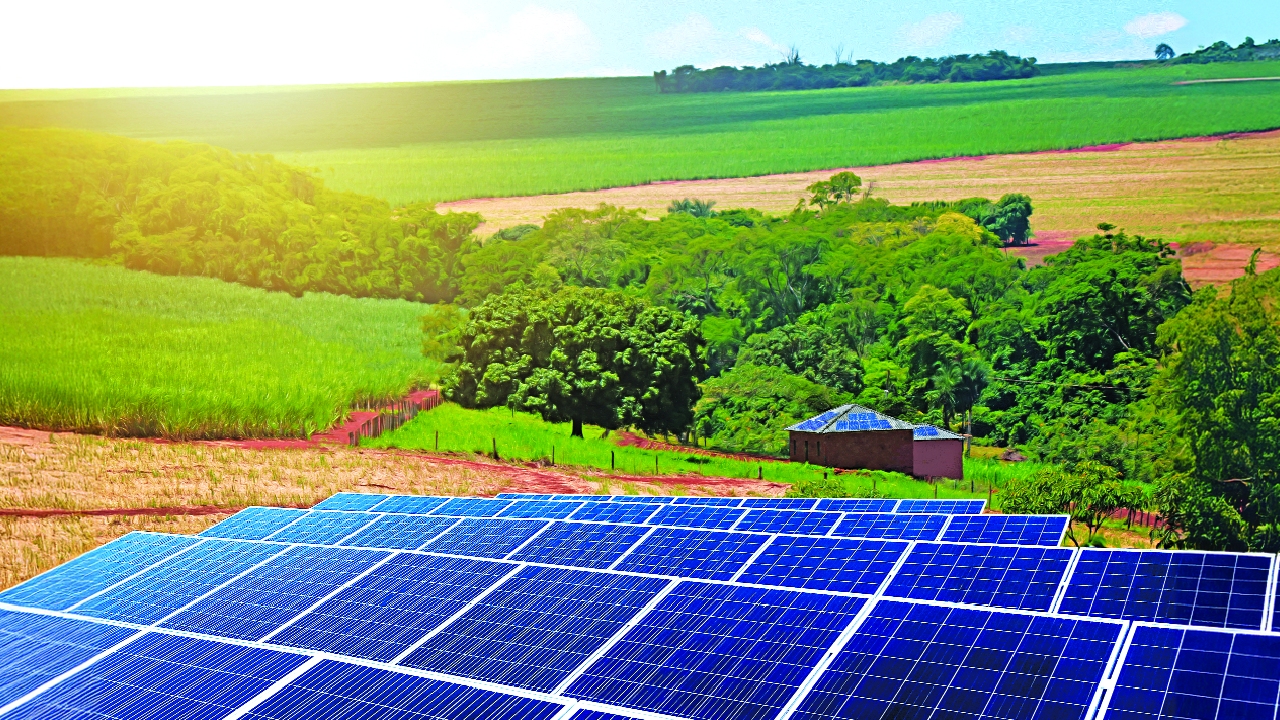
The story of India’s power sector is one of unprecedented scale and resilience. Under the visionary leadership of Prime Minister Narendra Modi, India’s energy transition has become a steady, institutional effort driven by pragmatic policy design. India is shaping a decisive chapter in global energy history and is emerging as a major player in overall RE generation capacity, showcasing significant growth in its clean energy transition.
Our installed generation capacity has more than doubled since 2014, with our non-fossil share rising to over 51 per cent by October 2025. This enabled us to achieve our Nationally Determined Contribution (NDC) target of 50 per cent non-fossil electric capacity nearly five years ahead of schedule.
The pace of this transformation is unparalleled. In FY 2025-26 alone, we added a record 47.3 GW of non-fossil capacity. Our solar journey has surged from a modest 2.8 GW in 2014 to 143.6 GW by February 2026. Backed by 60 GW of signed Power Sale Agreements and bids for 47.2 GW of Battery Energy Storage Systems, this consistent expansion proves our planning frameworks and private sector ecosystems are successfully aligning with long-term national objectives.
In today’s volatile global landscape, where geopolitical uncertainties disrupt traditional supply chains, the imperative for Aatmanirbharta (self-reliance) has never been more evident. To insulate our economy, we are aggressively driving electrification-from mobility to heavy industry — to systematically reduce oil import dependency. By targeting 30 per cent electric vehicle penetration by 2030 and shifting industrial loads to green alternatives, these comprehensive transitions are projected to save India over INR 1 lakh crore in fossil fuel imports cumulatively by the end of this decade.
Manufacturing sovereignty is another vital pillar. Under the Approved List of Models and Manufacturers (ALMM) framework, we have already established around 172 GW of domestic solar module manufacturing capacity, with indigenous solar cell production capacity of 27 GW. Yet, guided by ‘Vasudhaiva Kutumbakam’ (the world is one family), our transition is not inward-looking. Through platforms like the International Solar Alliance and bilateral frameworks, our clean energy journey is an offering to the world.
Equally central is social inclusion. Building on the success of legacy electrification programmes, the Revamped Distribution Sector Scheme (RDSS) sanctions INR 6,500 crore to electrify 13.6 lakh vulnerable tribal households, demonstrating the intersection of infrastructure policy with rural development.
Our flagship initiatives empower citizens directly. PM Surya Ghar: Muft Bijli Yojana, aiming for 1 crore households by 2027, has so far enabled 32 lakh households to generate their own electricity through rooftop solar installations. The scheme, in totality, will add 30 GW of capacity and reduce 72 crore tonnes of CO2 emissions. Similarly, the Pradhan Mantri Kisan Urja Suraksha evam Utthaan Mahabhiyaan (PM-KUSUM) Scheme has transformed agriculture, subsidising solar pumps to reduce diesel use and increase farmer income, bringing over 12 GW of solar capacity to 23 lakh Urjadata farmers.
Furthermore, the National Green Hydrogen Mission (INR 19,744 crore outlay) positions India as a global architect of the green hydrogen economy. By 2030, we aim for a 5 MMT production capacity, 125 GW of dedicated RE, and the creation of 6 lakh full-time jobs, ultimately capturing 10 per cent of global demand.
The path forward
This progress has benefited from sustained policy continuity. However, after a decade of record expansion, our focus is deliberately shifting from mere capacity addition to system strength, grid integration, and market reforms. Recent CERC network access amendments introducing dynamic ‘solar’ and ‘non-solar’ hours mark a decisive step towards unlocking stranded capacity and easing grid congestion. To complement this physical grid expansion, we are pioneering modern market mechanisms. Virtual Power Purchase Agreements (VPPAs) will play a pivotal role by decoupling procurement from physical delivery. We are strategically incorporating these instruments under the Electricity (Amendment) Bill and CERC regulations to deepen demand and stimulate private investment without being held back by immediate physical connectivity constraints.
In this context, platforms for global collaboration are essential. The upcoming Bharat Electricity Summit (BES) 2026, scheduled for March 19-22, 2026 at Yashobhoomi (IICC), Dwarka, New Delhi, will bring together policymakers, industry leaders, and financiers to drive this dialogue.
As India’s flagship power sector event, BES 2026 will feature over 500 global exhibitors showcasing innovations that shape our sustainable energy future. The Summit’s curated agenda reflects our national priorities through strategic panels like ‘India’s power sector roadmap to 2047’, ‘Unified power for a new India’, and ‘Hydrogen, ammonia and green molecules’. Furthermore, special programmes spotlighting Women in Electricity and global partnerships like PRAKRITI 2026 (the 2nd International Conference on Carbon Markets) will accelerate low-carbon growth.
Looking ahead, India’s energy pathway remains focused on reliable access, decisive decarbonisation, and inclusive economic participation. The journey is ongoing, and collective engagement at landmark forums like Bharat Electricity Summit 2026 will play a vital role in shaping its next phase.
The writer is the Minister of State for New and Renewable Energy; views are personal