Towards qualitative democracy: Need for poll reforms
Wide-ranging poll reforms are necessary to make quantitative democracy qualitative as well, in such a manner that such an ideal democratic system may be followed by other countries too. It is ridiculous that such well-educated officers from the IAS and allied services are at times ruled by uneducated political leaders. It is shameful to note that invalid votes exist even in elections to the posts of President and Vice-President, where MPs and MLAs vote.
There must be at least some minimum educational qualification to contest any election. It would be best to constitute an “Indian Political Service” on the lines of the “Indian Administrative Service (IAS)”. The system will automatically abolish the faulty practice of family politics, where politicians often misuse politics like a family business rather than as a tool for service to the people. Experience reveals that senior bureaucrats have done remarkably well when appointed as ministers. On the contrary, there are cases where less-educated ministers were not given a repeat chance due to non-performance.
Other wide-ranging poll reforms are also urgently needed to be implemented simultaneously without requiring any never-to-be-achieved political consensus. The case of George Fernandez being elected to the Rajya Sabha despite having lost his memory even calls for medical fitness certificates before allowing candidates to contest elections. An RTI response reveals that even the oath for his membership of the Rajya Sabha was read by a party colleague of George Fernandez.
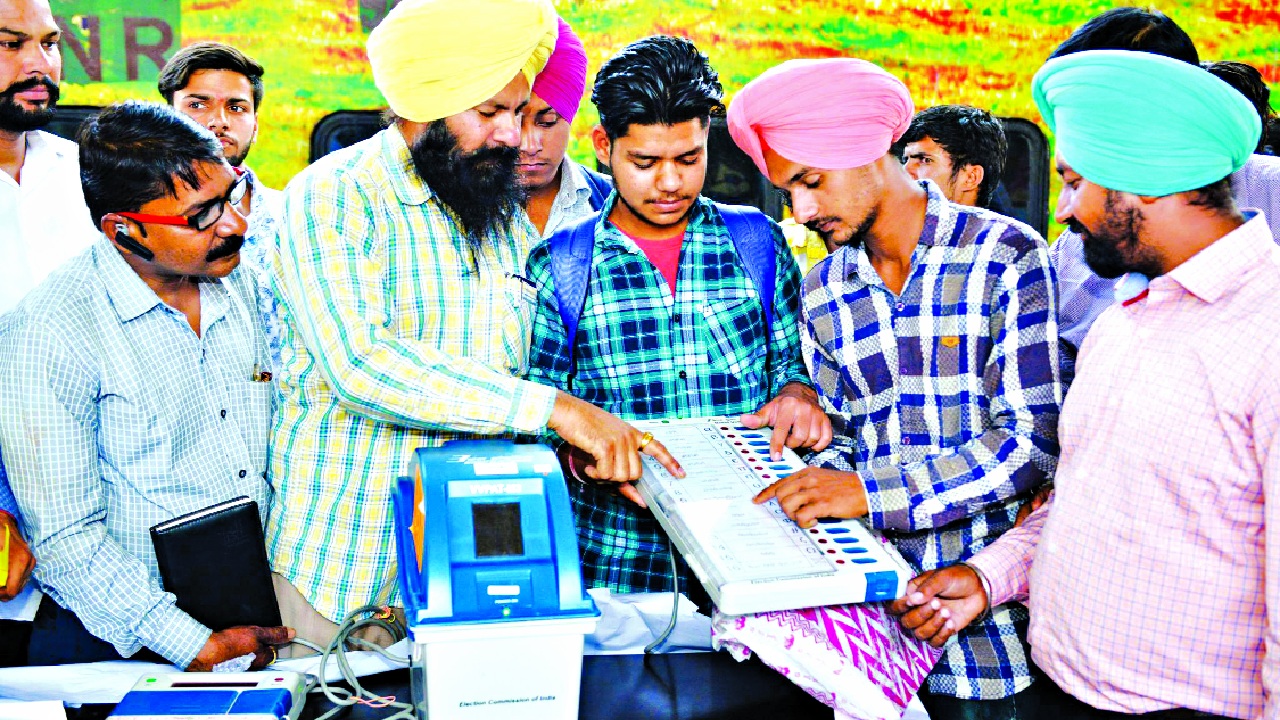
Simultaneous elections to the Lok Sabha and State Assemblies should be three-tier, with elections to municipal bodies also included in the ideal system. Elections for the President and Vice-President should also be held simultaneously by all MPs and MLAs in the same manner as the President is elected, but through EVMs equipped with VVPAT on nominations signed by at least 34 per cent of MPs to ensure direct elections. In case of a vacancy caused in the post of President, the Vice-President may be made President for the remainder of the term. However, in case of a vacancy in the post of Vice-President, an interim Vice-President may be elected by MPs only for the rest of the term. If both the regularly elected President and Vice-President are not in office, fresh simultaneous elections for both posts should be held without waiting for the five-year period.
The Prime Minister/Chief Ministers, along with the Speakers and Deputy Speakers of the Lower Houses, should be elected through a secret and compulsory vote of members of the Lower Houses through Electronic Voting Machines (EVMs) equipped with VVPAT on nominations signed by at least 34 per cent of members. Such an elected Prime Minister/Chief Minister may be removed by the same process, but with the compulsion of naming an alternate leader in the same motion. Members not opting to vote may lose their voting rights in the House, even while retaining membership. Without adopting such a system, the aspect of “One Nation, One Election” can never become a reality because of mid-term elections caused due to a hung Lok Sabha/State Assembly or the fall of governments in between. Even the present Prime Minister, Chief Ministers, Speakers and Deputy Speakers may be re-elected along the lines suggested above.
Since a person cannot represent two constituencies or become a member of both Parliament and a State Assembly, no person should be allowed to contest from more than one constituency or for both Parliament and a State Assembly. A sitting MP or MLA should first resign from his/her earlier seat before filing nomination for another. Membership of a Parliamentarian must be auto-terminated upon taking oath in a State as a Minister (or Chief Minister) and vice versa, to prevent situations such as the Atal Bihari Vajpayee government falling due to the single controversial vote of the then Odisha Chief Minister Girdhar Gomango, who did not resign from the Lok Sabha even after being sworn in as Odisha Chief Minister.
Secret voting for Rajya Sabha elections should be restored, but through EVMs equipped with the VVPAT system, with simultaneous elections for full-time and part-time members. Persons receiving more votes should be declared elected for full terms, while those with fewer votes may be declared elected for part terms. The Constitution should be amended to abolish the useless provision of Legislative Councils, which practically serve as political assignments to favourites and relations of political leaders. Only those who have not contested any election in their life should be appointed as nominated members of the Rajya Sabha. No MP or MLA should retain any type of post in their party or even in society. Ministerial strength should be reduced to 10 per cent of the strength of the Lower House. The post of Parliamentary Secretaries should be abolished.
Persons losing security should be barred from contesting elections for the next six years. The ‘None of the Above’ (NOTA) option should be made practically useful. All candidates receiving fewer votes than NOTA may be barred from contesting any future election, even though, in case NOTA wins in any constituency, the candidate next to NOTA may be declared elected, but only for that term. Thereafter, he may lose the right to contest any election in his lifetime.
An absconding Parliamentarian from court summons/warrants, if present at Sansad Bhawan even for attending the session, should not be allowed to leave until police authorities arrive for execution of the warrants. Parliamentarians and legislators with attendance of less than, say, 75 per cent in the House should not be allowed to contest any election for the next six years. Immunity to elected representatives should be withdrawn even from legislative proceedings because, in the infamous JMM bribery case, even the Apex Court expressed its inability to act against the guilty, as their bribed act to vote for the Narasimha Rao government was considered immunised under Parliamentary proceedings. Usually, Chairpersons of the Lok Sabha/Rajya Sabha/Parliamentary Committees are ultra-soft on impropriety by Parliamentarians. Rules of the Lok Sabha and Rajya Sabha should be re-written in a stringent manner by encoding fixed punishments for Parliamentarians for not following rules and norms, removing discretionary powers of Chairpersons and Parliamentary Committees. The Lok Sabha mildly punished its member Rajesh Manjhi for taking his lady friend as his wife on a foreign trip at government expense by merely barring him from a few sittings, even though such an act was not immunised under Parliamentary proceedings.
Parliamentarians should be required to compulsorily fill in all particulars in their biodata, including details of their assets and the name of spouse(s), to be placed in the public domain on the websites of the Lok Sabha and Rajya Sabha.
This can check several malpractices, such as hiding the name of an additional spouse, as was done by Dharmendra when he did not disclose the name of Hema Malini as his wife.
Rules should mandate that all deductions of government dues such as water, electricity, telephone, rent, or any other charges be made from salary/perks/pensions payable to them. Pensions should be withheld until former Parliamentarians/Ministers vacate government accommodation. Defaulters should be barred from contesting any future election until all dues are cleared and unauthorised accommodation is vacated. Since even persons posted as Prime Minister have been defaulters of dues for using Indian Air Force aircraft for non-official purposes, either the Prime Minister or the political party sponsoring the Prime Minister should deposit advance payment for such use.
Since political parties are not complying with the CIC verdict bringing them under the purview of the RTI Act, all direct or indirect government funding - including tax exemptions, subsidised land, leased government accommodation, free voters’ lists, and free Doordarshan/Radio time — should be abolished. Political parties not contesting any election in the last five years should be de-recognised. Sections 13A, 80GGB, and 80GGC of the Income Tax Act regarding contributions received by and made to political parties should be abolished to prevent the whitening of black money through registered but inactive parties. Live TV debates between prominent leaders and Prime Ministerial/Chief Ministerial candidates should replace mega-budget rallies and roadshows, which should instead be banned. Corruption-generating MPLADS should be abolished. Pensions for MPs and MLAs have no logic when they have been abolished for government servants. Persons with more than two children should not be allowed to contest elections. To avoid lifelong ambitions to remain in power, there may be an upper age limit of 65 years to contest direct elections. Experienced persons, if needed in ministries, can be elected as Rajya Sabha members. Retired judges of the Supreme Court and High Courts must not be given post-retirement assignments or allowed to enter politics for two years after retirement, or else they may lose post-retirement benefits or appointment as arbitrators.
To avoid the usual delay in approving poll reforms by Parliament, the Election Commission should be empowered to implement reforms by giving one year’s notice to Parliament. If Parliament does not disapprove of the reforms proposed within the stipulated one year, these should be deemed approved.
The writer is Guinness World Record Holder for writing most letters and RTI Consultant; views are personal