Towards a ‘Naxal-free India’ by 2026
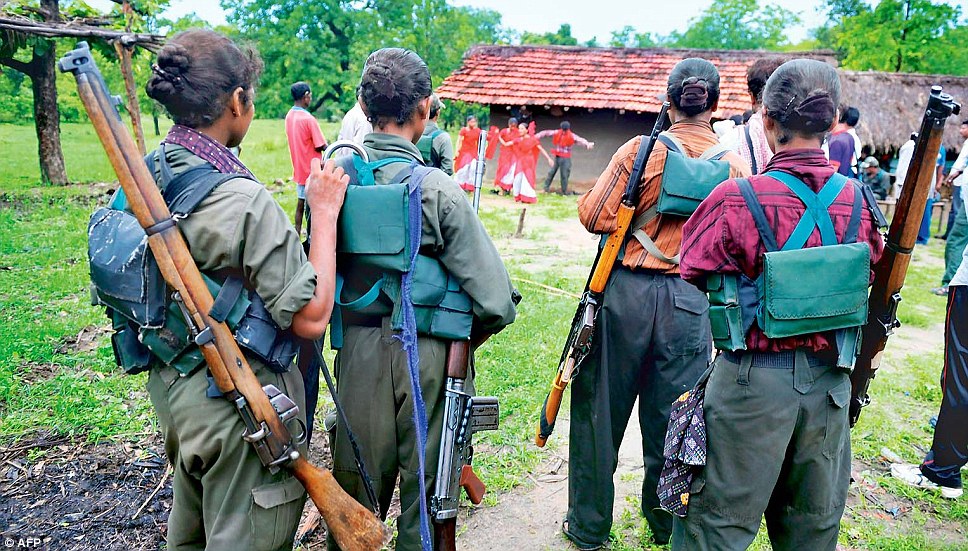
For decades, Left Wing Extremism (LWE) was one of India’s most pressing internal security challenges. Over the past decade, however, a unified and sustained counter-insurgency strategy has fundamentally altered the trajectory of the Naxal insurgency. The Narendra Modi government has combined sustained security operations, improved intelligence coordination, advanced surveillance technologies, and targeted development interventions in tribal regions to weaken Naxalism in the country. As a result, the number of LWE-affected districts has sharply declined, pushing the insurgency into its final phase. With violence continuing to fall, the government has set the goal of achieving a “Naxal-free” India by March 2026. As this timeline approaches, the challenge lies in ensuring security, sustainable livelihoods, and better alternatives for communities affected by Naxal violence.
At its peak in 2010, the “Red Corridor” spanned nearly 17 per cent of India’s landmass and had an estimated cadre strength of around 20,000. Today, the movement has been confined to a few forested pockets. Government data show a sharp decline in violence over the past two decades. Between 2004 and 2014, there were 16,463 Naxal incidents, compared to 7,744 between 2014 and 2024 — a drop of 53 per cent. By 2022, total casualties linked to Naxal violence fell below 100 for the first time in three decades. At the same time, the number of LWE-affected districts has reduced from 126 in 2014 to just 11 this year, primarily concentrated in parts of Chhattisgarh.
This decline reflects the Naxals’ growing inability to operate under a tightening counter-insurgency grid. High-profile attacks such as the 2010 Dantewada massacre or the 2013 Chhattisgarh political ambush have become rare. While isolated incidents still occur, including the April 2023 IED blast in Chhattisgarh, they no longer signal a broader resurgence. This shift highlights a clear transformation in India’s LWE strategy since 2014.
The earlier reactive and fragmented approach has been replaced by a coordinated and proactive model anchored in “Dialogue, Security, and Coordination”. The strategy combines sustained pressure on armed cadres with parallel development initiatives. Home Minister Amit Shah has explained the government’s “carrot-and-stick” policy against LWE: Naxals who surrender will receive “a red-carpet welcome”, but those who continue with violence will face a resolute security response. This clarity of intent has reshaped both operational outcomes and the psychological balance between the state and insurgents.
Earlier counter-Naxal efforts produced limited gains due to coordination issues. The difference this time lies in the unified command and multi-agency approach led by the Union Home Ministry, which ensures coherence, intelligence integration, and sustained operational momentum. Shah confirmed in a speech that the Modi government has adopted a “unified and ruthless approach” against Naxalism rather than a scattered one. Special forces from states and central paramilitary units such as the CRPF and its elite CoBRA battalions now regularly train together and carry out joint anti-Naxal operations.
In recent years, security forces have targeted the top Maoist leadership, supply lines, and forest bases with increasing precision. A major breakthrough came this year with the killing of CPI (Maoist) general secretary Nambala Keshava Rao, alias Basavaraju, along with 27 others in Chhattisgarh’s Abujmarh forest. Another senior leader, Madvi Hidma, was killed in Andhra Pradesh in November. These losses have severely disrupted Maoist command structures and regrouping efforts. Official data indicate that this year alone, 317 Naxals were killed, 862 arrested, and 1,973 surrendered. The scale of arrests and surrenders underscores the effectiveness of coordinated security operations and the steady dismantling of LWE.
Furthermore, advanced technology has become a key force multiplier in counter-insurgency efforts. Security agencies now rely on forensic laboratories, modern surveillance tools, and real-time intelligence to track and disrupt Naxal activities. This includes monitoring social media to counter information warfare, using drones and satellite reconnaissance to map movements, and applying AI-driven data analysis to identify patterns and predict threats.
At the same time, financial crackdowns have severely weakened the insurgent movement. Central and state agencies have seized assets, frozen accounts, and targeted Maoist financiers, with nearly INR100 crore reportedly seized. These measures have crippled logistical and financial support networks, making sustained insurgency increasingly unviable.
Alongside security operations, the central government has prioritised Centre-State coordination to strengthen local security infrastructure and improve governance in LWE-affected areas through schemes such as Security Related Expenditure, the Special Infrastructure Scheme, and Special Central Assistance.
India’s counter-insurgency successes are not measured solely by the number of casualties or arrests of Naxal leaders and cadres. A central pillar of the strategy has been addressing structural neglect by extending governance and development to long-isolated regions. Roads, electricity, schools, healthcare facilities, and access to banking have expanded across former Naxal strongholds. For example, under the Road Connectivity Project for LWE districts, nearly 12,000 km of roads have been constructed over the last decade, even through dense forests, to link remote villages. Where travelling 50 km once took days of walking through Naxal-held jungles, villagers can now drive on new roads. Telecommunications infrastructure has expanded rapidly, with near-complete 4G coverage expected soon. This means people can now access information, banking, and emergency services where there was once complete network darkness. A cornerstone of the Modi government’s approach is pairing hard security with a softer hand for those willing to abandon violence. The surrender policy has prompted thousands of Naxalites to leave the jungles, join the mainstream, and take advantage of rehabilitation schemes. Thousands of cadres have laid down arms in exchange for financial assistance, vocational training, housing, and employment support. In Chhattisgarh alone, over 2,100 Naxals surrendered in the past two years. Nationally, surrenders now exceed fatalities among insurgents, reflecting declining morale and faith in the Naxal cause.
As violence recedes, democratic participation has returned to areas once considered “no-go zones”. In November 2024, Gadchiroli (Maharashtra) recorded a historic 74 per cent turnout in village polls after years of Naxal threats. Similarly, in February 2025, Kerlapenda village in Sukma district, Chhattisgarh, witnessed a historic moment when residents cast their first votes in 75 years since India’s independence. These developments strike at the ideological core of Naxalism, which rejects parliamentary democracy. As citizens assert their constitutional rights in former LWE-affected areas, accountability shifts back to elected representatives rather than banned armed groups.
The progress achieved over the past decade must now be secured through sustained engagement with affected communities. Eliminating Naxal violence is not merely about silencing the last gun; it requires long-term trust-building, stronger Centre-State coordination, and a clear focus on tribal welfare. This includes ensuring land rights, employment opportunities, access to education and healthcare, connectivity, and the protection of forest rights.
The government’s goal of a “Naxal-free India” by March 2026 is attainable, provided hard security measures continue until the remaining leadership surrenders and governance and development improve simultaneously. Durable peace will ultimately depend on whether the state can translate security success into lasting improvements in the lives of affected populations. Only then can the violent legacy of the “Red Corridor” be permanently replaced by stability, opportunity, and faith in India’s constitutional order.
The writer is a Doctoral Candidate at Jawaharlal Nehru University, New Delhi. He has previously served in the National Security Council Secretariat; views are personal