The year democracy lost its alibi

“I was saved by God to make America great again,” Donald Trump said, a line that circulated widely during his political comeback rallies. “The golden age of America begins right now,” he declared at his inauguration for a second term on January 20 2025, marking a decisive shift in US politics with consequences likely to echo across generations. Trump’s appeal lay not in moderation but in confrontation, rooted in the assertion that democracy works best when it produces winners unencumbered by restraint. He rewarded those who delivered him power, while leaders in other democracies often spent their mandates managing survival and retreating from pledges once deemed non-negotiable. The old Marxian line about history repeating itself as tragedy and farce felt newly apt as elections continued to deliver both at once.
As democratic systems wrestled with their contradictions, quasi-democratic and openly authoritarian regimes pursued power with fewer inhibitions. Beijing tightened its grip on Taiwan, Tibet and Hong Kong while projecting global influence with mixed success. Moscow prosecuted its war in Ukraine with brutal persistence, accepting sanctions and isolation as the cost of imperial memory. The EU’s plan to deploy frozen Russian assets for Kyiv stalled, replaced by a €90 billion loan package costing taxpayers roughly €3 billion a year in interest. Pyongyang pressed ahead with missile tests, while state-linked hackers reportedly stole an estimated $2.02 billion in cryptocurrency in 2025 alone. Tehran endured another turbulent year, including a 12-day military confrontation with Israel in June that inflicted serious damage on both sides. In each case, power remained centralised and unapologetic, justified by security and sustained by fear. Across the globe, 2025 saw a wave of Gen Z-led protests that challenged authority with an intensity reminiscent of the Arab Spring, though freighted with similar risks. From climate strikes in London and Berlin to anti-corruption demonstrations in São Paulo, Mexico City, Dhaka and Kathmandu, young activists confronted entrenched elites with unprecedented energy and digital coordination. In Morocco, Tunisia, Indonesia and the Philippines, youth-driven uprisings rattled governments, while in the United States marches over climate action and student debt repeatedly clashed with authorities. Even in authoritarian states such as Iran and Vietnam, clandestine movements mobilised online and in the streets, forcing concessions while provoking brutal crackdowns. Yet these eruptions revealed a familiar pattern: protest destabilised societies faster than it delivered reform, leaving weakened institutions and political vacuums ripe for exploitation. The Gen Z moment of 2025 showcased idealism and impatience alike, but also warned that revolt can become the architect of new disorder.
The dissonance between public spectacle and private conclave was on display in Beijing during the 80th anniversary of the end of the Second World War in September 2025. State television followed Xi Jinping and Vladimir Putin as they approached the parade ground, while microphones accidentally left live captured a fragment of conversation that quickly spread worldwide. According to reports, Putin’s interpreter remarked, “Human organs can be continuously transplanted. The longer you live, the younger you become,” to which Xi replied, “Some predict that in this century humans may live to 150 years old.” The Kremlin later confirmed the exchange as casual discussion, yet the symbolism was unmistakable: two leaders whose authority rests on longevity speculating, however lightly, about defeating mortality itself. In societies facing demographic decline, the fantasy of extended life carried political weight.
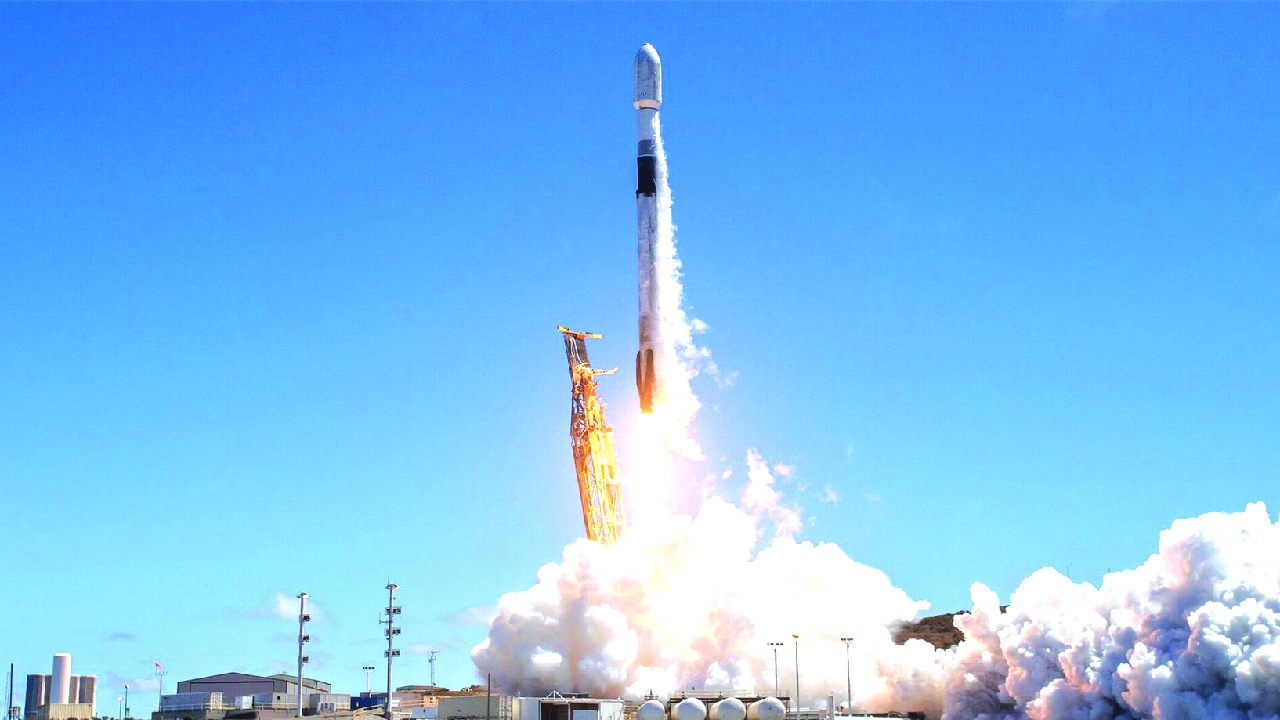
That moment intersected with a broader obsession cutting across systems: the promise and threat of artificial intelligence. Governments unable to agree on climate targets found common urgency in machine learning, particularly its military and medical applications. The US National Security Commission on Artificial Intelligence warned in 2021 that AI would “accelerate the speed of warfare beyond human comprehension”. By 2025, the Pentagon had embedded AI across military operations, deploying commercial models and prioritising generative tools to preserve technological advantage. Project Stargate, involving OpenAI, Microsoft, Nvidia, Oracle and SoftBank, was said to entail hundreds of billions in public-private investment to expand AI infrastructure and research. China, meanwhile, channelled tens of billions into its own AI ecosystem, sustaining the world’s second-largest cluster of AI firms. Critical minerals remained a strategic fulcrum, with China controlling over 90 per cent of global rare-earth processing capacity. Competition in space also intensified. The number of active satellites in low Earth orbit surpassed 9,350, led by SpaceX’s Starlink constellation. The US Space Development Agency awarded US$3.5 billion for new infrared tracking satellites to strengthen missile-warning systems. China expanded its on-orbit presence with a record number of launches, placing hundreds of satellites to advance communications and surveillance networks, including early deployments for its Guowang megaconstellation. Close encounters between Chinese, Russian and Western satellites exposed weak space-traffic coordination, with orbit increasingly framed in martial rather than peaceful terms. On the ground, the uglier face of power refused to remain hidden. In the United States, the Epstein Files Transparency Act compelled the Justice Department to release records by mid-December, but heavy redactions drew bipartisan criticism and reinforced the sense that wealth and influence shield the powerful from accountability. Elsewhere, democracies confronted familiar failures: France grappled with unresolved clerical abuse scandals; Britain faced renewed scrutiny over policing gaps in grooming-gang cases; and India’s chronic under-reporting of sexual violence persisted as a human-rights concern.
The language of peace, too, was deployed with cynicism. Trump repeatedly suggested he deserved the Nobel Peace Prize, citing initiatives he claimed to have shaped, including the Abraham Accords and the 2025 US-brokered ceasefire in Gaza, under which remaining living Israeli hostages were released. He also pointed to diplomatic efforts on Ukraine, despite peace terms remaining elusive amid resistance from Kyiv, Moscow and key EU states. Trump further referenced conflicts involving India and Pakistan; Kosovo and Serbia; Israel and Iran; and Armenia and Azerbaijan as evidence
of his peacemaking credentials, notwithstanding the absence of durable settlements. Trump did not receive the prize, which instead went to María Corina Machado, the Venezuelan opposition leader who told me in 2020 that “a mafia group has destroyed my beloved nation”. Washington now treats her as a key ally, even as it reportedly seeks to seize another oil tanker linked to Caracas. Across Latin America, right-wing politics gained ground, with Argentina’s Javier Milei consolidating power amid a broader regional shift.
Africa was no exception to the disorder. In Sudan, a brutal civil war between the Rapid Support Forces and rival factions continued throughout 2025, marked by mass atrocities and the displacement of millions. In the Democratic Republic of the Congo, fighting with the Rwanda-linked M23 rebel group forced tens of thousands to flee. Nigeria’s security situation deteriorated as jihadist factions expanded operations. Across West Africa, coups in Mali, Burkina Faso and Niger led to withdrawal from ECOWAS and the formation of the Alliance of Sahel States, promising economic autonomy though its capacity to curb extremism remains uncertain.
Through all this, inequality hardened. The World Inequality Report 2026 showed that the richest 0.001 per cent — fewer than 60,000 people — control three times more wealth than the poorest half of humanity combined. Orwell’s line still resonates: “All animals are equal, but some are more equal than others.” This year has not disproved it; it has updated it with satellites, algorithms and offshore accounts. Power moves faster and hides better, but feeds on the same asymmetries. As the year closes, the temptation is to wish for renewal without reckoning. The age ahead will not be golden by proclamation; it will be judged, as ever, by who is allowed to live with dignity — and who is told, politely or otherwise, to wait. To the New Year — hopefully wiser.
(The writer is a columnist based in Colombo); views are personal