The Traditional Indian Solutions to Natural Disaster Mitigation
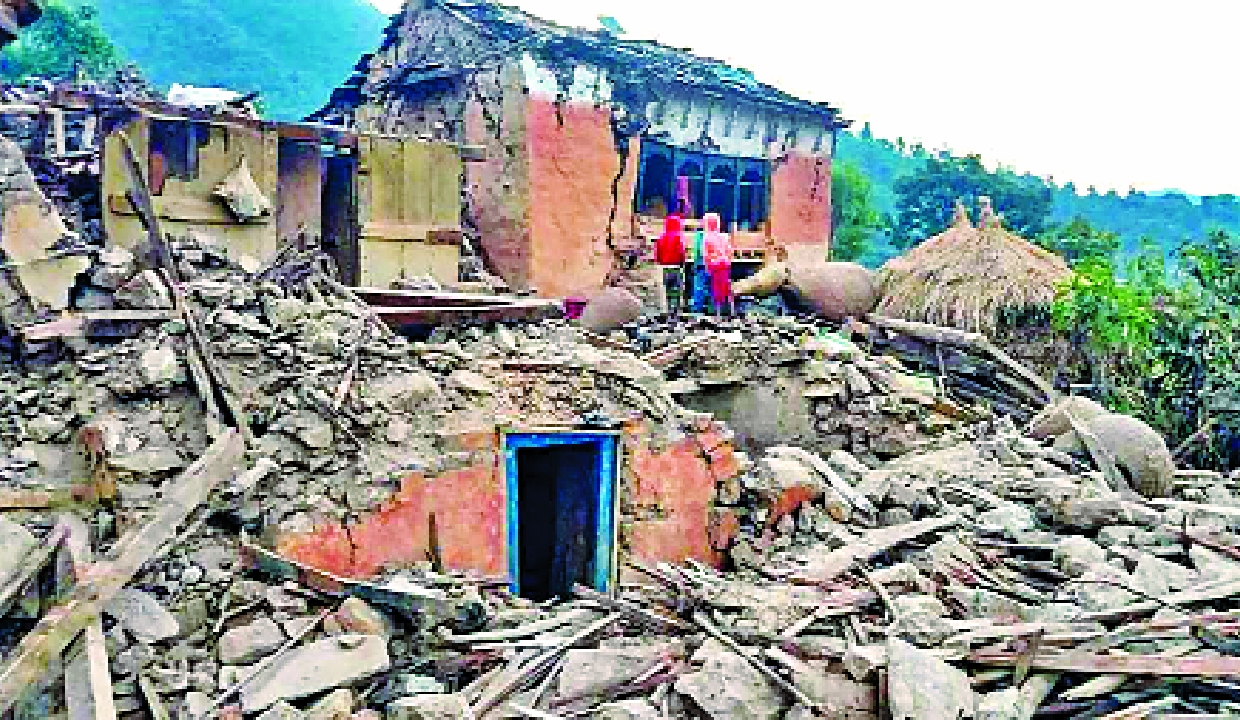
Many ancient Indian scholars mentioned about natural calamities or vipatti in their texts and some also proposed ways to deal with them. For instance, the text Kamandakiya Nitisara (c. 500-700 CE) enumerates 15 categories of disasters, including those caused by excessive rainfall and drought.
For earthquake resilience, the Pallavas of Kanchi strengthened stone structures by using precisely cut joints without mortar and inserting granite layers as binders, improving resistance to seismic movement. The Kakatiya dynasty of Warangal, which built the UNESCO World Heritage site of Ramappa Temple in the 13th century CE, employed 'sandbox' technology in its construction to help the structure withstand seismic forces. In the Himalayan region, traditional techniques like Kath Kuni from Himachal Pradesh continue to offer earthquake-resistant solutions. This style combines interlocking deodar wood, stone and hay without mortar, creating flexible structures that can withstand tremors. Small doors and windows with strong wooden frames reduce structural stress, while heavy slate roofs add stability. Another Himalayan technique, Dhajji Dewari, uses timber frames with earth infill and is considered more economical and time-efficient.
Vedic scholars gave more importance to prevention than cure and hence suggested suitable firefighting implements, fire brigades and water backups to deal with fires. For instance, Kautilya's Arthashastra prescribes that every household should keep some indigenous devices to douse fire. The city superintendents are instructed to set up fire extinguishing devices in various public places as precaution. Interestingly, the indigenous practices against forest fires advocate for 'controlled' burning, contrary to the policy of complete fire suspension followed in modern forestry. This is done to avoid the accumulation of excess dry matter (leaves, twigs, etc.) that induces catastrophic wildfires and promote the growth of new vegetation, aiding in biodiversity
conservation. For instance, the indigenous practice of jhum cultivation from Northeast India uses controlled burning to clear pests and weeds while preventing large fires through local knowledge of wind patterns, vegetation, topography and buffer forests. The ash also restores soil nutrients on rain-washed hill slopes. It is important to note here that, historically, long fallow cycles allowed ecological recovery, unlike today's shortened cycles caused by population pressure.
Similarly, in Uttarakhand, winter burning on steep hill slopes promotes grass regrowth, supports livelihoods, maintains biodiversity and lowers wildfire risk in the Himalayan Forest. In Central India, tribal communities conduct controlled burning in early summer, create fire-breaks around villages and fields, monitor animal behaviour and vegetation changes to predict fires. Forest fire management is generally a community effort and the indigenous knowledge is passed down across generations. Community traditions such as planting fire-resistant trees among the Khasi tribe of Meghalaya and seasonal fire bans among the Munda tribe of Jharkhand further highlight the value of indigenous knowledge in forest fire management.
Since the time of the Indus Valley Civilization, water harvesting systems have played a vital role in India for drinking water, irrigation and adaptation to extreme weather. Traditional reservoirs and tanks helped tackle droughts, recharge groundwater and reduce soil erosion through community participation. The Vijayanagara Empire (13th-17th century CE) for instance, developed extensive community-managed tank systems for agriculture and drinking water. Today, these neglected traditional practices are regaining importance amid growing water insecurity.
Water-scarce regions such as Rajasthan, Gujarat and Delhi historically relied on stepwells like Baolis and Bawaris for water conservation. Their layered steps reduced evaporation, while canals diverted rainwater into reservoirs to recharge aquifers. Karnataka's Pushkarni stepwell at Hampi is another example of efficient water storage. Jhalaras collected seepage from upstream reservoirs, Kunds stored rainwater in underground wells for drinking, and Nadis served as village ponds, harvesting rainwater from nearby catchments. Even during the Mauryan period, Arthashastra stressed maintaining food and water reserves to mitigate droughts, seeking assistance from friendly foreign governments, etc. to mitigate droughts. He also gave paramount importance to the preservation of natural resources, such as planting suitable vegetation to protect drylands, conserving pasturelands, protection of forests, water reservoirs and mines for ecological preservation.
Kautilya considers floods as highly devastating. He advises that the villages located near water sources should be relocated to a higher ground above the flood level during monsoons. A stock of supplies such as gourds, skin bags, canoes, tree trunks, hand planks, bamboo poles and braided ropes should be kept ready along with rescue teams to evacuate people from inundated areas. He also highlights the importance of community involvement in the flood rescue operations. A Mahasthan inscription from the Mauryan period also reflects flood mitigation measures focused on recovery and rebuilding, mainly through agricultural support. Further, the conventional water harvesting systems, as discussed above, also help in flood mitigation by collecting and storing excess precipitation, shielding from property damage without the need for additional constructions against floods.
Over centuries, rural communities have relied on ecological knowledge to anticipate seasonal changes and withstand weather extremes. Texts like the Taittiriyopanisad emphasise harmony between humans and nature as the basis of true prosperity. As climate change accelerates disasters across the globe, the modern solutions can be considered to be blended with indigenous wisdom that sustained its civilisation for centuries. From earthquake-resistant Himalayan architecture and community-led forest fire management to ingenious water harvesting systems and flood preparedness measures, India's traditional knowledge reflects a profound understanding of resilience, sustainability and coexistence with nature. Reviving these traditions and empowering communities who practice them can help India build not just disaster resilience, but also a more sustainable and resilient future.
R K Pachnanda, Former Chairman, Haryana Public Service Commission; Former Chairman, Haryana Electricity Regulatory Commission; Former DG-ITBP; Former DG-NDRF; Commissioner of Police. Kolkata; Director, Bharat ki Soch & Neha G, JR. Research Fellow, Bharat Ki Soch; Views presented are personal.