Marvels of India - Chola Reservoirs
Marvels of Engineering, Environment and Sustainability
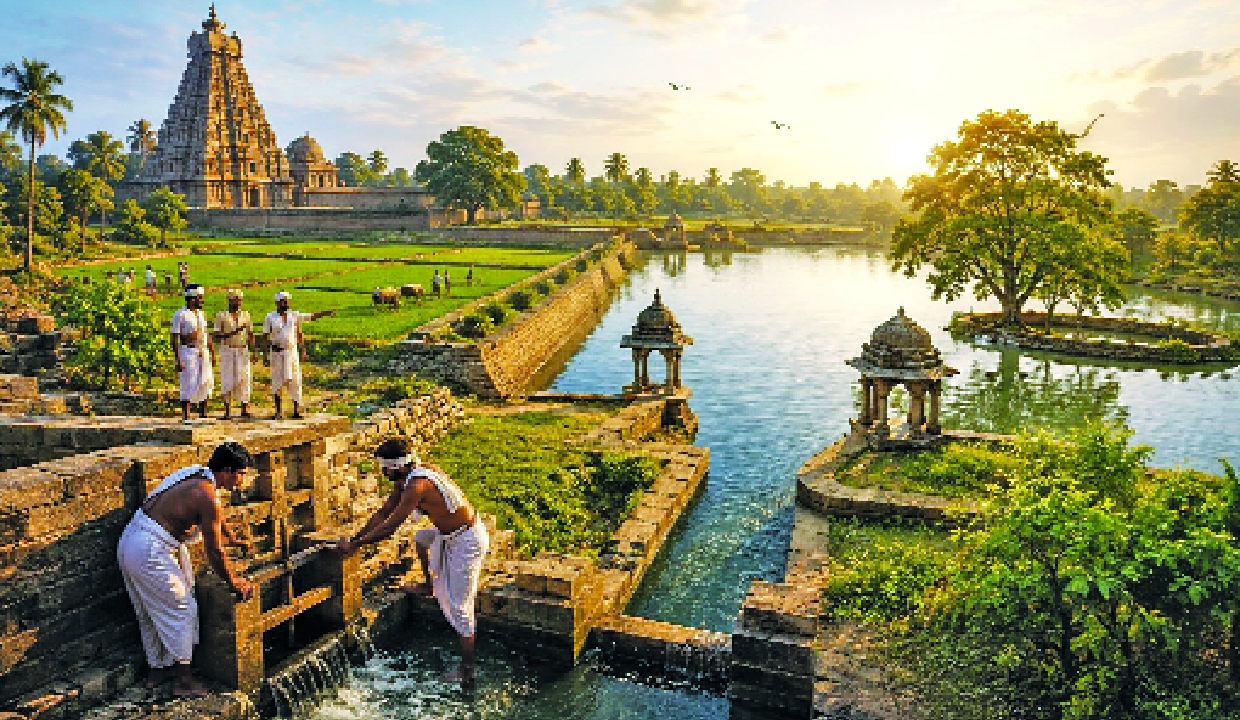
The Cholas developed an extensive network of interconnected tanks, channels and sluices that served as models of decentralised, community-managed irrigation systems. Raja Raja Chola-I built the still-functional Uyyakondan channel, constructed over 5,000 dams and established a dedicated water ministry: arguably the world's first institutional framework for water governance.
Ecological Intelligence: Groundwater and Flood Management
The design of Chola water structures was closely aligned with local topography and seasonal rainfall patterns, helping prevent water wastage, promote groundwater recharge and sustain agriculture. The Eri (meaning tank in Tamil) network recharged groundwater, maintained water levels in wells and prevented soil erosion: functions that the ecologists today recognise as critical ecosystem services.
Community Governance: The Eri-Variyam System
The Eri-Variyams (tank committees) actively managed water bodies, with considerable involvement from village assemblies and temples, which contributed their land and human resources. This decentralised stewardship ensured maintenance, equitable distribution and local accountability: principles now championed in modern integrated water resource management.
A Legacy Still Alive
In 2022, the International Commission on Irrigation and Drainage recognised Kallanai (meaning stone dam in Tamil) as a World Heritage Irrigation Structure. Many ancient Chola techniques underpin modern irrigation practices in Tamil Nadu, highlighting their enduring relevance.