The silent burden of modern educators
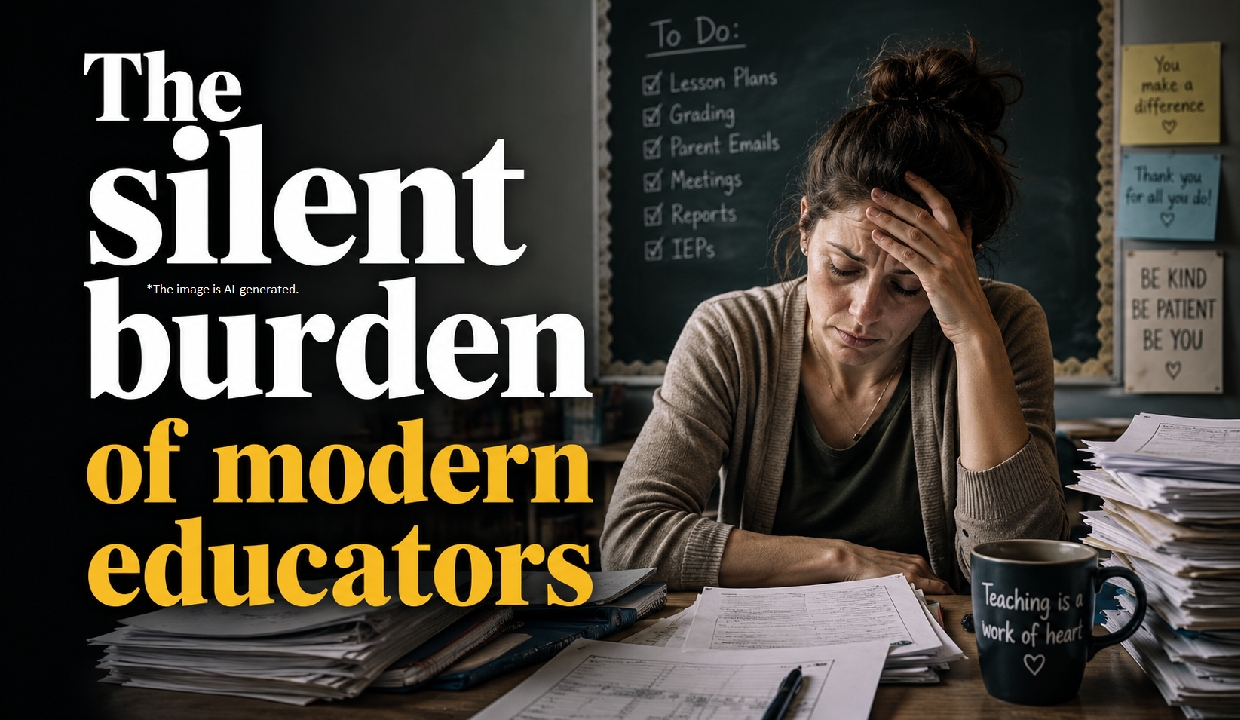
A teacher walks into the classroom with much more than just textbooks and lesson plans. With academic duties come expectations from various sources: parents, students, school administrators, coordinators, policymakers and society at large. Every stakeholder has unique desires, but they all view the teacher as the individual accountable for achieving outcomes. The contemporary educator has emerged as the focal point of an increasingly intricate educational environment. Although society frequently acknowledges the value of education, it often fails to recognise the significant pressure on those responsible for providing it.
Parents expect personalised attention and care for their children. School administrators look for academic excellence, discipline, innovation and measurable outcomes. Coordinators focus on curriculum implementation, assessment schedules and regulatory compliance, while authorities expect schools to follow prescribed guidelines and policies. Society, in turn, places the responsibility on teachers to nurture responsible and value-driven citizens. Amid all these expectations, learners themselves seek an education that is engaging, personalised, comfortable and meaningful. Amidst all these expectations is a teacher striving to balance various demands while staying effective, motivated and emotionally present.
Discussions about education often focus on students, infrastructure, technology and curriculum reforms. Yet one vital question remains unanswered: Who is looking after the teachers? A teacher’s work does not end with the final school bell. Lesson planning, assessments, reports, meetings and parent communication continue long after classroom hours. While technology was meant to simplify teaching, it has often added to the workload, leaving less time for meaningful teaching and student interaction.
The situation becomes even more complex because every stakeholder in the school system operates under pressure. School heads answer to managements, governing bodies, regulatory authorities and parents. Coordinators and department heads are expected to ensure curriculum delivery, maintain academic standards, monitor assessments, support teachers, address parent concerns and translate institutional policies into classroom practice. Yet educational leadership cannot be limited to monitoring deadlines, reports and performance data. Effective leaders are not merely supervisors; they are facilitators, mentors and advocates for their teachers. The strongest schools are not only those with impressive infrastructure or high examination results, but those where leaders understand that teacher well-being directly affects student learning. Teachers who feel trusted, supported and valued are more likely to teach with confidence, creativity and commitment.
Society expects teachers to build resilience, inspire creativity and shape future leaders, yet often overlooks their own well-being. Burdened by growing administrative demands, many educators receive limited support for their professional and emotional growth.
A school’s success should be measured not only by results, but also by teacher satisfaction, retention and workplace well-being. The future of education depends on recognising a simple truth: teachers are not machines designed to absorb unlimited pressure. If students are to flourish, we must first support those who stand at the front of the classroom.
The writer is an educator and a councillor; Views presented are personal.