The retreat of tolerance and the rise of religious patriotism
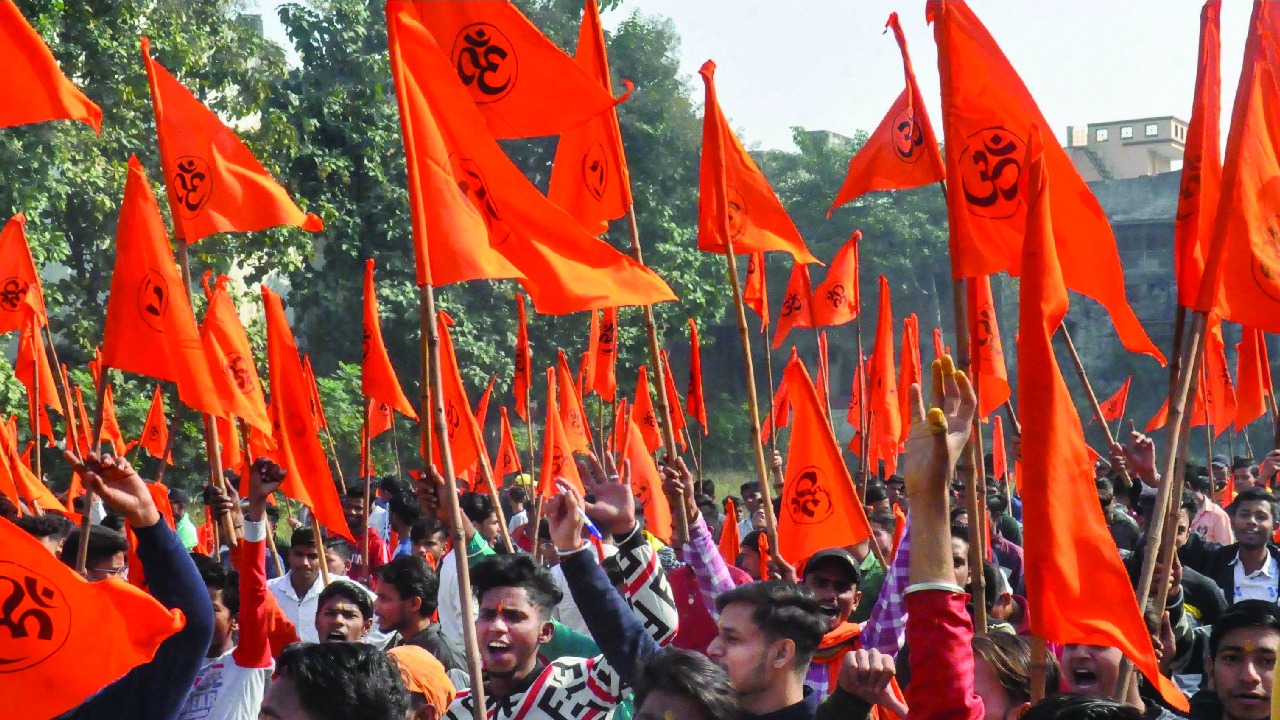
As societies across the world retreat into hardened identities, tolerance is giving way to religious patriotism. From the West to South Asia, faith is being tied to geography — squeezing minorities and forcing India to confront a stark civilisational choice. The year 2025 will be remembered less for a single dramatic rupture and more for a quiet but consequential shift in the moral grammar of societies across the world. From North America and Europe to South Asia and West Asia, the language of pluralism is thinning. In its place is emerging a harder, more territorial idea of religious identity. Tolerance, once projected as a universal virtue, is increasingly seen as a concession. Replacing it is what may best be described as religious patriotism — the fusion of faith with geography, ancestry and national belonging. This is not a development confined to one country, one religion, or one political ideology. It is global, civilisational, and systemic. Its most visible victims are minorities, but its deeper consequence is the steady erosion of the moral space that once allowed diverse societies to coexist without demanding cultural conformity.
A Global Turn Inward
Across the Western world, long celebrated as the custodian of liberal pluralism, the signs are unmistakable. Anti-immigration movements have acquired cultural and religious overtones. Migrant faiths — Hinduism, Islam, Sikhism — are no longer viewed merely as personal belief systems but as markers of foreignness. Hindu gods are openly demonised in parts of the United States. Sikh religious processions face resistance in countries that pride themselves on multiculturalism. Religious symbols are increasingly treated not as expressions of diversity but as challenges to national identity.
This shift is often explained away as economic anxiety or migration stress. While these factors matter, they do not fully capture what is unfolding. The deeper driver is a form of cultural jingoism — a defensive assertion of identity in response to perceived civilisational decline.
Rapid demographic change, weakening shared moral vocabularies, and declining civilisational confidence have pushed societies inward. Religion, once imagined as portable and universal, is being territorialised. Christianity is subconsciously reclaimed as native to the Northern Hemisphere, Islam is pushed back towards West Asia, and Hinduism is framed as something that belongs in India and nowhere else. The implicit message is blunt: practise your religion where it originated.
It is civilisational zoning. Once religion is tied to territory, the politics that follow are rarely benign. Demands for cultural conformity can harden into claims of exclusive belonging, and minorities are no longer seen merely as different but as geographically misplaced. In extreme forms, this logic has justified displacement, the redrawing of borders, and even ethnic cleansing. The insistence that faith must remain within its “own” geography has, in the past, produced not stability but violence.
The Rising Tide in India
It would be a mistake to assume that India is insulated from this global hardening of identities. Often described as the world’s largest experiment in pluralism, the country is witnessing symptoms of the same hardening, shaped by its own historical and social specificities.
The intimidation and disruptions faced by Christian communities in India during Christmas celebrations are not random aberrations. They reflect a growing anxiety around conversion, foreign influence, and cultural control. Periodic tensions involving Muslims, too, are driven by historical memory, political mobilisation and socio-economic segregation. These developments differ in cause from Western migration-driven hostility, but they converge in effect: a growing sense of minority insecurity.
More significantly, India has begun to differentiate-intellectually and politically-between indigenous and foreign religions, and by extension, between their followers. What may have begun as a civilisational or historical classification is increasingly seeping into civic attitudes. Religions associated with origins outside the subcontinent are viewed through questions of loyalty, authenticity and belonging. This shift is not rooted in constitutional doctrine, but in a changing social and political discourse.
This represents a departure from India's civilisational instinct. Historically, India absorbed religions without demanding cultural erasure. Faiths that arrived from elsewhere were Indianised, not othered. The shift from coexistence to classification is therefore not merely social; it is philosophical.
Emergence of Religious Patriotism
Religious patriotism is not devotion, nor is it cultural confidence. It is the belief that religion derives legitimacy from territory, and that national belonging is graded by faith. Under this framework, religion becomes a marker of insider and outsider status. Citizenship may remain legally intact, but cultural belonging becomes conditional.
This phenomenon manifests differently across regions. In the West, it is driven by migration stress intersecting with theological absolutism. In Bangladesh, it appears as structural religious majoritarianism reinforced by state weakness, leaving minorities existentially vulnerable. In India, it is emerging as a civilisational assertion that risks sliding into hierarchy. The causes differ, but the pattern is unmistakable: pluralism is retreating.
The Squeezing of Minorities
For minorities, across geographies, the most immediate consequence is not always legal discrimination but psychological insecurity. Belonging becomes provisional. Faith must be explained, justified or muted. Visibility invites suspicion. Minorities increasingly experience themselves as permanent guests rather than equal stakeholders.
History suggests that such erosion of emotional security often precedes more tangible forms of exclusion. The global nature of this trend also weakens the coherence of the minority-rights discourse. Outrage is selective, empathy uneven, and moral standards inconsistently applied.
The Secular Advantage
This global religious hardening also raises an uncomfortable strategic question. In a world where faith is increasingly becoming a source of social friction, do non-religious or post-religious societies enjoy a relative advantage? Countries such as China, where religion is tightly subordinated to the state, are largely insulated from religion-based strife that now preoccupies many plural societies. This does not make such systems morally superior, but it does free them from a powerful axis of internal conflict. As religious societies expend energy managing identity anxieties, those that have marginalised religion may find themselves comparatively unencumbered.
A Civilisational Choice for India
For India, the implications are especially stark. The country has articulated an ambition to be Vishwaguru-a moral and civilisational guide in a fragmented world. This claim cannot rest on economic size or demographic weight alone. It rests on offering an alternative model of coexistence.
India therefore faces a choice, not a contradiction. It can embrace religious patriotism fully and be consciously content as the primary civilisational homeland of Hindus. That is a coherent and historically grounded path, and many societies have chosen it. Or it can aspire to be Vishwaguru, which demands something more difficult: the ability to be rooted without being exclusionary, confident without being territorial.
What India cannot do is conflate the two. A civilisation that territorialises religion cannot simultaneously claim universal moral leadership.
The Meaning of 2025
The importance of 2025 lies not in the scale of violence or the number of incidents, but in the direction of travel. Across continents, societies are moving away from acceptance toward conditional tolerance, and from tolerance toward exclusion. Religion, once a bridge across cultures, is becoming a boundary marker.
Whether this hardening solidifies into permanent civilisational blocs or is arrested by renewed moral imagination remains an open question. But the warning is unmistakable. The end of tolerance is not inevitable; it is a choice-made consciously or by default. For a world searching for anchors, and for India seeking leadership, that choice will define the decades to come.
The writer is a retired IAS officer; views are personal