The Pieter Principle- Rebuilding Indi-Go
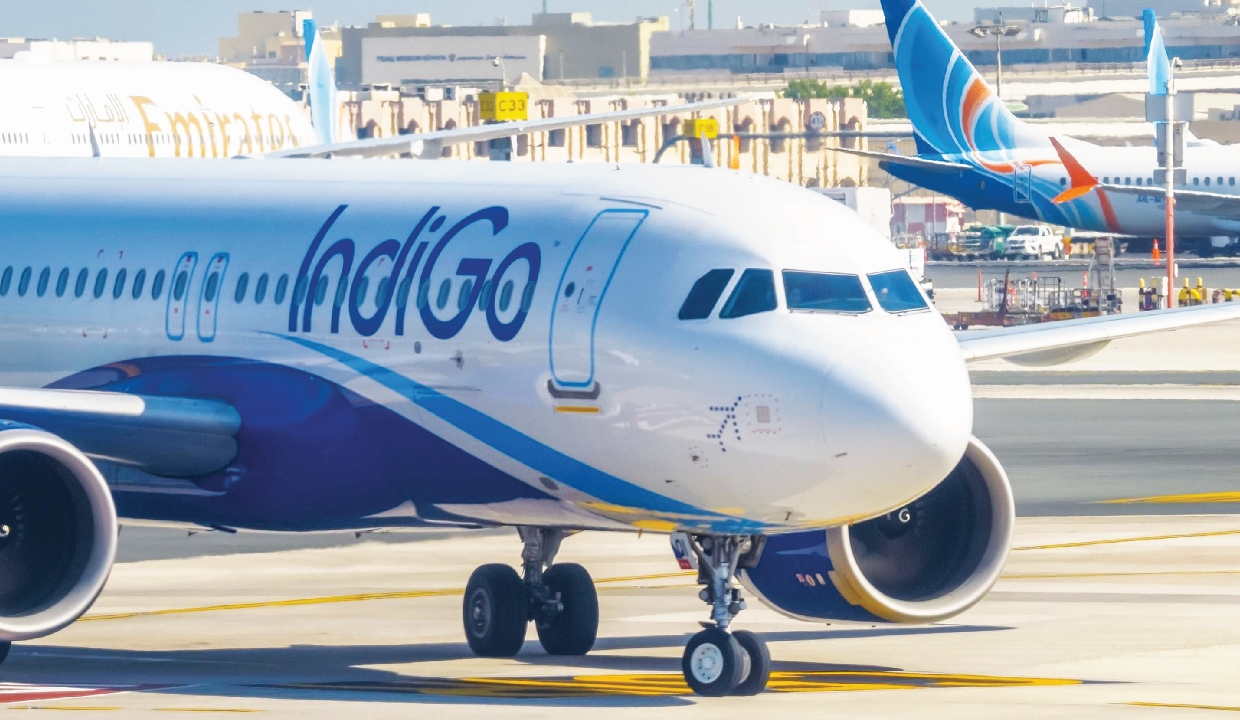
Two hours after the Indian Stock exchanges closed on March 10, the Interglobe Board sat down to discuss the letter the Managing Director had received from Pieter Elbers- Ceo Indigo, and within 15 minutes, at 1745 hours the board accepted Elbers resignation, thanked him for his services, and decided that the Founder & Managing Director Rahul Bhatia would take over as interim CEO. The Stock exchanges & Media were informed before 1800 hours.
Rahul Bhatia’s carefully worded email to reassure the 37,300 employees of Indigo was sent out and hit almost all the mailboxes by 1815-1820 hours.
In his email to employees, Bhatia stated that “Interglobe founded Indigo 22 years ago, with one simple mission… make air travel affordable and accessible for every Indian.” “I join hands with all of you today to ensure that we regain our right of choice with our customers...”
“What happened last December should never have taken place… our customers didn’t deserve it and nor did all of you, especially the frontline employees who bore most of the brunt for no fault of theirs.” “you are indeed the living spirit of Indigo”
The context and tone of the two-page missive laid bare the recent undercurrents that had beset the once chummy relationship between the Managing Director and the CEO. There was obvious unhappiness over the constant pressure from the government, since the December Indigo crisis, as the Ministry itself & by extension the DGCA, had come under immense pressure from the PMO, alliance partners and the public for full accountability and transparency.
Sources within Indigo spoke of the gradual distance, that had developed between the CEO and others board level personell, since last December, and things had come to a head with the events of the past few days, with the embarrassment over the international flights due to the Iran war and the restrictions placed on their wet leased wide body aircraft, even though none of that was the CEOs fault. Operationally, the war was causing Indigo to bleed on each international flight.
Sources indicate that both leaders had a pretty cut-and-dry discussion, which pointed the way to the exit, and things were wrapped up in less than 6 hours on that day.
Indigo had brought Pieter on board to streamline the operations, double revenue by 2030 and transition to a hybrid carrier, with the induction of wide-body aircraft, upgrade into the stretch product and rebuild the loyalty program. In many ways, Pieter had achieved a lot of those tasks, but he paid the price for someone else cutting corners at Indigo operations.
Shock waves went through the media; however, this was a development that was inevitable after the December Indigo Crisis for many close Industry watchers. His removal almost 90 days after the crisis, was a bit like closing the stable doors after the horse had bolted.
Perhaps Pieter and Indigo had missed a trick way back in December of not being able to control the media narrative. As an upstanding aviation leader, one almost expected him to offer his resignation and shoulder responsibility, in the great tradition of other aviation leaders such as Gary Kelly-Southwest, Allen Joyce-Qantas, Dennis Muilenburg-Boeing, Kim E-Bae-Jeju Air; Dave Calhoun-Boeing, Sebastian Mikosz-Kenya Airways or Akbar Al Baker of Qatar, who offered to step down for the Airbus grounding issue.
I personally would not be surprised if Pieter had offered to quit privately, but the truth will never be known. Had that occurred and Pieter offered to step down, it may have endeared him to the Indian public, the Government and his own board, who would have deflected their own mistakes. Sadly, that didn’t happen, and the owners didn’t speak up then, and Pieter was left holding the can and apologising to the nation for the Indigo crisis.
So how will history judge Pieter Elbers and his stint at Indigo?
Let’s look at how Indigo grew from the day that Pieter Elbers entered Indigo and almost doubled Market Capitalisation, Fleet size increased, number of passengers up by 50 per cent, Passenger Load factor up by 15 per cent, ASKMS because flat post-disruption and it was profitable until the December disruption.
We also examined Indigo's performance vis-à-vis global airlines, and found that Elbers had brought Indigo into a unique league. Globally, Indigo is in a league of the best, with an operating margin of 20 per cent-25 per cent a comparison on par with Ryan Air (20 per cent) and Southwest (8-12 per cent), which is significantly higher than most global airlines. Indigo is also on par with global leaders in terms of weekly ASK capacities, reflecting its massive domestic network
There were some morale issues with the Pilots at Indigo though Senior Pilots stated “Pieter was a nice guy, and has been made the fall guy” others breathed a sigh of relief that this period was over and they could now move on to grow further, the fact is that there is an HR issue which Indigo will have to address quickly to boost morale.
By any matrix, Pieter will go down as one of the more successful Aviation leaders in India, but we also need to look at the hemorrhaging of the last 3 months. During the last 3 months, Indigo has lost approx. 57,0000+ crores of market cap. (Share price on 1/12/26 was 5916, closed on 10/3/26 at 4355) Stock price had plunged 35 per cent since its 52-week high and a 4.9 per cent loss of domestic market share. That would have alarmed the MD & the Board, between December and March, they lost close to double the market capitalisation that their initial IPO was worth.
REBUILDING INDIGO
Indigo is not broken, merely bruised. It is an Indian brand that stands for excellence globally. Rahul Bhatia, the founder & managing director, will have to have all hands-on deck, to reorient the Indigo way, back to his own vision. Customer confidence will have to rebuilt and route rationalisation needs to be implemented. Breakneck growth will have to take a back seat for the next quarter until they stabilise operations, rediscover the OTP that made them the first choice.
Indigo will have to reorient a bit to become nimble to cope with international exigencies like the Iran war & should delineate international & domestic operations. Regaining domestic market share is key and passenger focus is important to take on a rejuvenated Air India and Akasa Airlines in the Indian skies as it also flies globally with wide bodies. The market has today greeted the change of guard with cautious optimism. As Rahul Bhatia invokes Bollywood and says “Main Hoon Na”, the future beckons.
|
METRIC |
BEFORE ELBERS |
AFTER ELBERS |
|
MARKET CAP |
Rs 85000-90000 Crores |
Rs 168,000 crore |
|
FLEET SIZE |
279-300 AIRCRAFT |
440 AIRCRAFT |
|
PAX CARRIED ANNUALLY |
69 MILLION |
112-118 MILLION |
|
PAX LOAD FACTOR |
73-75% |
84-86% |
|
ASKMS |
110-120 BILLION ANN (APRX) |
180-200 BILL ANN (EST) |
|
OTP |
78-82% TYPICAL RANGE |
74-76 POST DISRUPTION |
|
PROFITABILITY |
RECOVERING FROM COVID LOSSES |
STRONG PROFITS -DECLINE IN 2026 |
Sanjay Lazar is CEO Avialaz consultants & an Aviation expert. He is @sjlazars on @x; Views presented are personal.