The indispensable ecosystem: A case for protecting the Aravallis
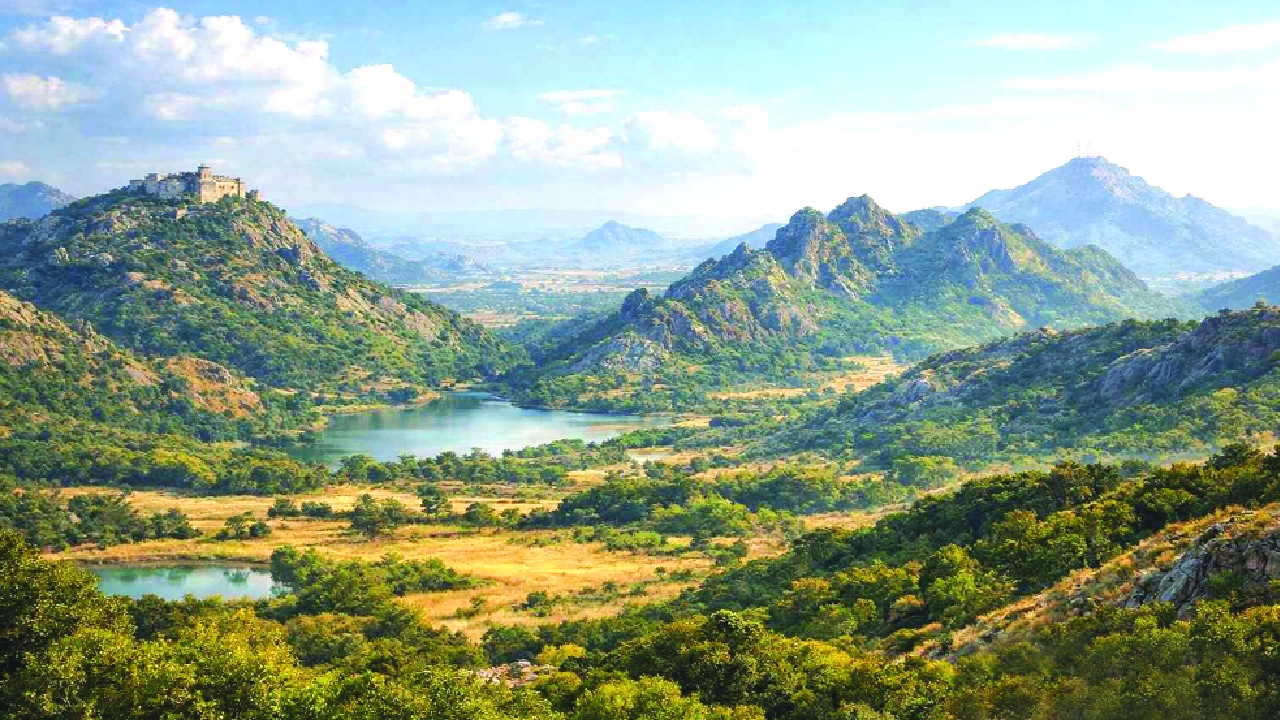
The Aravalli Range, stretching approximately 692 kilometres, is the 3-billion-year-old geological “spine” that supported the dawn of Indian civilisation. Known in the Puranas as the Pariyatra, this range formed the protective wall of Brahmavarta, the sacred heartland of Vedic hymn composition. It also sustained a network of the Saraswati, Drishadvati, Sahibi and Luni rivers. The valleys served as a global metallurgical hub, providing the Harappan world with gold and copper, while archaeological records reveal that the Saraswati banks nourished the world’s earliest ploughed field (Kalibangan), and the Drishadvati valley conceals Rakhigarhi, a metropolis now confirmed to be larger than Mohenjo-daro. The Aravallis are no less than a unique national treasure and a natural monument.
Often referred to as the “green lung” of northwest India, the Aravallis today provide indispensable ecological services vital for the environmental and socio-economic stability of the entire region, with benefits extending far beyond their geological structure due to their crucial role in climate regulation, water security and air quality. The continuous ridge of the Aravallis impedes the eastward and north-eastward spread of Thar Desert sands and controls desertification in Haryana, Punjab and western Uttar Pradesh, while the range’s part in Haryana and Delhi helps channel monsoon moisture towards the plains during summer and shields the region from intense dry westerly winds.
For the water-stressed populations of Haryana and Delhi, the Aravallis are a primary natural mechanism for groundwater recharge, sustenance of streams and water bodies, and water security. Acting as a vital physical filter, the existing hills and vegetative cover function as a critical environmental buffer against air pollution and even the dust storms that sweep into the NCR.
Although continuously damaged due to illegal mining and deforestation, the Aravalli Range remains a vital biodiversity-rich area, having endemic species and medicinal plants, an important genetic reservoir for northwest India, and a habitat and corridor for wildlife, facilitating their movement from Gujarat and Rajasthan to the areas of Haryana and Delhi and vice versa.
A specific threat to the Aravallis currently is the opening for diversion, especially for mining, of hills less than 100 metres tall. This “100-metre rule” is particularly dangerous because over 90 per cent of the Aravalli Range has a height lower than this.
Further, a significant area of the Aravallis is proposed for conversion into an open zoo (safari park) by the Haryana Government — a proposal fraught with severe regulatory, ecological and socio-economic risks.
Considering the Aravallis’ historical, cultural, ecological and social significance, examples of global warnings emerging from the prioritisation of short-term economic gain over environmental conservation seem relevant.
In the Central Appalachian Mountains, USA, mountain-top removal (MTR) mining led to ecological catastrophe, with over 2,000 miles of streams buried with waste rock, destroying entire forested ecosystems. Acid mine drainage leached heavy metals into waterways, and ultra-fine silica and sulphur particles contaminated the air. MTR proximity resulted in higher occurrences of cardiovascular diseases, including lung cancer, among residents, and environmental degradation left communities impoverished and in a state of social ruin.
Severe ecological and social impacts have followed mining in the high Andes Mountains of Peru and Chile. Driven by reserves of copper, gold and zinc, open-pit mining has disrupted the fragile Andean water cycle, leading to water scarcity, air pollution and water contamination with heavy metals such as arsenic and mercury.
Studies of large-scale hillside clear-cutting and deforestation accompanying mining and breaking of lands in Brazil, Indonesia and India show that they dramatically accelerate soil erosion, eliminate forests’ ability to act as carbon sinks, contaminate rivers with massive sediment loads, and ruin livelihoods and cultures of local communities.
The removal of hills of the Aravallis would lead to fragmentation and breaching of the natural barrier that controls movement of dust from the Thar Desert towards the National Capital Region of Delhi. The loss of smaller ridges, currently acting as localised micro-watersheds and aquifer recharge points, would compromise water availability, destroy unique micro-habitats and leave behind barren, excavated pits. A sample survey of mined areas in the country unfortunately reveals that the mandated condition regarding their post-mining
rehabilitation is rarely complied with by agencies.
There are already examples in the Aravallis where broken lands are converting the natural recharge zone into a stagnant “sump” of contaminated surface run-off, poisoning the groundwater that people use. The Central Ground Water Board (2024-25) and various health studies confirm that, in the Aravalli mining belt, water already has an altered chemistry with higher-than-permissible limits of lead and cadmium (>0.01 mg/L) and fluoride (>4.7 mg/L), which cause neurological impairment and bone deformities, including mottled teeth in children. Further, nitrates have increased by 60 per cent since 2017 and their levels are just one short of the permissible limit of 45 mg/L. Yet another danger to the Aravallis has emerged from the proposal to convert its forest area into an open zoo that would burden it with land breaking and accelerated non-essential constructions in the name of development. International examples show that similar projects in arid or semi-arid zones have caused ecological havoc because of the competing demands of intensive tourism infrastructure, local people’s survival needs and the wounded susceptibilities of the xeric ecosystem.
Safari parks in semi-arid African rangelands (such as Kenya and Tanzania) demonstrate the severe impacts of high-volume tourism infrastructure, leading to rapid localised desertification, contributed by the mining of water for captive animals. Open zoos established in Spain and Portugal on dry, scrubland forests illustrate the dangers of eco-tourism in low-biomass ecosystems. Constructing artificial water bodies and modifying natural streams for animal viewing cause hydrological stress that damages the natural flood-drought cycle crucial for indigenous scrubland species.
High-impact tourism and animal-concentration schemes in arid zones in the Middle East and Australia show how easily dry ecosystems can move into ecological collapse. The uncontrollable pressure for increased infrastructure, together with grazing burden, rapidly destroys the cryptobiotic crusts and soil structure, accelerating desertification. Large tracts of the open zoo or safari become ecological dead zones and contribute to regional dust pollution. Additionally, any heightened concern for non-native “charismatic” megafauna introduced for tourist appeal exacerbates adverse impacts on local species.
The massive habitat disturbance due to the proposed safari park in the Aravallis will disrupt the crucial wildlife corridor, displace indigenous Aravalli wildlife, destroy the fragile habitat and biodiversity therein, compromise the already-stressed groundwater-recharge zone, and impact the health and livelihoods of local populations. It will also affect the very ecological services (air purification, water recharge and dust control) that the Aravallis currently provide to the region.
Global precedents of ecological collapse in sensitive regions serve as a stark, cautionary blueprint for the Aravalli Range. Preliminary frameworks have, of course, been initiated by India for valuing ecosystem services. Apparently, adequacy of conservation initiatives for the Aravallis is claimed by quoting the establishment of some protected areas and steps taken towards restoration of selected patches. While these initiatives reflect important policy intent, the ecological integrity of the range continues to face severe and intensifying threats.
In fact, the absence of a regional natural-capital accounting approach limits the systematic quantification of the range’s contributions towards land productivity, water regulation, carbon storage, biodiversity conservation, livelihoods and climatic stability. As such benefits provided by the Aravalli ecosystems remain largely unaccounted, the financial returns of “development” appear comparatively significant — more so when the land is not “forest land”. Undervaluing the ecological damage caused by development projects also results in a distorted trade-off, ensuring that economic growth is prioritised over long-term environmental sustainability. Vulnerability of the Aravallis to short-term development pressures will continue until it is valued appropriately in economic terms. Saving the Aravallis, apart from being an appropriate response to preserving the cradle of Harappan and Vedic civilisations, is an environmental and urgently needed socio-economic imperative.
The writers are Former PCCFs of UP and Maharashtra; views are personal